乐单
曲目
- 1Clandestino2:30
- 2Desaparecido3:49
- 3Bongo Bong2:40
- 4Je ne t’aime plus2:05
- 5Mentira…4:39
- 6Lágrimas de oro3:00
- 7Mama Call2:23
- 8Luna y sol3:09
- 9Por el suelo2:24
- 10Welcome to Tijuana4:07
- 11Día luna… Día pena1:32
- 12Malegría2:58
- 13La vie à 23:02
- 14Minha galera2:24
- 15La despedida3:12
- 16El viento2:28
16 首 · 约 46 分钟 · 依据 1998 US 发行的版本,在 MusicBrainz 看这个版本。
介绍
这个词条没有中文维基百科条目,下面是英文维基百科的原文。
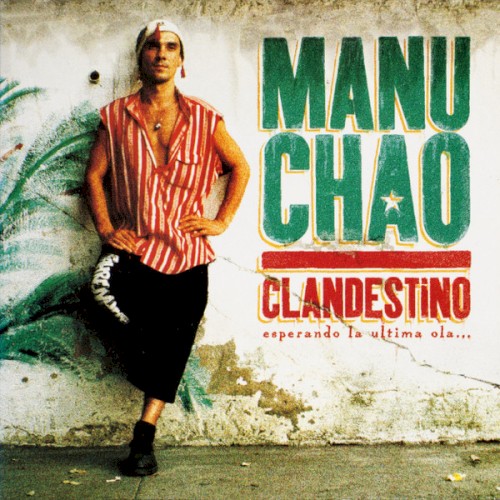
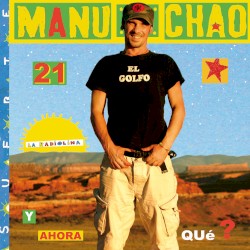
Clandestino is the debut studio album by French artist Manu Chao, released in 1998. The album contains many soundbites throughout, two of which are bits of a speech by Subcomandante Marcos and, like Chao's subsequent albums, was mostly recorded by the musician himself in various locations around the world, using a small laptop—which is referred to in the liner notes as Estudio Clandestino. The French edition of Rolling Stone magazine named this album the 67th greatest French rock album (out of 100). The album was also included in the book 1001 Albums You Must Hear Before You Die. The album was ranked number 469 in Rolling Stone's list of the 500 Greatest Albums of All Time in 2020.
Background
Clandestino emerged from a period of personal and professional upheaval for Manu Chao, following the breakup of his band, Mano Negra, in 1994. Mano Negra had been a pioneering force in the world of punk-infused Latin rock, but after years of internal strife and a chaotic tour across war-torn Colombia, the group disbanded before their 1994 studio album Casa Babylon was even released. The aftermath of this experience left Chao in a fragile state, both personally and professionally.
For the next three years, Chao spiraled into a deep sense of restlessness and depression, continuing his music career by performing at bars in Tijuana and Rio. He wandered across Europe, Africa, and South America, unable to settle anywhere for long. His journey took him through cities like London, Paris, and Naples, and even to Colombia and Mexico, where he found solace among the Zapatistas and experimented with peyote. Chao's mental health reached a low point in Brazil, where he came close to taking his own life. It was here, in a rundown Rio favela, that an encounter with a cow, which he described as "tender," gave him a renewed sense of purpose, pulling him back from the brink. Chao's time as a wandering musician deeply influenced the creation of Clandestino.
Recording
The recording process was unconventional. Chao's journey took him to places like Tijuana and Mexico, where he immersed himself in the raw energy of the border region and spent time with the Zapatistas. During these travels, he began recording ideas on a portable recorder, capturing not just his own music, but also street sounds, snippets of conversation, and other noises that would later shape the atmosphere of the album. Chao returned to Spain, armed with little more than his portable recorder, on which he had stored the songs and sounds. He continued writing more songs in Madrid and Galicia before making his way to Paris, where he briefly worked on an album with former girlfriend Anouk for Virgin. This experience pushed him into thinking about creating his own album from the 50 songs and snippets he had accumulated during his travels.
The process of making the album was somewhat haphazard. By the summer of 1997, Chao began organizing his recordings, deciding which tracks to develop further. In Paris, he partnered with producer Renaud Letang to sift through a collection of songs that would eventually form the album. Initially, the album had a strong electronica influence, with dance beats dominating the sound. However, as Chao continued to experiment, a technical glitch with Letang's computer inadvertently stripped out most of the electronic elements and drums, leaving behind a more acoustic, organic sound. Rather than being discouraged, Chao embraced the unexpected turn of events, famously stating, "le hazard est mon ami"—"chance is my friend." Chao later described the process as "pure therapy," reflecting the cathartic nature of the album for him personally. He and Letang continued experimenting with different mixes, even testing the tracks on the children of Chao's neighbors. According to Chao, the songs that resonated most with the children were the ones that ultimately made the cut. The result was an album that felt completely unique and unlike anything they had heard before. As Letang described it, they felt as though they had "given birth to a UFO," something entirely foreign to the music scene at the time. However, industry professionals were skeptical, with many expecting the album to have limited appeal, mainly among Mano Negra's fanbase.
正文摘自英文维基百科「Clandestino」,按 CC BY-SA 4.0 使用;删去了参考文献、外部链接、表格和图片;篇幅所限只节选了前面一部分,全文见原条目。
资料卡
- 作品性质
- 音乐专辑
- 表演者
- Manu Chao
- 发行日期
- 1998 年
- 流派
- 摇滚乐
- 语言
- 西班牙语、法语、葡萄牙语
- 唱片公司
- 维珍唱片
- 下一部
- Próxima Estación: Esperanza
- 获奖
- SNEP diamond album、Victory of the album of traditional musics or musics of the world(1999)
资料来自 Wikidata Q867788(CC0)。
制作名单
- 厂牌
- ARK 21(目录号 61868 10036 2 5)
演奏与演唱
- 演出
- Anouk(第 4 首)
词曲与编曲
- 作曲
- Manu Chao(其中 14 首)
- 作词
- Manu Chao(其中 14 首)
- 词曲
- Manu Chao(第 4、10 首)、Anouk Khelifa-Pascal(第 4 首)、François Meslouhi(第 10 首)
名单来自 MusicBrainz(CC0)这一发行版本的关系数据,由志愿者录入,不一定齐全。
更多资料与乐评
在哪听
Manu Chao 的其他专辑
艺人页 ›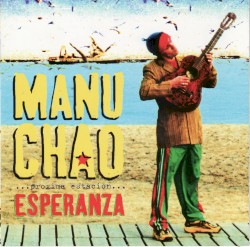



相似的专辑









同在 1998 年发行