乐单
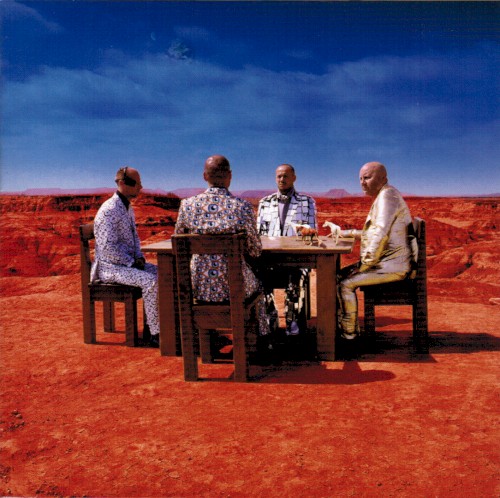
Black Holes and Revelations (2006)
曲目
第 1 张 · CD
- 1Take a Bow4:35
- 2Starlight4:00
- 3Supermassive Black Hole3:29
- 4Map of the Problematique4:19
- 5Soldier’s Poem2:04
- 6Invincible5:00
- 7Assassin3:31
- 8Exo‐Politics3:53
- 9City of Delusion4:49
- 10Hoodoo3:43
- 11Knights of Cydonia6:07
第 2 张 · DVD-Video · Absolution Tour
- 1Hysteria4:11
- 2New Born6:29
- 3Sing for Absolution4:55
- 4Muscle Museum5:07
- 5Apocalypse Please4:41
- 6Ruled by Secrecy4:58
- 7Sunburn5:31
- 8Butterflies and Hurricanes6:10
- 9Bliss3:53
- 10Time Is Running Out4:02
- 11Plug In Baby5:04
- 12Blackout5:25
- 13Fury4:58
- 14The Small Print3:38
- 15Stockholm Syndrome7:16
- 16The Groove5:50
- 17Riff Rucas4:03
- 18Thoughts of a Dying Atheist3:12
- 19Endlessly4:00
30 首 · 约 139 分钟 · 依据 2006-07-11 US 发行的版本,在 MusicBrainz 看这个版本。
介绍
这个词条没有中文维基百科条目,下面是英文维基百科的原文。
Black Holes and Revelations is the fourth studio album by the English rock band Muse. It was released on 3 July 2006 through Warner Bros. Records and Helium-3. It was produced by Rich Costey over four months in London, Milan, New York City, and southern France.
The album saw a change in style for Muse, with influences including Depeche Mode, Millionaire, Lightning Bolt, Sly and the Family Stone, and music from southern Italy. Like their previous albums, it features political and dystopian themes, with lyrics covering topics such as political corruption, alien invasion, revolution and New World Order conspiracies, as well as more conventional love songs.
Black Holes and Revelations entered the charts at number one in five countries, including the UK, and in the top 10 in several other countries, including the US. It was certified quadruple platinum in the UK and platinum in the US. "Supermassive Black Hole" and "Knights of Cydonia" entered the top 10 of the UK singles chart, while "Starlight", "Map of the Problematique" and "Invincible" reached the top 25. As of 2018, Black Holes and Revelations had sold more than 4.5 million copies worldwide.
Black Holes and Revelations received positive reviews and appeared on several lists of the year's best albums. It was nominated for the Mercury Prize and appeared in the 2007 version of 1001 Albums You Must Hear Before You Die. Recordings from the Black Holes and Revelations tour were released on the 2008 live album HAARP.
Recording
Muse's third album, Absolution (2003), brought them mainstream exposure in the United States. Muse spent about two weeks writing and rehearsing for their next album at Studio Miraval, an old château in southern France. The producer Rich Costey, who had also worked on Absolution, joined them two weeks later.
The songwriter, Matt Bellamy, said Muse wanted to be free from distractions so that they could focus and be absorb different influences. The bassist, Chris Wolstenholme, said writing and recording was more relaxed than previous albums, as the band had no deadline. The group wanted to create a more personal album than Absolution. However, progress was slow and they had difficulty deciding which songs to work on. The group moved to New York City, where Bellamy spent time in clubs and learnt to DJ, influencing the dance elements of "Supermassive Black Hole" and "Map of the Problematique".
Bellamy used guitar amps including a Vox AC30 and a Ampeg V4. Muse took a more active role in using studio technology, having previously left its use to engineers. Costey wanted to capture Bellamy's "personality" as a guitarist, recording the sound of his fingers and plectrum on the strings. Hoping to change their working style, they purchased old synthesisers including a Buchla 200e and set aside time to learn to use them.
The bulk of recording was completed at Avatar and Electric Lady Studios in New York City. The album was finished at a studio in Italy, where Bellamy spent several weeks recording vocals. Costey estimated that the album took about four months to record, including mixing at Townhouse Studios, London.
Music
On "Take a Bow", Muse wanted to blend classical, electronic and rock music. It opens with string arpeggios inspired by Philip Glass, backed by a Moog synthesiser. The "Map of the Problematique" riff was written on keyboard; at Costey's encouragement, Bellamy recreated it on guitar by splitting the guitar signal into three audio signals, which were processed with pitch shifters and synthesisers. "Assassin", influenced by the noise rock band Lightning Bolt, began as a long progressive rock song with a "huge" piano break before Muse trimmed it. "Supermassive Black Hole", a mixture of dance beats and guitar, was influenced by Bellamy's visits to clubs in New York City and the Belgian band Millionaire. Critics likened it to Prince.
Muse recorded the "Starlight" melody using two pianos at different octaves and layered samples of prepared piano. "Soldier's Poem" was written for Absolution, but rewritten with new lyrics and an arrangement inspired by "Can't Help Falling in Love" by Elvis Presley. The drummer, Dominic Howard, said Muse had planned to record it with a "massive, epic" approach, but decided to use a small studio with vintage equipment and few microphones. He described it as a "real highlight", with "some of the most amazing vocals I've ever heard Matt do".
"Knights of Cydonia" features mariachi trumpet and a "galloping" drumbeat and ends with a guitar solo. It was inspired by surf rock and the 1962 single "Telstar" by the Tornados, which featured Bellamy's father, George Bellamy. Bellamy said that the title "acknowledged that this is a bit funny, particularly when we are pushing the epic side of the band to almost comical levels ... There's a lot of freedom in being able to laugh at yourself." "City of Delusion" and "Knights of Cydonia" were influenced by Bellamy's interest in flamenco guitar.
正文摘自英文维基百科「Black Holes and Revelations」,按 CC BY-SA 4.0 使用;删去了参考文献、外部链接、表格和图片;篇幅所限只节选了前面一部分,全文见原条目。
资料卡
- 作品性质
- 音乐专辑
- 表演者
- 缪斯乐队
- 发行日期
- 2006 年 6 月 3 日
- 时长
- 45 分 28 秒
- 流派
- 另类摇滚、交响摇滚
- 语言
- 英语
- 唱片公司
- 氦3唱片、华纳兄弟唱片公司
- 制作人
- 缪斯乐队
资料来自 Wikidata Q204240(CC0)。
制作名单
- 厂牌
- Warner Bros. Records(目录号 44350-2)
- 录音室
- 混音:The Town House(Shepherd's Bush);混音:Sony Music Studios(Hell's Kitchen);混音:Power Station at BerkleeNYC(Hell's Kitchen);录音:Worthy Farm(Pilton);video shot at:Worthy Farm(Pilton);混音:Suite Studios(Dublin);录音:The Wiltern(Koreatown);video shot at:The Wiltern(Koreatown)
制作
- 混音
- Rich Costey(其中 11 首)、Max Dingel、Claudius Mittendorfer、Marc Carolan(其中 19 首)
- 制作人
- Rich Costey(其中 11 首)、缪斯乐队(其中 11 首)、Alison Howe(其中 12 首)
- 录音
- Rich Costey(其中 11 首)、Claudius Mittendorfer(其中 11 首)、Tommaso Colliva、缪斯乐队、Adam Taylor(第 13、16 首)、Sound Moves(第 14、15 首)
- 工程师
- Tommaso Colliva、Myriam Corrège、Rich Costey、Eddie Jackson、Claudius Mittendorfer、Ross Petersen、Ryan Simms
- 母带处理
- Vlado Meller、Howie Weinberg
- 剪辑
- Tom Kirk(其中 19 首)
- 执行制作人
- Ben Challis(其中 12 首)、Mark Cooper(其中 12 首)
- 助理混音
- Mark Rinaldi(第 2 首)
演奏与演唱
- 演出
- 马修·贝勒米、Dominic Howard、Christopher Wolstenholme
- 吉他
- 马修·贝勒米(其中 11 首)
- 键盘
- 马修·贝勒米(其中 11 首)
- 打击乐
- Dominic Howard(其中 11 首)
- 鼓
- Dominic Howard(其中 11 首)
- 贝斯
- Christopher Wolstenholme(其中 11 首)
- 主唱
- 马修·贝勒米(其中 11 首)
- 和声
- Christopher Wolstenholme(其中 11 首)
- 弦乐
- Around Art(第 1、9、10 首)
- 小提琴
- Edoardo de Angelis(第 1、9、10 首)
- 指挥
- Audrey Riley(第 1、10 首)、Mauro Pagani(第 9 首)
- 小号
- Marco Brioschi(第 9、11 首)
词曲与编曲
- 编曲
- 马修·贝勒米、Dominic Howard、Christopher Wolstenholme
- 作曲
- 马修·贝勒米(其中 17 首)、Dominic Howard(其中 12 首)、Christopher Wolstenholme(其中 12 首)
- 作词
- 马修·贝勒米(其中 17 首)
- 器乐编曲
- 马修·贝勒米(第 1 首)、Mauro Pagani(第 9 首)、Audrey Riley(第 10 首)
包装与设计
- 设计 / 插画
- danmandell
- 摄影
- Derrick Santini、Storm Thorgerson、Rupert Truman
- 视频导演
- Janet Fraser Crook(其中 12 首)、Tom Kirk(其中 7 首)
名单来自 MusicBrainz(CC0)这一发行版本的关系数据,由志愿者录入,不一定齐全。
更多资料与乐评
在哪听
缪斯乐队 的其他专辑
艺人页 ›


同在 2006 年发行