 乐单

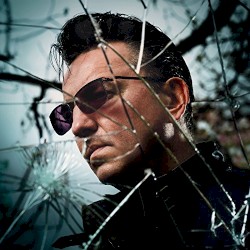
照片:Hinton1994,CC BY-SA 3.0,Wikimedia Commons
理察·霍利
- 生卒
- 1967 –
- 国家/地区
- 英国
- 外文名
- Richard Hawley
- 流派
- 流行音乐、摇滚乐
介绍
这个词条没有中文维基百科条目,下面是英文维基百科的原文。
Richard Willis Hawley (born 17 January 1967) is an English singer-songwriter, guitarist, and producer. After his first band Treebound Story (formed while he was still at school) broke up, Hawley found success as a member of Britpop band Longpigs in the 1990s. He played with Pulp, led by his friend Jarvis Cocker, as a touring musician for a short time. As a solo musician, Hawley has released ten studio albums. He has been nominated for a Mercury Prize twice and once for a Brit Award. He has also collaborated with Robbie Williams, Nancy Sinatra, Gwen Stefani, Arctic Monkeys, Paul Weller, Duane Eddy, Lisa Marie Presley and Manic Street Preachers.
Early life
Born in Sheffield, Hawley grew up with two sisters in a working-class area of the city. He was born with a cleft palate, which required numerous operations. Both of his parents were musicians; his father Dave Hawley was a guitarist with a number of local bands (on his death, the Sheffield Star called him a "Sheffield music legend"), and his mother Lynne a singer. They divorced when he was 16 years old. He is a lifelong supporter of local football club Sheffield Wednesday. He noted that "I always wrote songs since childhood" and realising that "you could actually make something up of your own was quite a big one then". He attended Hucklow Middle School together with future Pulp bassist Steve Mackey, and passed his O-levels. Hawley briefly worked at the local HMV.
While still at school, Hawley formed the Treebound Story and at the age of 19 recorded a Peel Session together with the band. Following the band's split, Hawley briefly formed the Lovebirds releasing a single record in 1992 before being recruited to be guitarist in the Longpigs in 1993. Hawley was a member of the Longpigs until the end of the decade receiving critical attention and some, but limited, commercial success during the late 1990s Britpop era. As a member of the Longpigs, Hawley released two albums, The Sun Is Often Out and Mobile Home. After the demise of the band, he joined Pulp as a touring guitarist while also working as a session musician. During his time with both bands he was able to "quietly hone" his songwriting skills, citing that "I was never really very good about bleating on about being a songwriter".
Solo career
Setanta (2001–2004)
Impressed by a home demo of songs written through the late 1990s, both Jarvis Cocker and Mackey urged Hawley to record the material. He used some left-over studio time to demo material and to experiment. Pointing out that "I just wanted to make something gentle for myself – I never expected it to be released". He recorded a song per day, recording most of the instruments himself "with a boom mike in the middle so I could walk between instruments – I mixed it in my head". His eponymous debut was a mini-album that featured seven songs and released in April 2001 through Setanta Records. It was supported by the single "Coming Home". While Hawley played "90% of the stuff" he was assisted by former Longpigs drummer Andy Cook and Colin Elliot, who became his long-term producer.
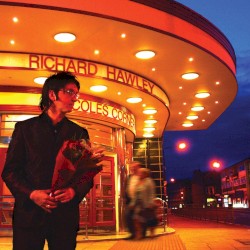
Hawley later commented that "I think with anybody's early stuff you can batter it and take things apart. [With] doing those early records I was trying to get back to a way of being creative with recording rather than taking this dogmatic approach to it". He admitted that he did not get "it right every time but I got what I wanted to achieve. It was to try and find something in the song. And also, with those early records, there was no money". Clash Magazine described it as "a rather brief burst of seven mid-paced, ’50s-flecked moments of jangle. Listening back now, it’s easy to spot the early signs of the grandeur that was to come, especially on standout "Sunlight" amongst these tentative 22 and a half minutes". The cover of the album was shot in front of a bingo hall in Cleethorpes.
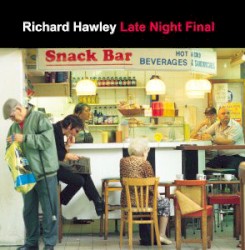
In 2001, Late Night Final, named after the cry of vendors selling the Sheffield Star evening newspaper on the streets of the city, was released to positive reviews from the press. Hawley later explained that prior to going into the sessions "all I'd got was the riff to "Baby, You're My Light" and that the majority of songs were written during the sessions. As an example he cited "The Nights Are Cold" that was done in one take after Cooke asked "look, we've got a gig tonight, are we doing this or what?". Clash magazine called it "a remarkably assured, often truly gorgeous, collection of warmly evocative lullabies" singling out the songs "Baby, You’re My Light" and "The Nights Are Cold" as "mesmerising". The album was produced by Alan Smythe.
正文摘自英文维基百科「Richard Hawley」,按 CC BY-SA 4.0 使用;删去了参考文献、外部链接、表格和图片;篇幅所限只节选了前面一部分,全文见原条目。
资料卡
- 出生
- 1967 年 1 月 17 日
- 出生地
- 谢菲尔德
- 国籍
- 英国
- 活跃起始
- 1989 年
- 职业
- 吉他手、创作歌手、歌手、作曲家、音乐制作人、音乐家
- 乐器
- 吉他、人声
- 流派
- 流行音乐、摇滚乐
- 唱片公司
- 静音唱片
- 所属团体
- 果浆乐团(1998–2002)
- 使用语言
- 英语
- 获奖
- MOJO Awards
- 官方网站
- richardhawley.co.uk
资料来自 Wikidata Q716361(CC0)。
榜单和奖项里的专辑(1)
曲库里的其他专辑(6)
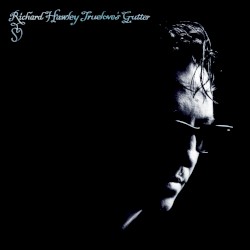
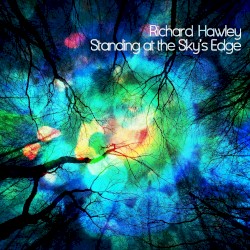
完整作品表见 MusicBrainz。
有关联的艺人
- 果浆乐团英国 · 1978– · 另类摇滚、英伦摇滚
成员、所属团体、受到的影响,来自 Wikidata。