 乐单
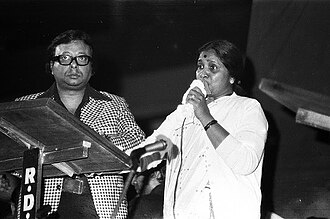
照片:Aditijain,Public domain,Wikimedia Commons
Rahul Dev Burman
- 生卒
- 1939 – 1994
- 国家/地区
- 印度、英属印度
介绍
这个词条没有中文维基百科条目,下面是英文维基百科的原文。
Rahul Dev Burman (; 27 June 1939 – 4 January 1994) was an Indian music director and singer, who is considered to be one of the greatest and most successful music directors of the Hindi film music and Bengali cinema industry. From the 1960s to the 1990s, Burman composed musical scores for 331 films, bringing a new level of music ensemble with his compositions. Burman did his major work with legendary singers Kishore Kumar, Lata Mangeshkar, Asha Bhosle and Mohammed Rafi. He also worked extensively with lyricists like Majrooh Sultanpuri, Anand Bakshi and Gulzar, with whom he created some of the most memorable numbers in his career. Nicknamed Pancham, he was the only son of the composer Sachin Dev Burman and his Bengali lyricist wife Meera Dev Burman.
He was mainly active in the Hindi film industry as a composer, and also provided vocals for a few compositions. He influenced the next generation of Indian music directors, and his songs remain popular in India and overseas. Many years after his death, his songs continued to inspire new singers and composers.
Early life and career beginnings
Burman was born to the Bengali and Hindi film composer and singer, Sachin Dev Burman, and his lyricist wife Meera Dev Burman (née Dasgupta), in Calcutta. Initially, he was nicknamed Tublu by his maternal grandmother, although he later became known by the nickname Pancham. According to some stories, he was nicknamed Pancham because, as a child, whenever he cried, it sounded in the fifth note (Pa), G note on c major scale, of music notation; in Hindustani Classical Music, Pancham is the name of the fifth scale degree: (IAST: Ṣaḍja, Ṛṣabha, Gandhāra, Madhyama, Pañcama, Dhaivata, Niṣāda). Another theory says that the baby was nicknamed Pancham because he could cry in five different notes. Yet another version is that when the veteran Indian actor Ashok Kumar saw a newborn Rahul uttering the syllable Pa repeatedly, he nicknamed the boy Pancham.
Burman received his early education in West Bengal from Ballygunge Government High School in Kolkata. His father S. D. Burman was a noted music director in Hindi-language films, the Mumbai-based Hindi film industry. When he was seventeen years old, R. D. Burman composed his first song, "Aye Meri Topi Palat Ke Aa", which his father used in the film Funtoosh (1956). The tune of the song "Sar Jo Tera Chakraaye" was also composed by him as a child and his father included it in the soundtrack of Guru Dutt's Pyaasa (1957).
In Mumbai, Burman was trained by Ustad Ali Akbar Khan (sarod) and Samta Prasad (tabla). He also considered Salil Chowdhury his guru. He served as an assistant to his father and often played harmonica in his orchestras.
Some of the notable films in which Burman is credited as the music assistant include Chalti Ka Naam Gaadi (1958), Kaagaz Ke Phool (1959), Tere Ghar Ke Samne (1963), Bandini (1963), Ziddi (1964), Guide (1965) and Teen Devian (1965). Burman also played mouth organ for his father's hit composition "Hai Apna Dil To Aawara", which was featured in the film Solva Saal, and sung by Hemanta Mukhopadhyay.
In 1959, Burman signed up as a music director for the film Raaz, directed by Guru Dutt's assistant Niranjan. However, the film was never completed. The lyrics of this Guru Dutt and Waheeda Rehman-starrer film were written by Shailendra. Burman recorded two songs for the film before it was shelved. The first song was sung by Geeta Dutt and Asha Bhosle, and the second one had vocals by Shamshad Begum.
Burman's first released film as an independent music director was Chhote Nawab (1961). When the noted Hindi film comedian Mehmood decided to produce Chhote Nawab, he first approached Burman's father Sachin Dev Burman for the music. However, S. D. Burman declined the offer, advising he was unavailable. At this meeting, Mehmood noticed Rahul playing tabla, and signed him as the music director for Chhote Nawab. Burman later developed a close association with Mehmood, and made a cameo appearance in Mehmood's film Bhoot Bungla (1965).
Music career
1961–1975: Early career and rise to prominence
R. D. Burman began his career as a music director with the 1961 film Chhote Nawab, which proved to be a lukewarm success and so were his next three ventures, Bhoot Bungla (1965), Teesra Kaun (1965) and Pati Patni (1966). He established himself with Vijay Anand's musical mystery film Teesri Manzil (1966), which starred Shammi Kapoor and Asha Parekh in the lead. It went on to become a huge success at the box office which was attributed to its superhit songs, "O Haseena Zulfonwali Jane Jahan", "O Mere Sona Re Sona", "Aaja Aaja Main Hoon Pyar Tera", "Deewana Mujhsa Nahin" and "Tumne Mujhe Dekha Hokar Meherban", all of which were featured in the year-end annual list of Binaca Geetmala. In addition, the soundtrack of Teesri Manzil proved to be the seventh best-selling Hindi film album of the 1960s.
正文摘自英文维基百科「R. D. Burman」,按 CC BY-SA 4.0 使用;删去了参考文献、外部链接、表格和图片;篇幅所限只节选了前面一部分,全文见原条目。
资料卡
- 艺名 / 别名
- Pancham
- 出生
- 1939 年 6 月 27 日
- 出生地
- 加尔各答
- 去世
- 1994 年 1 月 4 日
- 去世地
- 孟买
- 国籍
- 印度(1950 起)、英属印度(1947)、印度联邦(1947–1950)
- 活跃起始
- 1961 年
- 职业
- 作曲家、电影配乐作曲家、录音艺术家、导演、演员、音乐家
- 使用语言
- 孟加拉语、印地语、英语
- 获奖
- Filmfare Award for Best Music Director(1995)、Filmfare Award for Best Music Director(1984)、Filmfare Award for Best Music Director(1983)
资料来自 Wikidata Q3351160(CC0)。
榜单和奖项里的专辑(1)
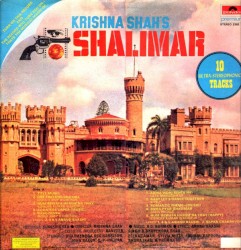
曲库里的其他专辑(19)
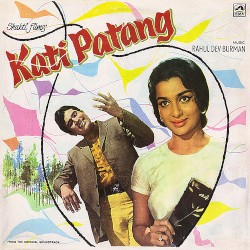
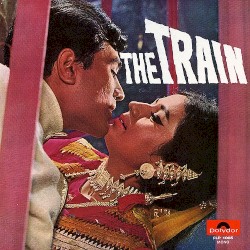
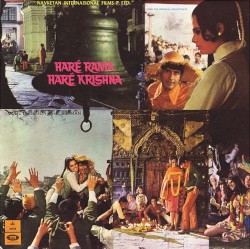
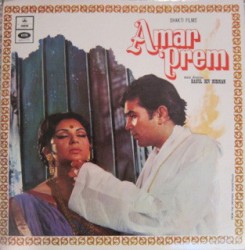
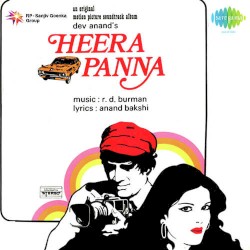
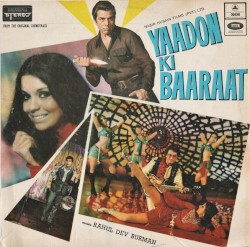
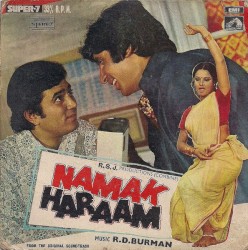
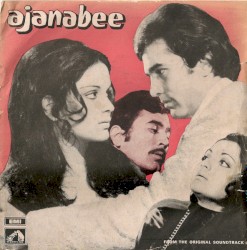

完整作品表见 MusicBrainz。