 乐单
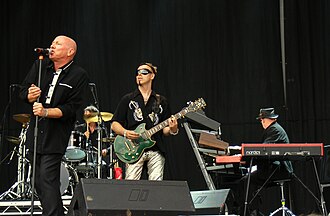
照片:Phil King,CC BY 2.0,Wikimedia Commons
杂志乐团
- 成立 / 解散
- 1977 –
- 国家/地区
- 英国
- 外文名
- Magazine
- 流派
- 朋克摇滚、新浪潮
- 成员
- 约翰·麦乔克、Howard Devoto、巴里·亚当森
介绍
这个词条没有中文维基百科条目,下面是英文维基百科的原文。
Magazine were a British rock band formed in 1977 in Manchester, England by singer Howard Devoto and guitarist John McGeoch. After leaving the punk rock group Buzzcocks in early 1977, Devoto decided to create a more progressive rock band. The original line-up of Magazine was composed of Devoto, McGeoch, Barry Adamson on bass, Bob Dickinson on keyboards and Martin Jackson on drums.
Their debut album, Real Life (1978), was critically acclaimed and later considered one of the first British post-punk albums. After releasing two other albums, Secondhand Daylight and The Correct Use of Soap, McGeoch left the band in 1980 to join Siouxsie and the Banshees. Magazine released another studio album and disbanded in 1981. All four of their albums reached the top 40 on the UK Albums Chart.
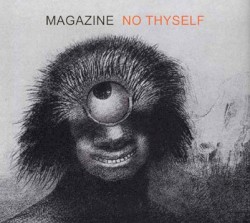
They reunited in 2009 for a UK tour with Noko on guitar. Magazine released an album of new material, No Thyself, in October 2011, followed by a short UK tour.
Magazine have been cited as an influence by bands and musicians such as Simple Minds, the Smiths, Radiohead, Pulp, Pond, and John Frusciante.
History
Devoto formed Magazine in Manchester, shortly after he left Buzzcocks in early 1977. In April 1977, he met guitarist McGeoch, then an art student, and they began writing songs, some of which would appear on the first Magazine album. They then recruited Barry Adamson on bass, Bob Dickinson on keyboards and Martin Jackson (previously of the Freshies) on drums, forming the first line-up of the band. After signing to Virgin Records, Magazine played their debut live gig at Rafters in Manchester on 28 October 1977.
"Motorcade" co-writer Dickinson, whose background was in classical and avant-garde music, left shortly after several gigs in late 1977. In mid-February 1978, the band recorded their first John Peel session for BBC radio. In early 1978, they also released their first single, "Shot by Both Sides", produced by Mick Glossop: it was a song Magazine recorded as a quartet. It featured a guitar-bass-drums sound similar to punk rock. Shortly after the single's release, Dave Formula, who had played with a briefly successful 1960s rock band from Manchester called St. Louis Union, joined as keyboardist. "Shot by Both Sides" used a chord progression suggested by Pete Shelley, which was also used in the Buzzcocks track "Lipstick". The Magazine single just missed the UK top 40. The band, with Formula on keyboards, made its first major TV appearance on Top of the Pops in February 1978, performing the single. The band recorded their first John Peel session for BBC radio 1 on 14 February 1978: the four tracks were broadcast on 20 February. "Shot by Both Sides" was re-recorded and produced by John Leckie for their debut album Real Life.
Following a British tour to promote Real Life (which made the UK top 30), Jackson left Magazine in late July. He was replaced briefly by Paul Spencer, who performed with the band for gigs across Europe and some television appearances, including The Old Grey Whistle Test, where they played "Definitive Gaze". Spencer quit partway through the tour, joining the Speedometors shortly afterwards. He was replaced in October by John Doyle, who completed the Real Life promotional tour and remained in the band.
Magazine's second album, Secondhand Daylight, was released in 1979, reaching the UK top 40. The album featured a greater use of synthesisers. That same year, McGeoch, Adamson and Formula joined electronic project Visage, recording and releasing the single "Tar".
After the release of Secondhand Daylight, Devoto decided to change producers. He chose Martin Hannett, who produced their next album, The Correct Use of Soap, released the following year and again making the top 30, while the single "Sweetheart Contract" was a minor success on the singles chart. Following its release, McGeoch left the band, tired of Magazine's low sales and their less guitar-oriented songs. He soon joined Siouxsie and the Banshees. To replace him, the band hired Robin Simon, who had been in Ultravox and Neo. That line-up toured Europe and Australia, recording their next release, the live album Play. Simon made some initial recordings and rehearsals for what would be the next Magazine album, including co-writing the song "So Lucky", but he left the band before the album was released so that he could record the John Foxx solo album The Garden.
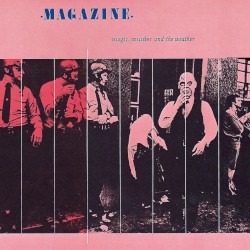
Again without a guitarist, Devoto called in his former college friend at Bolton, Ben Mandelson (a former Amazorblades member). This line-up completed the 1981 recording of the band's fourth studio album, Magic, Murder and the Weather, but Devoto quit that May, months before its release, and the remaining members disbanded. A year later, After the Fact, the first Magazine compilation, was released.
正文摘自英文维基百科「Magazine (band)」,按 CC BY-SA 4.0 使用;删去了参考文献、外部链接、表格和图片;篇幅所限只节选了前面一部分,全文见原条目。
资料卡
- 成立
- 1977 年
- 成立于
- 曼彻斯特
- 来自
- 英国
- 活跃起始
- 1978 年
- 流派
- 朋克摇滚、新浪潮
- 唱片公司
- EMI
- 成员
- 约翰·麦乔克、Howard Devoto、巴里·亚当森
资料来自 Wikidata Q1475584(CC0)。
榜单和奖项里的专辑(1)
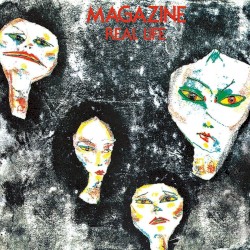
曲库里的其他专辑(4)
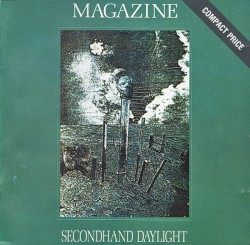
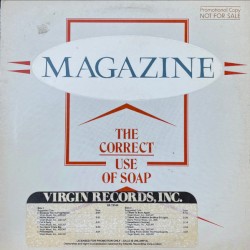
完整作品表见 MusicBrainz。
有关联的艺人
- 巴里·亚当森英国 · 1958– · 后朋克
成员、所属团体、受到的影响,来自 Wikidata。