 乐单
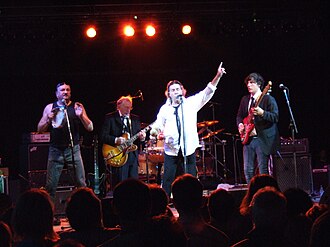
照片:Philippe BRIZARD,CC BY 3.0,Wikimedia Commons
美丽坏东西
- 成立 / 解散
- 1963 –
- 国家/地区
- 英国
- 外文名
- The Pretty Things
- 流派
- 节奏布鲁斯
- 成员
- Phil May、迪克·泰勒、Jon Povey、Wally Waller、斯基普·艾伦、Viv Prince、Brian Pendleton、John Stax、小妞、Viv Broughton、杰克·格林、Simon Fox
介绍
这个词条没有中文维基百科条目,下面是英文维基百科的原文。
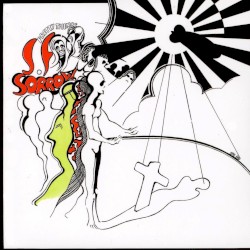
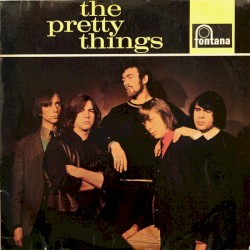
The Pretty Things were an English R&B and rock band formed in September 1963 in Sidcup, Kent, taking their name from Bo Diddley's 1955 song "Pretty Thing", and active in their first incarnation until 1971. They released five studio albums, including the debut The Pretty Things and S. F. Sorrow (often considered the first rock opera), four EPs and 15 UK singles, including the Top 20 UK Singles Chart "Don't Bring Me Down" and "Honey I Need". They reformed later in 1971 and continued through to 1976 issuing three more studio albums, and reformed once again from 1979 to 2020 releasing another five studio albums, the last of which was Bare as Bone, Bright as Blood.
The group were formed by vocalist Phil May, who was a constant presence until his death in 2020, and guitarist Dick Taylor – who left before the end of their first incarnation but rejoined for the entirety of the third – along with John Stax (bass), Brian Pendleton (guitar), and Pete Kitley, who was replaced on drums by Viv Prince before any recording began. There have been many personnel changes with Peter Tolson (guitar), Jon Povey (keyboards), and Skip Alan (drums) being involved in all three incarnations, while bassist Wally Waller was involved in the first and third.
The Pretty Things recorded stock music for film soundtracks which were issued as the Electric Banana series of albums, and collaborated with other artists and bands in the 1990s, such as Pretty Things & the Yardbird Blues Band, and Pretty Things 'N Mates.
History
1962–1964: Formation
The Pretty Things were preceded by Little Boy Blue and the Blue Boys, which consisted of Dick Taylor, fellow Sidcup Art College student Keith Richards, and Mick Jagger, among others. When Brian Jones was recruiting for his own band, all three joined Brian and Ian Stewart and were dubbed "Rollin' Stones" by Jones in June 1962. Because there were too many guitar players in the band, Taylor switched to bass. He quit the Stones five months later, when he was accepted at the Central School of Art and Design in London. Phil May, another Sidcup student, convinced him to form a new band. Taylor was once again playing guitar, with May singing and playing harmonica. They recruited John Stax on bass and harmonica, Brian Pendleton on rhythm guitar, and Pete Kitley on drums. Kitley was soon replaced by Viv Andrews, also known as Viv Broughton.
Bryan Morrison, a fellow student at the Art College where May and Taylor studied, was recruited as their manager. Morrison was to manage them for the rest of the 1960s, building his own Bryan Morrison Agency. This agency represented Pink Floyd among many other bands. Forming a partnership with songwriter Jimmy Duncan, he got the Pretty Things a recording contract with Fontana Records in early 1964. At this point, Viv Andrews was replaced by Viv Prince, a more experienced drummer who had played with Carter-Lewis and the Southerners.
1964–1966: Early career
The Pretty Things' first three singles appeared in the UK Singles Chart in 1964 and 1965: "Rosalyn" No. 41, "Don't Bring Me Down" No. 10, and the self-penned "Honey I Need" at No. 13. They never had a hit in the United States, but had considerable success in their native United Kingdom and in Australia, New Zealand, Germany and the Netherlands. Their appearance and behaviour were provocative, with May claiming to have the longest hair in the UK and Prince often causing chaos wherever he went.
The band later blamed their lack of success in the US on the fact their management opted for a tour of the Southern Hemisphere in July–August 1965. During their two weeks in New Zealand, they caused so much outrage in the media that the New Zealand Parliament addressed the issue of granting entry permits to musicians such as the Pretty Things. The band was never actually banned from re-entering New Zealand, contrary to what can be read in some sources.
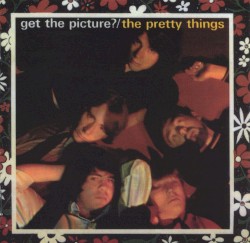
The first of what would be many personnel changes over the years also began, with Prince, whose wild antics had become too much for the other members to endure, being the first to go in November 1965. He was replaced by Skip Alan. In early 1966, the band made a short film The Pretty Things on Film; it featured live footage and a music video prototype for "Can't Stand the Pain", which also featured their manager, Morrison. Rarely screened at the time, the film can be found as a bonus multimedia item on the Snapper CD re-issue of Get the Picture. 1966 saw the R&B scene fall into decline and the Pretty Things began moving away, flirting with soul music. In mid-1966, they made the UK Singles Chart for the final time with a cover of the Kinks song "House in the Country". In December 1966 came the single "Progress", where the band were joined by a brass section.
Pendleton left in December 1966 and was replaced on stage by Billy Harrison from Them. Stax followed in January 1967. Jon Povey and Wally Waller, both former Fenmen from Bern Elliott and the Fenmen, joined and made the band a five-piece once again.
正文摘自英文维基百科「The Pretty Things」,按 CC BY-SA 4.0 使用;删去了参考文献、外部链接、表格和图片;篇幅所限只节选了前面一部分,全文见原条目。
资料卡
- 成立
- 1963 年
- 成立于
- 伦敦
- 来自
- 英国
- 活跃起始
- 1963 年
- 流派
- 节奏布鲁斯
- 唱片公司
- 华纳兄弟唱片公司、方塔纳唱片、Fruits de Mer Records
- 成员
- Phil May、迪克·泰勒、Jon Povey、Wally Waller、斯基普·艾伦、Viv Prince、Brian Pendleton、John Stax、小妞、Viv Broughton、杰克·格林、Simon Fox
- 获奖
- MOJO Awards
- 官方网站
- prettythings.net
资料来自 Wikidata Q1364657(CC0)。
榜单和奖项里的专辑(1)
曲库里的其他专辑(5)
完整作品表见 MusicBrainz。
有关联的艺人
- 丑角合唱团美国 · 1967– · 朋克摇滚、前朋克
成员、所属团体、受到的影响,来自 Wikidata。
风格、年代相近的艺人
- 滚石乐队英国 · 1962– · 摇滚乐、蓝调摇滚
- 艾尔顿·强英国 · 1947– · 摇滚乐、流行摇滚
- 谁人英国 · 1964– · 艺术摇滚、硬式摇滚
- 罗德·斯图尔特英国 · 1945– · 摇滚乐、蓝调摇滚
- 比吉斯英国 · 1958– · 摇滚乐、迪斯科
- 动物乐队英国 · 1962– · 蓝调摇滚、硬式摇滚
- 达斯蒂·斯普林菲尔德英国 · 1939–1999 · 灵魂乐、节奏布鲁斯
- 雏鸟乐队英国 · 1963– · 迷幻摇滚、蓝调摇滚
- 史蒂夫·温伍德英国 · 1948– · 蓝眼灵魂乐、摇滚乐
- 小脸乐队英国 · 硬式摇滚、迷幻摇滚
- 阿黛尔英国 · 1988– · 流行音乐、蓝眼灵魂乐
- 艾米·怀恩豪斯英国 · 1983–2011 · 灵魂乐、节奏布鲁斯