 乐单
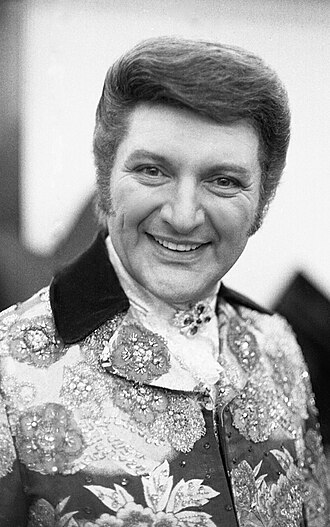
照片:Allan warren,CC BY-SA 3.0,Wikimedia Commons
列勃拉斯
- 生卒
- 1919 – 1987
- 国家/地区
- 美国
- 外文名
- Liberace
- 流派
- 古典音乐
介绍
这个词条没有中文维基百科条目,下面是英文维基百科的原文。
Władziu Valentino Liberace (May 16, 1919 – February 4, 1987) was an American pianist, singer, and actor. He was born in Wisconsin to parents of Italian and Polish origin and enjoyed a career spanning four decades of concerts, recordings, television, motion pictures, and endorsements. At the height of his fame, from the 1950s to 1970s, he was the highest-paid entertainer in the world, with established concert residencies in Las Vegas and an international touring schedule.
Liberace became popular with general audiences through performances that included showmanship and elaborate costumes and choreography. Critical reception was mixed, with some believing his playing was flashy but lacked depth.
In 1959 Liberace successfully sued the Daily Mirror for libel after they published an article implying he was homosexual (which was criminalized at the time). Later, in 1982, he was sued by his lover and chauffeur, Scott Thorson, for palimony. He continued to deny he was homosexual, and died of AIDS-related cytomegalovirus pneumonia in 1987.
Early life and education
Władziu Valentino Liberace (known as Lee to his friends and Walter to family) was born on May 16, 1919, in West Allis, Wisconsin, a suburb of Milwaukee. His grandfather Valentino Liberace (1836–1909) was a casket maker from Formia in Central Italy, where his father, musician Salvatore ("Sam") Liberace (1885–1977), was born. His mother, Frances Zuchowski (1891–1980), was born in Menasha, Wisconsin, and was of Polish descent. Liberace had an identical twin who died at birth. He had three surviving siblings: a brother George (who was a violinist), a sister Angelina, and younger brother Rudy (Rudolph Valentino Liberace, named after the actor due to his mother's interest in show business).
Liberace's father played the French horn in bands and cinemas, and often worked as a factory worker or laborer. While Sam encouraged music in his family, his wife Frances, despite having been a concert pianist before her marriage, believed music lessons and a record-player to be unaffordable luxuries. This disagreement caused family disputes. Liberace later said, "My dad's love and respect for music created in him a deep determination to give as his legacy to the world, a family of musicians dedicated to the advancement of the art."
Liberace began playing the piano at age four. While Sam took his children to concerts to further expose them to music, he was a taskmaster demanding high standards from the children in both practice and performance. Liberace's prodigious talent was evident from his early years. By age 7, he was capable of memorizing difficult pieces. He studied the technique of Polish pianist Ignacy Jan Paderewski. Aged eight, he met Paderewski backstage after a concert at the Pabst Theater in Milwaukee. "I was intoxicated by the joy I got from the great virtuoso's playing", Liberace said later. "My dreams were filled with fantasies of following his footsteps...Inspired and fired with ambition, I began to practice with a fervour that made my previous interest in the piano look like neglect." Paderewski later became a family friend as well as Liberace's mentor, to whom the protégé never missed any opportunities to pay tribute.
The Depression was financially hard on the Liberace family. In childhood, Liberace suffered from a speech impediment; as a teen, he was taunted by neighborhood children who mocked him for his effeminate personality, his avoidance of sports, and his fondness for cooking and the piano. Liberace concentrated on his piano playing with the help of music teacher Florence Kelly, who oversaw Liberace's musical development for ten years. He gained experience playing popular music in theaters, on local radio, and for dancing classes, clubs, and weddings.
In 1934, he played jazz piano with a school group named The Mixers and later with other groups. Liberace performed in cabarets and strip clubs; although Sam and Frances disapproved, their son was earning a living during hard times. For a while, Liberace adopted the stage name Walter Busterkeys. He showed an interest in draftsmanship, design, and painting, and he became a fastidious dresser and a follower of fashion. By this time, he was displaying a penchant for turning eccentricities into attention-getting practices, and he earned popularity at school despite some making him an object of ridicule.
Career
Early career
A participant in a formal classical music competition in 1937, Liberace was praised for his "flair and showmanship". At the end of a traditional classical concert in La Crosse, Wisconsin, in 1939, Liberace played his first requested encore, the popular comedy song "Three Little Fishies". He later stated that he played the popular tune in the styles of several different classical composers. The 19-year-old played with the Chicago Symphony Orchestra on January 15, 1940, at the Pabst Theater in Milwaukee, performing Liszt's Second Piano Concerto under the baton of Hans Lange, for which he received strong reviews. He also toured in the Midwest.
正文摘自英文维基百科「Liberace」,按 CC BY-SA 4.0 使用;删去了参考文献、外部链接、表格和图片;篇幅所限只节选了前面一部分,全文见原条目。
资料卡
- 本名
- Władziu Valentino Liberace
- 艺名 / 别名
- Liberace
- 出生
- 1919 年 5 月 16 日
- 出生地
- 西艾利斯
- 去世
- 1987 年 2 月 4 日
- 去世地
- 棕榈泉
- 国籍
- 美国
- 活跃起始
- 1936 年
- 活跃结束
- 1986 年
- 职业
- 钢琴家、音乐家、歌手、作家、自传作者、电影演员、演员、电视演员、艺术家
- 乐器
- 钢琴、人声
- 流派
- 古典音乐
- 唱片公司
- 哥伦比亚唱片、Dot唱片公司
- 使用语言
- 英语
- 获奖
- star on Hollywood Walk of Fame
- 官方网站
- liberace.org
资料来自 Wikidata Q347528(CC0)。
本站收录的歌(1)
- 奔放的旋律1965
风格、年代相近的艺人
- Todd Duncan美国 · 1903–1998 · 歌剧