 乐单
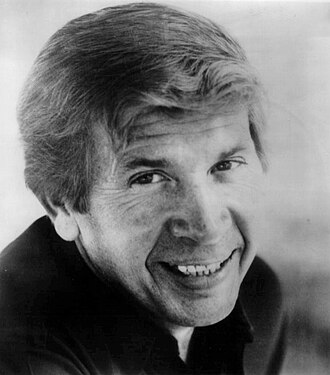
照片:Warner Brothers Records.,Public domain,Wikimedia Commons
巴克·欧文斯
- 生卒
- 1929 – 2006
- 国家/地区
- 美国
- 外文名
- Buck Owens
介绍
这个词条没有中文维基百科条目,下面是英文维基百科的原文。
Alvis Edgar "Buck" Owens Jr. (August 12, 1929 – March 25, 2006) was an American musician, singer, and songwriter. He was the frontman for The Buckaroos, which had 21 No. 1 hits on the Billboard country music chart. He pioneered what came to be called the Bakersfield sound, named in honor of Bakersfield, California, Owens's adopted home and the city from which he drew inspiration for what he preferred to call "American music".
While the Buckaroos originally featured a fiddle and retained pedal steel guitar into the 1970s, their sound on records and onstage was always more stripped-down and elemental. The band's signature style was based on simple story lines, infectious choruses, a twangy electric guitar, an insistent rhythm supplied by a prominent drum track, and high, two-part vocal harmonies featuring Owens and his guitarist Don Rich.
From 1969 to 1986, Owens co-hosted the popular CBS television variety show Hee Haw with Roy Clark (syndicated beginning in 1971). According to Owens's son Buddy Alan, the accidental 1974 death of Don Rich, his closest friend, devastated him for years and impaired his creative efforts until he mounted a comeback in the late 1980s.
Owens is a member of both the Country Music Hall of Fame and Nashville Songwriters Hall of Fame.
Biography
Owens was born August 12, 1929 on a farm in Sherman, Texas, United States, to Alvis Edgar Owens Sr. and Maicie Azel (née Ellington) Owens.
In the biography About Buck., Rich Kienzle writes: "'Buck' was a donkey on the Owens farm." "When Alvis Jr. was three or four years old, he walked into the house and announced that his name also was 'Buck'. That was fine with the family, and the boy's name became 'Buck' from then on." He attended public school for grades 1–3 in Garland, Texas.
Owens's family moved to Mesa, Arizona, in 1937 during the Dust Bowl and Great Depression. While attending school in Arizona, Owens found that while he disliked formal schoolwork, he could often satisfy class requirements by singing or performing in school plays. As a result, he began to take part in such activities whenever he could.
Early career
A self-taught musician and singer, Owens became proficient on guitar, mandolin, horns, and drums. When he obtained his first electric steel guitar, he taught himself to play it after his father adapted an old radio into an amplifier. Owens quit school in the ninth grade to help work on his father's farm and pursue a music career. In 1945, he co-hosted a radio show called Buck and Britt. Co-host Theryl Ray Britten and Owens also played at local bars, where owners usually allowed them and a third member of their band to pass the hat during a show and keep 10% of the take. They eventually became the resident musicians at a Phoenix bar called the Romo Buffet.
In the late 1940s, Owens became a truck driver, a job which took him through the San Joaquin Valley of California, where he first experienced and was impressed by the town of Bakersfield. He and his first wife eventually settled there in 1951. Soon, Owens was frequently traveling to Hollywood for session recording jobs at Capitol Records, playing backup for Tennessee Ernie Ford, Wanda Jackson, Tommy Collins, Tommy Duncan, and many others.
Using the pseudonym "Corky Jones" to prevent the recording of a rock 'n' roll tune from hurting his aspiring Country Music career, Owens recorded a rockabilly record called "Hot Dog" for the Pep label. Some time in the 1950s he lived with his second wife and children in Fife, Washington, where he sang with the Dusty Rhodes band.
In 1958 Owens met Don Rich in Steve's Gay 90s Restaurant in South Tacoma, Washington. Owens had observed one of Rich's shows and immediately approached him about collaborating, after which Rich began playing fiddle with Owens at local venues. They were featured on the weekly BAR-K Jamboree on KTNT-TV 11. In 1959, Owens's career took off when his song "Second Fiddle" hit No. 24 on the Billboard country chart. Soon after, "Under Your Spell Again" made it to No. 4 on the charts and Capitol Records wanted Owens to return to Bakersfield, California.
Following their success, Owens tried unsuccessfully to convince Rich to accompany him to Bakersfield. Instead, Rich opted to go to become a music teacher at Centralia College. While there, he tutored on the side but continued playing local venues. In December 1960, however, he left to rejoin Owens in Bakersfield.
"Above and Beyond" hit No. 3. On April 2, 1960, and Owens performed the song on ABC-TV's Ozark Jubilee.
正文摘自英文维基百科「Buck Owens」,按 CC BY-SA 4.0 使用;删去了参考文献、外部链接、表格和图片;篇幅所限只节选了前面一部分,全文见原条目。
资料卡
- 本名
- Alvis Edgar Owens Jr.
- 艺名 / 别名
- Buck Owens、Corky Jones
- 出生
- 1929 年 8 月 12 日
- 出生地
- 谢尔曼
- 去世
- 2006 年 3 月 25 日
- 去世地
- 贝克斯菲尔德
- 国籍
- 美国
- 活跃起始
- 1945 年
- 职业
- country singer、创作歌手、吉他手、作曲家、录音艺术家、歌手、电影制片人、country musician、乐队领队
- 乐器
- 吉他、人声
- 唱片公司
- Capitol唱片、Sundazed Music
- 所属团体
- Buck Owens & His Buckaroos
- 使用语言
- 英语
- 获奖
- 加利福尼亚名人堂(2015)、star on Hollywood Walk of Fame
- 官方网站
- buckowens.com
资料来自 Wikidata Q712353(CC0)。
曲库里的其他专辑(6)
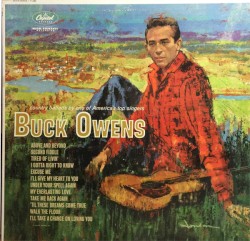
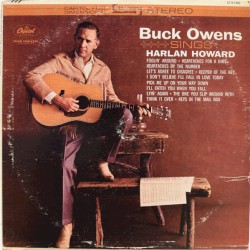
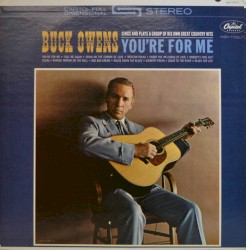
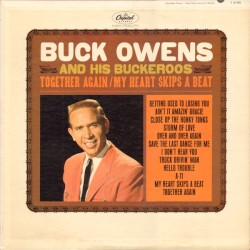
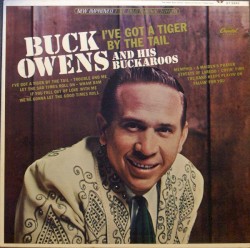
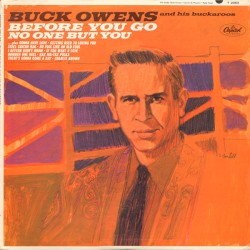
完整作品表见 MusicBrainz。
有关联的艺人
成员、所属团体、受到的影响,来自 Wikidata。