乐单
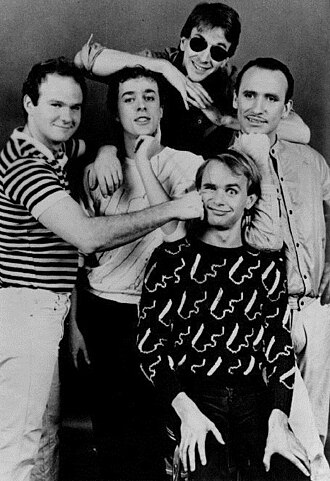
照片:MTV,Public domain,Wikimedia Commons
介绍
这个词条没有中文维基百科条目,下面是英文维基百科的原文。
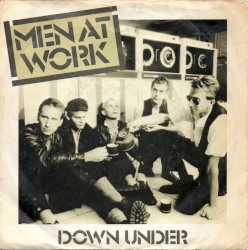
Men at Work are an Australian rock band formed in Melbourne in 1979. They were best known for breakthrough hits such as "Down Under", "Who Can It Be Now?", "Be Good Johnny", "Overkill", "It's a Mistake" and "High Wire". The founding member and frontman is Colin Hay, who performs on lead vocals and guitar. After playing as an acoustic duo with Ron Strykert from 1978 to 1979, Hay formed the group with Strykert playing bass guitar and Jerry Speiser on drums. They were soon joined by Greg Ham on flute, saxophone and keyboards and John Rees on bass guitar, with Strykert switching back to lead guitar. The group were managed by Russell Depeller, a friend of Hay whom he met at La Trobe University. This line-up achieved national and international success during the early to mid-1980s.
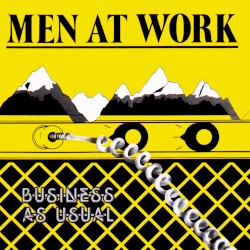
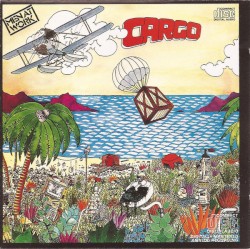
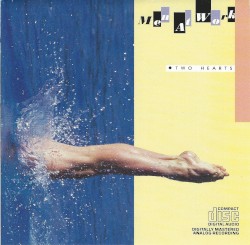
In January 1983, they were the first Australian artists to have a simultaneous No. 1 album and No. 1 single on the United States Billboard charts: Business as Usual (released on 9 November 1981) and "Down Under" (1981), respectively. With the same works, they achieved the distinction of a simultaneous No. 1 album and No. 1 single on the Australian, New Zealand, and United Kingdom charts. Their second album Cargo (2 May 1983) was No. 1 in Australia, No. 2 in New Zealand, No. 3 in the US, and No. 8 in the UK. Their third album Two Hearts (3 April 1985) reached the top 20 in Australia and top 50 in the US.
They won the Grammy Award for Best New Artist in 1983, were inducted into the ARIA Hall of Fame in 1994 and have sold over 30 million albums worldwide. In May 2001, "Down Under" was listed at No. 4 on the APRA Top 30 Australian songs and Business as Usual appeared in the book 100 Best Australian Albums (October 2010).
In 1984, Speiser and Rees were asked to leave the group, leaving Hay, Ham and Strykert as a trio accompanied by session musicians. During the recording of the Two Hearts album, Strykert decided to leave. Soon after the 1985 release of Two Hearts, Ham left also, leaving Hay as the sole remaining member. Hay elected to work as a solo artist shortly thereafter in early 1986 and the Men at Work name was retired.
From 1996 until 2002, Hay and Ham revived the name and toured the world as Men at Work accompanied by new group members. On 19 April 2012, Ham was found dead at his home from an apparent heart attack.
In 2019, Hay once again revived the Men at Work moniker and began touring with a new lineup.
History
Origins
The nucleus of Men at Work formed in Melbourne around June 1979 with Colin Hay on lead vocals and guitar, Ron Strykert on bass guitar and Jerry Speiser on drums. They were soon joined by Greg Ham on flute, sax and keyboards and then John Rees on bass guitar, with Strykert switching to lead guitar. Hay had immigrated to Australia in 1967 from Scotland with his family. In 1978, he had formed an acoustic duo with Strykert, which expanded by mid-1979 with the addition of Speiser. Around this time as a side project, keyboardist Greg Sneddon (ex-Alroy Band), a former bandmate of Jerry Speiser, together with Speiser, Hay and Strykert, performed and recorded the music to Riff Raff, a low budget stage musical, on which Sneddon had worked.
Hay asked Greg Ham to join the group, but Ham hesitated as he was finishing his music degree. Ultimately, he decided to join the band in October 1979. John Rees, a friend of Speiser, joined soon after. The name "Men At Work" was thrown into the hat by Hay, and was seconded by Ron Strykert, when a name was required to put on the blackboard outside The Cricketer's Arms Hotel, Richmond. The band built a "grass roots" reputation as a pub rock band. In 1980, the group issued their debut single, "Keypunch Operator" backed by "Down Under", with both tracks co-written by Hay and Strykert. It was self-financed and appeared on their own independent M. A. W. label. Australian musicologist Ian McFarlane felt the A-side was "a fast-paced country-styled rocker with a clean sound and quirky rhythm". Despite not appearing in the top 100 on the Australian Kent Music Report Singles Chart, by the end of that year the group had "grown in stature to become the most in-demand and highly paid, unsigned band of the year".
In July 1980, the band performed at the second "Rock Against Racism" concert at the Northcote Town Hall in Northcote, Melbourne, along with bands including the Aboriginal band No Fixed Address and Ross Hannaford's Lucky Dog, and feminist circus troupe Wimmin's Circus.
International success – Business as Usual and Cargo (1981–1983)
Early in 1981, Men at Work signed with CBS Records, the Australian branch of CBS Records International, (which became Sony Music) on the recommendation of Peter Karpin, the label's A&R person. The group's first single with CBS Records in Australia, "Who Can It Be Now?", was released in June 1981. It reached No. 2 and remained in the chart for 24 weeks. It had been produced by United States–based Peter McIan, who was also working on their debut album, Business as Usual.
正文摘自英文维基百科「Men at Work」,按 CC BY-SA 4.0 使用;删去了参考文献、外部链接、表格和图片;篇幅所限只节选了前面一部分,全文见原条目。
资料卡
- 成立
- 1978 年
- 成立于
- 墨尔本
- 来自
- 澳大利亚
- 活跃起始
- 1979 年
- 流派
- 新浪潮、流行摇滚、雷鬼音乐、摇滚乐
- 唱片公司
- 哥伦比亚唱片、史诗唱片、索尼音乐、贝塔斯曼音乐集团
- 所属团体
- Category:Men at Work members
- 获奖
- 格莱美奖最佳新人(1983)
- 官方网站
- menatwork.com.au
资料来自 Wikidata Q831111(CC0)。
曲库里的其他专辑(4)
完整作品表见 MusicBrainz。