 乐单

照片:Dunkelkammerpictures,CC BY-SA 3.0,Wikimedia Commons
The Magic Band
- 成立 / 解散
- 1965 –
- 国家/地区
- 美国
- 流派
- 另类摇滚
介绍
这个词条没有中文维基百科条目,下面是英文维基百科的原文。
The Magic Band was the backing band of American singer, songwriter and multi-instrumentalist Captain Beefheart between 1967 and 1982. The band was formed by guitarist Alex St. Clair with Beefheart as the lead singer; eventually, they morphed into a backing band for him. The rotating lineup featured dozens of performers, many of whom became known by nicknames given to them by Beefheart. In 1974, several members left to form the short-lived group Mallard. In 2003, the Magic Band reformed without Beefheart, who died in 2010, and continued until 2017.
Origins
The members of the original Magic Band had come together in 1964. At this time Don Van Vliet (later 'Captain Beefheart') was the lead singer of the group, which had been brought together by guitarist and former classmate Alex St. Clair. As in many emerging groups in California at the time, there were elements of psychedelia and the foundations of contemporary hippie counterculture. In this early incarnation they were a blues-rock outfit.
The group was promoted as "Captain Beefheart and his Magic Band", on the premise that Captain Beefheart had "magic powers" and, upon drinking a Pepsi, could summon up "His Magic Band" to appear and perform behind him. The strands of this logic emanated from Vliet's Beefheart persona having been "written in" as a character in a "teenage operetta" that friend Frank Zappa had formulated, along with Van Vliet's renowned "Pepsi moods" with his mother Willie Sue and his generally spoilt teenage demeanor. The name "His Magic Band" changed to "the Magic Band" in 1972.
The group played numerous car-club dances and juke joint gigs, and won the Battle of the Bands at the Teenage Fair, an annual event held at the Hollywood Palladium in the 1960s. In late 1965, with Leonard Grant as their manager, the group landed a contract to record two singles with A&M Records. Musical relationships had also been struck with members of Rising Sons, who would later feature in the band's recordings. Working with young producer David Gates opened up horizons for Vliet's skills as a poet-cum-lyricist, with his "Who Do You Think You're Fooling" on the flip side of the band's first single, a cover of the Ellas McDaniel/Willie Dixon-penned hit "Diddy Wah Diddy".
Fate and circumstance, not for the first time, would befall the band's success upon its release – which coincided with a singles cover of the same song by the Remains. The A&M deal also brought some contention between members of the band, who were torn between being an experimental "pop" group and a purist blues band.
The initial line-up of the Magic Band that entered the studio for the A&M recordings was not that which emerged by the second release, "Moonchild", also backed by a Vliet-penned number, "Frying Pan". The original Magic Band was primarily a rhythm and blues band, led by St. Clair, along with Doug Moon (guitar), Jerry Handley (bass), and Vic Mortenson (drums), the last being rotated with and finally replaced by Paul "P.G." Blakely. For the first A&M recording, Mortenson had been called up for active service and St. Clair stood in on drums, with a recently recruited Richard Hepner taking up the guitar role. By the time the single was aired on a pop television show, P.G. Blakely was back in the drum seat. He then left for a career in television and was replaced by John French by the time the band cut their first album, as the first release on the new Buddah Records label.
A 12-inch vinyl 45 rpm mono EP/mono mini-cassette tape was released in 1987, with the four tracks of the two singles, plus "Here I Am, I Always Am" as a fifth previously unreleased song. This release was titled The Legendary A&M Sessions, with a red-marbled cover and (later) members Moon, Blakely, Vliet, St. Clair and Handley seated in a "temperance dance band" photo-pose.
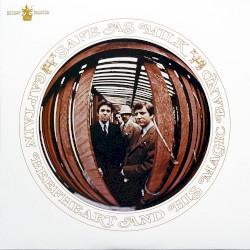
Personnel in the Magic Band for Beefheart's first album, Safe as Milk, were Alex St. Clair, Jerry Handley and John French. Earlier meetings with the Rising Sons had secured them the guitar and arranging skills of Ry Cooder, which also brought about input from Taj Mahal on percussion, and guitar work from Cooder's brother-in-law Russ Titelman. Further guests to this line-up included Milt Holland on percussion and the all-important and controversial theremin work on "Electricity" by Samuel Hoffman. It was perhaps this track, above the others, which caused A&M to view the band as "unsuitable" for their label with music that was seen as weird and too psychedelic for popular consumption. A&M dropped them and the album was recorded for Buddah Records, with the band signed to Kama Sutra Records.
正文摘自英文维基百科「The Magic Band」,按 CC BY-SA 4.0 使用;删去了参考文献、外部链接、表格和图片;篇幅所限只节选了前面一部分,全文见原条目。
资料卡
- 成立
- 1965 年
- 来自
- 美国
- 活跃起始
- 1965 年
- 流派
- 另类摇滚
资料来自 Wikidata Q820040(CC0)。
榜单和奖项里的专辑(1)
有关联的艺人
成员、所属团体、受到的影响,来自 Wikidata。