 乐单
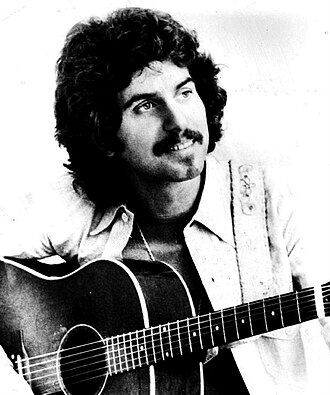
照片:David Forest Company (management)/Epic Records,Public domain,Wikimedia Commons
强尼·瑞物尔斯
- 生卒
- 1942 –
- 国家/地区
- 美国
- 外文名
- Johnny Rivers
- 流派
- 摇滚乐
介绍
这个词条没有中文维基百科条目,下面是英文维基百科的原文。
Johnny Rivers (born John Henry Ramistella; November 7, 1942) is an American retired musician. He achieved commercial success and popularity throughout the 1960s and 1970s as a singer and guitarist, characterized as a versatile and influential artist. Rivers is best known for his 1960s output, having popularized the mid-1960s discotheque scene through his live rock and roll recordings at the Los Angeles nightclub Whisky a Go Go, and later shifting to a more orchestral, soul-oriented sound during the latter half of the decade. These developments were reflected by his most notable string of hit singles between 1964 and 1968, many of them covers. They include "Memphis", "Mountain of Love", "The Seventh Son", "Secret Agent Man", "Poor Side of Town", "Baby I Need Your Lovin'", and "Summer Rain". Rivers had a total of nine top-ten hits and 17 top-forty hits on the US charts from 1964 to 1977.
Life and career
Early years
John Henry Ramistella was born in New York City and moved to Baton Rouge, Louisiana when he was five. Influenced by the distinctive Louisiana musical style, Rivers began playing guitar at age eight, taught by his father and uncle. While still in junior high school, he started sitting in with a band called the Rockets, led by Dick Holler, who later wrote several hit songs, including "Abraham, Martin and John" and the novelty song "Snoopy vs. the Red Baron".
The younger Ramistella formed his own band, the Spades, and made his first record at 14 while he was a student at Baton Rouge High School. Some of their music was recorded on the Suede label as early as 1956.
On a trip to New York City in 1958, Ramistella met DJ-promoter Alan Freed, who suggested the name change to "Johnny Rivers" referencing the Mississippi River that flows through Baton Rouge. Freed also helped the artist then renamed Johnny Rivers to get him signed to recording contracts with the Gone record label. Between March 1958 and March 1959, Johnny Rivers released three records, including "Baby Come Back" (a non-Christmas version of Elvis Presley's "Santa Bring My Baby Back (To Me)"), none of which sold well.
Rivers returned to Baton Rouge in 1959 and began touring the American South alongside comedian Brother Dave Gardner. One evening in Birmingham, Alabama, Rivers met Audrey Williams, Hank Williams's first wife. She encouraged Rivers to move to Nashville, Tennessee, where he found work as a songwriter and demo singer. Rivers also worked alongside Roger Miller. By this time, Rivers had decided he would never make it as a singer and songwriting became his priority.
1960s
In 1958, Rivers met fellow Louisianan James Burton, a guitarist in a band led by Ricky Nelson. Burton later recommended one of Rivers's songs, "I'll Make Believe," to Nelson, who recorded it. They met in Los Angeles in 1961, where Rivers subsequently found work as a songwriter and studio musician. His big break came in 1963 when he filled in for a jazz combo at Gazzarri's, a nightclub in Hollywood where his instant popularity drew large crowds.
In 1964, Elmer Valentine gave Rivers a one-year contract to open at the Whisky a Go Go on Sunset Strip in West Hollywood. The Whisky had been in business just three days when the Beatles song "I Want to Hold Your Hand" entered the Billboard Hot 100. The subsequent British Invasion knocked almost every American artist off the top of the music sales charts, but Rivers was so popular that record producer Lou Adler decided to issue a 10-song album on the Imperial label Johnny Rivers Live at the Whisky a Go Go, which reached No. 12 on the Billboard album chart. Rivers later recalled that his most requested live song back then was "Memphis", which reached No. 2 on Cash Box on July 4–11, 1964 and also on the Hot 100 on July 11–18, 1964. It sold over one million copies and was awarded a gold disc. According to Elvis Presley's friend and employee, Alan Fortas, Presley played a test pressing of "Memphis" for Rivers that Presley had made but not released. Rivers was impressed and added it to his live act and, much to Presley's chagrin, recorded and released his live cover version before Presley’s cover. Rivers's version far outsold the Chuck Berry original from August 1959, which stalled at No. 87 in the US.
Rivers continued to record mostly live performances throughout 1964 and 1965, including Go-Go-style records with songs featuring folk music and blues rock influences including "Maybellene" (another Berry cover), after which came "Mountain of Love", "Midnight Special", "Seventh Son" (written by Willie Dixon) plus Pete Seeger's" Where Have All the Flowers Gone?", all of which were hits.
正文摘自英文维基百科「Johnny Rivers」,按 CC BY-SA 4.0 使用;删去了参考文献、外部链接、表格和图片;篇幅所限只节选了前面一部分,全文见原条目。
资料卡
- 出生
- 1942 年 11 月 7 日
- 出生地
- 纽约
- 国籍
- 美国
- 活跃起始
- 1956 年
- 职业
- 歌手、词曲作家、吉他手、音乐制作人、人声艺术家、音乐家
- 乐器
- 吉他、人声
- 流派
- 摇滚乐
- 唱片公司
- 帝国唱片、大西洋唱片、Big Tree Records、Cub Records、史诗唱片、时代唱片公司
- 官方网站
- johnnyrivers.com
资料来自 Wikidata Q1702399(CC0)。
本站收录的歌(1)
曲库里的其他专辑(1)
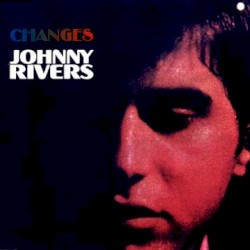
完整作品表见 MusicBrainz。