 乐单

照片:Stuart Sevastos,CC BY 2.0,Wikimedia Commons
The Triffids
- 成立 / 解散
- 1976 –
- 国家/地区
- 澳大利亚
- 流派
- 另类摇滚
- 成员
- David McComb、Jill Birt、Martyn P. Casey、Graham Lee、Alsy MacDonald、Alsy MacDonald、Robert McComb
介绍
这个词条没有中文维基百科条目,下面是英文维基百科的原文。
The Triffids were an Australian alternative rock and pop band, formed in Perth, Western Australia, in 1978, with David McComb as singer-songwriter, guitarist, bass guitarist and keyboardist. They achieved some success in Australia, but greater success in the UK and Scandinavia in the 1980s before disbanding in 1989. Their best-known songs include "Wide Open Road" (February 1986) and "Bury Me Deep in Love" (October 1987). SBS television featured their 1986 album, Born Sandy Devotional, on the Great Australian Albums series in 2007, and in 2010 it ranked 5th in the book The 100 Best Australian Albums by Toby Creswell, Craig Mathieson and John O'Donnell.
According to music historian Ian McFarlane, "The Triffids remain one of Australia's best-loved, post-punk groups ... McComb ... infused his melancholy songs with stark yet beautiful and uniquely Australian imagery. Few songwriters managed to capture the feeling of isolation and fatalistic sense of despair of the Australian countryside."
History
Formation and early years (1976–1981)
In 1976 in Perth, high school students David McComb on acoustic and bass guitars and vocals and Alan "Alsy" MacDonald on drums and vocals, formed Dalsy as a multimedia project, making music, books and photographs. They wrote and performed songs with Phil Kakulas on guitars and vocals (all three later in the Blackeyed Susans), then soon became Blök Musik and Logic (for a day). In May 1978, they became the Triffids, taking their name from the post-apocalyptic novel by John Wyndham, The Day of the Triffids. They were soon joined by Andrew McGowan on guitar and Julian Douglas-Smith on piano. When Byron Sinclair joined on bass guitar in September, McComb switched to rhythm guitar. The Triffids began partly in response to the punk rock movement. Writing in his diary as a teenager, McComb traced the band's emergence in Perth:
On the night of 27 November 1976, a tape was made by Alsy MacDonald, playing a single toy drum, and Dave McComb playing acoustic guitar. The multimedia group 'Dalsy' had come into being. Dalsy went on to make several remarkable tapes (mainly of original material): The Loft Tapes, Rock 'n' Roll Accountancy, Live at Ding Dongs, Bored Kids, Domestic Cosmos, People Are Strange Dalsy Are Stranger, Steve's and the seminal punk work, Pale Horse Have a Fit ... Dalsy did paintings, sculptures and poetry, and wrote a book named "Lunch". They were tinny and quirky, obsessive and manic, versatile and productive. They were also immensely unpopular ... The members of Dalsy grew to hate their audience. They still do, and this hate is an integral part of their music. Dalsy split up towards the end of 1977 ... They launched into 1978 as Blok Musik, with their famous Blok Musik tape ... In April, they played at the Leederville Town Hall Punk Fest, alongside Perth's punk rock contingent but, as usual, no one danced. After that they went home and metamorphosised into Logic. Within a day they changed their minds, and metamorphosised into the Triffids.
Between 1978 and 1981, McComb wrote over 100 original songs and the Triffids had recorded and independently released six cassette tapes, simply called, 1st (1978), 2nd (1978), 3rd (1979), 4th (1979), Tape 5 (1980) and Sixth (1981) (see List of The Triffids Cassettes). By 1979, Kakulas and Sinclair had left and were replaced by David's older brother, Robert McComb on violin and guitar, and Will Akers on bass guitar, and in 1980 Margaret Gillard joined on keyboards. At year's end, the band won a song competition run by the Western Australian Institute of Technology (now Curtin University) Student Guild's radio show on 6NR (now Curtin FM), and in July 1981 they released their first single, "Stand Up", on the Shake Some Action label. MacDonald had briefly left the band for two months, and the single was recorded with Mark Peters as drummer.
Early recordings (1982–1984)
Gillard and Akers left in February 1982 and were replaced by Jill Yates on keyboards and a returning Sinclair. April saw the release of Reverie, a four-track EP on Resonant Records. Around this time, due to the small population/market in Perth, the band started the long journey driving from Perth to Sydney, then Melbourne (and back again) to play shows, do some recording and to live for large periods of time, often in quite squalid conditions. By mid-year Sinclair had left again, and Martyn P. Casey joined the band on bass guitar in September 1982. For $150 a night, The Triffids' services as a support act were procured by The Reels, The Sunnyboys, The Church, Hunters & Collectors or Uncanny X-Men.
正文摘自英文维基百科「The Triffids」,按 CC BY-SA 4.0 使用;删去了参考文献、外部链接、表格和图片;篇幅所限只节选了前面一部分,全文见原条目。
资料卡
- 成立
- 1976 年
- 成立于
- 珀斯
- 来自
- 澳大利亚
- 活跃起始
- 1979 年
- 流派
- 另类摇滚
- 唱片公司
- 男同唱片
- 成员
- David McComb(1978–1989)、Jill Birt(1983–1989)、Martyn P. Casey(1982–1989)、Graham Lee(1985–1989)、Alsy MacDonald(1978–1980)、Alsy MacDonald(1982–1989)、Robert McComb(1979–1989)
- 官方网站
- thetriffids.com
资料来自 Wikidata Q2094855(CC0)。
榜单和奖项里的专辑(1)
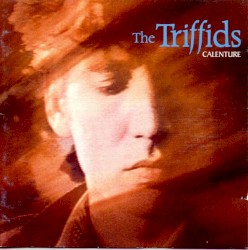
曲库里的其他专辑(4)
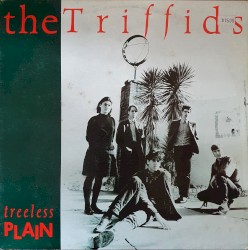
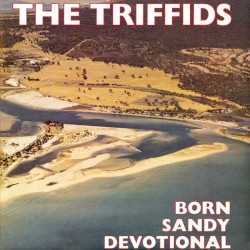
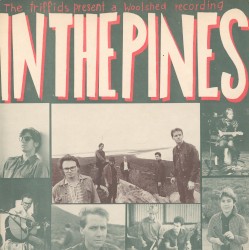
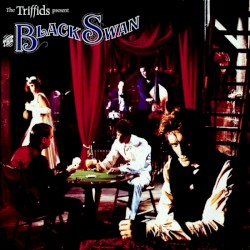
完整作品表见 MusicBrainz。