 乐单
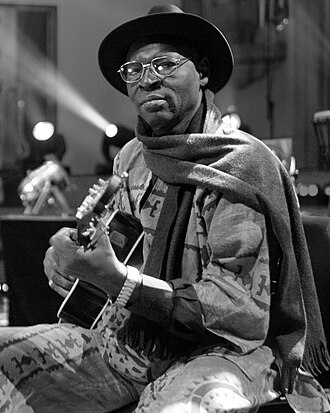
照片:Tagles,Public domain,Wikimedia Commons
阿里·法可·图日
- 生卒
- 1939 – 2006
- 国家/地区
- 马里共和国
- 外文名
- Ali Farka Touré
- 流派
- 布鲁斯
介绍
这个词条没有中文维基百科条目,下面是英文维基百科的原文。
Ali Ibrahim "Ali Farka" Touré (31 October 1939 – 6 March 2006) was a Malian singer and multi-instrumentalist, and one of the African continent's most internationally renowned musicians. His music blends traditional Malian music and its derivative, African-American blues, and is considered a pioneer of African desert blues. Touré was ranked number 76 on Rolling Stone's list of "The 100 Greatest Guitarists of All Time" and number 37 on Spin magazine's "100 Greatest Guitarists of All Time".
Some years after his death, a group of musicians playing in his style performed as the Ali Farka Touré Allstars (2012), and later the Ali Farka Touré Band (formed 2014).
Early life
Touré was born in 1939 in the village of Kanau, on the banks of the Niger River in Gourma-Rharous Cercle in the northwestern Malian region of Tombouctou. His family belonged to the Songhai community and moved to the nearby village of Niafunké when he was still an infant. His father died serving in the French Army in 1940. He was the tenth son of his mother but the only one to survive past infancy. "The name I was given was Ali Ibrahim, but it's a custom in Africa to give a child a strange nickname if you have had other children who have died," Touré was quoted as saying in a biography on his record label, World Circuit Records. His nickname, "Farka", chosen by his parents, means "donkey", an animal admired for its tenacity and stubbornness: "Let me make one thing clear. I'm the donkey that nobody climbs on!"
Early musical influences
In Malian society, musical performance was the duty of a lower caste known as the griot. Since Touré was from the "noble" caste, he was forbidden to play any musical instruments. He disregarded this and secretly built a monochord from a tin can and played it with his friends.
Having worked various jobs as a young adult including as a chauffeur and an ambulance boatman, it was a performance by the national ballet of Guinea in 1956 that would influence Touré to pursue a career in music. It was the guitar playing during this performance that made Ali determined to learn the instrument.
During the 1960s, Mali hosted and held national talent competitions aimed at bringing together the various diverse groups of people that lived within the newly independent nation, such as the Bambara in the south, the nomadic Tuareg in the North and the Fula and Songhai in the Sahel. It was at these competitions that Touré soaked up the music of all these different cultures and learned to sing in seven languages.
Touré had great success at these competitions and ended up heading to Bulgaria to represent Mali internationally. It was during this trip that he bought his first guitar, and it was also the first time that he heard the music that was being produced by African Americans in the United States during the 1960s, of which Touré instantly became a fan. He was particularly fond of the music of John Lee Hooker and has stated that, “The first time I heard John Lee Hooker, I heard his music but I said ‘I don’t understand this, where did they come up with this culture? This is something that belongs to us.”
Although Touré has been described as "The African Bluesman", he insisted that his music was not blues, stated that, “To me blues is a type of soap powder, my music is older than the blues”.
Musical career
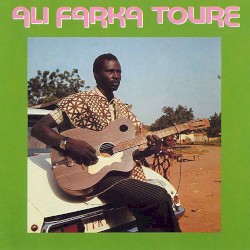
As the first African bluesman to achieve widespread popularity on his home continent, Touré was often known as "the African John Lee Hooker". Musically, the many superpositions of guitars and rhythms in his music were similar to John Lee Hooker's hypnotic blues style. He usually sang in one of several African languages, mostly Songhay, Fulfulde, Tamasheq or Bambara as on his breakthrough album, Ali Farka Touré, which established his reputation in the world music community.
Touré spent the 1970s as a sound engineer at Radio Mali in Bamako. This allowed him the opportunity to use the radio station's recording studio, which at the time was the only recording studio in Mali. Touré sent tapes of his recordings to various record labels in France and eventually ended up releasing a series of albums simply titled Ali Farka Touré in the late 1970s and early '80s.
In 1986, Touré captured the attention of the British market when tracks from one of his albums referred to as ‘the red album’ was played on British radio. British DJ Andy Kershaw discovered "the red album" while in Paris looking for records that were difficult to find in the UK. He recalls how he purchased the album at random from among a pile of others as its cover had stood out to him. Upon listening to it after returning home to North London, Kershaw realised he had found something special. When he played a few tracks during his segment on BBC Radio One, it provoked an extraordinary reaction from his listeners.
正文摘自英文维基百科「Ali Farka Touré」,按 CC BY-SA 4.0 使用;删去了参考文献、外部链接、表格和图片;篇幅所限只节选了前面一部分,全文见原条目。
资料卡
- 出生
- 1939 年 10 月 31 日
- 出生地
- 通布图
- 去世
- 2006 年 3 月 7 日、2006 年 3 月 6 日
- 去世地
- 巴马科
- 国籍
- 马里共和国
- 活跃起始
- 1976 年
- 职业
- 歌手、农民
- 乐器
- 吉他、人声
- 流派
- 布鲁斯
- 唱片公司
- World Circuit
- 使用语言
- 法语
- 获奖
- 格莱美奖最佳环球音乐专辑(1995)、Grammy Award for Best Traditional World Music Album(2006)、Grammy Award for Best Traditional World Music Album(2011)
- 官方网站
- worldcircuit.co.uk/#Ali_Farka_Toure
资料来自 Wikidata Q334947(CC0)。
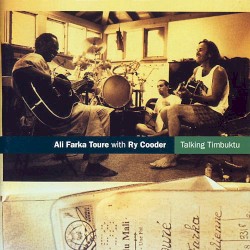
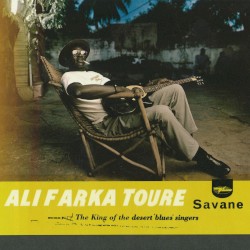
榜单和奖项里的专辑(2)
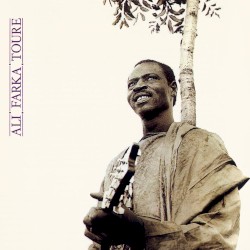
曲库里的其他专辑(8)
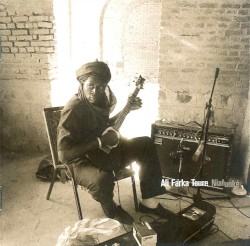
完整作品表见 MusicBrainz。