 乐单
The Dictators
- 成立 / 解散
- 1973 –
- 国家/地区
- 美国
- 流派
- 朋克摇滚、硬式摇滚
介绍
这个词条没有中文维基百科条目,下面是英文维基百科的原文。
The Dictators are an American punk rock band formed in New York City in 1972. Known for their acerbic and provocative approach in their music, the Dictators underwent several changes in their lineups. Its founding members included musicians Andy "Adny" Shernoff (bass, keyboards, vocals), Ross "The Boss" Friedman (lead guitar) and Scott "Top Ten" Kempner (rhythm guitar). Other long-term members have included "Handsome" Dick Manitoba (vocals) and Mark "The Animal" Mendoza (bass). Throughout varying lineups, Shernoff, Friedman and Kempner have been constant members.
With albums like The Dictators Go Girl Crazy!, Manifest Destiny and Bloodbrothers, the Dictators did not initially have any commercial success outside the punk rock scene in the 1970s and courted some controversies, but later grew to be respected as one of the pioneers in punk rock with a strong cult following. Critic John Dougan said that they were "one of the finest and most influential proto-punk bands to walk the earth."
History
Origins
The band was formed in 1972 by Andy "Adny" Shernoff, who was attending the State University of New York at New Paltz, and Ross "The Boss" Friedman who was playing in a local band called Total Crudd. Scott "Top Ten" Kempner was asked to join, and the trio rented a house in Kerhonkson, New York, where they lived and rehearsed with various drummers.
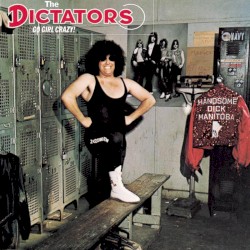
The original recording line-up consisted of vocalist/bassist/songwriter Andy Shernoff, Friedman on lead guitar, Scott Kempner on rhythm guitar, and drummer Stu Boy King. They recorded their 1975 debut album, The Dictators Go Girl Crazy! for Epic Records, produced by manager Sandy Pearlman, and Murray Krugman, both best known for their work with Blue Öyster Cult). Pearlman was also instrumental in crafting the image of the Dictators, where roadie and "secret weapon" Richard Blum, who also joined the lineup of the band, was named Handsome Dick Manitoba. Pearlman also suggested that Friedman use the surname "Funichello", but Friedman disliked it and the name was used once for the album.
The Dictators Go Girl Crazy! sold poorly at the time but is now considered to be a starting point for American punk rock. Entertainment Weekly wrote, "Go Girl Crazy's junk-generation culture and smart-aleck sensibility did provide an essential blueprint for '70s punk. With its TV references and homely vocals, this ground-breaking and long-unavailable album continues to inspire underground groups everywhere." In a 2006 book, The Heebie-Jeebies at CBGB's, Steven Beeber argued that this all-Jewish band was an early musical expression in rock music of the New York sarcasm and toughness found among this alienated population, who significantly contributed to NYC punk rock.
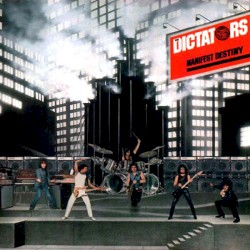
Frustrated by the lack of sales, the band broke up for a few months in late 1975, but reconvened in early 1976, with bassist Mark "The Animal" Mendoza replacing Shernoff and Ritchie Teeter replacing King. After a few months Shernoff was persuaded to return to the group as the group's keyboardist. This line-up soon secured a contract with Asylum Records (at least partly due to the notoriety the group had developed following a well-publicized brawl between Manitoba and singer Jayne County, then billed as Wayne County) and released their second album, Manifest Destiny, in 1977. The album was produced by Pearlman and Krugman with songs written by Shernoff. Andy Shernoff observed the growing fanbase of the band, and employed a commercial sound in Manifest Destiny, stating that it was necessary to not "fuck things up". "Handsome" Dick Manitoba later recalled that in Manifest Destiny, the commercial sound, which he described as "zero punk" and "overproduced" did not reflect what he considered the ethos of the Dictators, "rock and roll snotty". Ross "The Boss" Friedman was more forgiving of Manifest Destiny, describing it as "experimental" and acknowledging that Shernoff went "wild on his pop side": Friedman then reflected on his guitar works in the album and was favorable to some of the songs, such as "Steppin' Out".
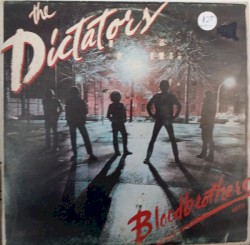
Early in 1978, Mendoza had left the band (soon joining Twisted Sister), and Shernoff had returned to his original position on bass guitar. It was this line-up of Manitoba, Shernoff, Friedman, Kempner, and Teeter which recorded Bloodbrothers (yet again produced by Pearlman and Krugman with songs written by Shernoff). It was the first album to feature Manitoba as the group's vocalist on all the songs, though Bruce Springsteen–a big fan of the group to this day–can be heard counting "1-2-1-2-3-4" during the album's opening track, "Faster and Louder." The album's "Baby, Let's Twist" was a minor hit on a number of East Coast radio stations, but the lack of mainstream success caused the band to split again the following year. Shortly before the split, drummer Mel Anderson had left Twisted Sister and joined The Dictators, replacing Teeter.
正文摘自英文维基百科「The Dictators」,按 CC BY-SA 4.0 使用;删去了参考文献、外部链接、表格和图片;篇幅所限只节选了前面一部分,全文见原条目。
资料卡
- 成立
- 1973 年
- 成立于
- 纽约州、纽约
- 来自
- 美国
- 活跃起始
- 1973 年
- 流派
- 朋克摇滚、硬式摇滚
- 唱片公司
- 史诗唱片
- 官方网站
- thedictators.com
资料来自 Wikidata Q645464(CC0)。
榜单和奖项里的专辑(1)
曲库里的其他专辑(2)
完整作品表见 MusicBrainz。