 乐单
詹姆士·杨西
- 生卒
- 1974 – 2006
- 国家/地区
- 美国
- 外文名
- J Dilla
- 流派
- 嘻哈音乐、灵魂乐、instrumental hip-hop、另类嘻哈
介绍
这个词条没有中文维基百科条目,下面是英文维基百科的原文。
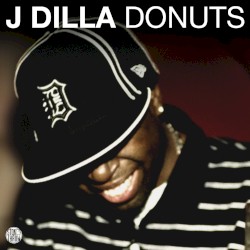
James Dewitt Yancey (February 7, 1974 – February 10, 2006), better known by the stage names J Dilla, Jay Dee, or simply Dilla, was an American record producer, rapper, and composer. He emerged from the mid-1990s underground hip-hop scene in Detroit, Michigan, as a member of the group Slum Village. He was a founding member of the Soulquarians, a musical collective active during the late 1990s and early 2000s. Yancey and Madlib collaborated as the duo Jaylib, releasing the album Champion Sound. Yancey's final album, Donuts, was released three days before his death. He was also known for producing the Pharcyde album Labcabincalifornia.
Yancey died at the age of 32 from a combination of TTP and lupus. Despite a short mainstream career, he is widely considered to be one of the most influential producers in hip-hop and popular music. J Dilla's music raised the artistic level of hip-hop production in Detroit. According to The Guardian, "His affinity for crafting lengthy, melodic loops peppered with breakbeats and vocal samples took instrumental hip-hop into new, more musically complex realms." Yancey's approach to drum programming, often cited as a loose, or "drunk", style that eschews the use of quantization, has been influential on producers and drummers.
Early life
Yancey grew up in Detroit, Michigan. The family lived in a house on the northeast corner of McDougall and Nevada, on the east side of Detroit. Yancey's parents had musical backgrounds; his mother, Maureen "Ma Dukes" Yancey, is a former opera singer and his father, Beverly Dewitt Yancey, was a jazz bassist, and performed Globetrotters half-time shows for several years. Yancey's mother said that he could "match pitch perfect harmony" before he learned how to speak.
Along with a range of other musical genres, Yancey developed a passion for hip-hop music. After transferring from Davis Aerospace Technical High School to Pershing High School, his classmates T3 and Baatin joined him in rap battles; the three later formed the rap group Slum Village. Yancey also took up beat-making using a simple tape deck as the center of his studio. In his teenage years, he "stayed in the basement alone" to train himself to produce beats with his growing record collection.
Career
1992–2000: Early career
In 1992, Yancey met the Detroit musician Amp Fiddler, who let him use his Akai MPC, a music workstation, which he quickly mastered. Fiddler, while playing keyboards with Funkadelic on the 1994 Lollapalooza tour, met Q-Tip of A Tribe Called Quest, a group also in the lineup. Fiddler introduced Q-Tip to Yancey, who gave Q-Tip a Slum Village demo tape. In 1995, Yancey and MC Phat Kat formed 1st Down and became the first Detroit hip-hop group to sign with a major label (Payday Records). The deal ended after one single when the label ended the contract.
In 1995, Yancey recorded the Yester Years EP with 5 Elementz (a group consisting of Proof, Thyme, and Mudd). In 1996, he formed Slum Village and recorded what would become their debut album Fantastic, Vol. 1 at RJ Rice Studios. Upon its release in 1997, the album quickly became popular with fans of Detroit hip-hop. Many journalists compared Slum Village to A Tribe Called Quest. However, Yancey said he felt uncomfortable with the comparison:
It was kinda fucked up [getting that stamp] because people automatically put us in that [Tribe] category. That was actually a category that we didn't actually wanna be in. I thought the music came off like that, but we didn't realize that shit then. I mean, you gotta listen to the lyrics of the shit. Niggas was talking about getting head from bitches. It was like a nigga from Native Tongues never woulda said that shit. I don't know how to say it. It's kinda fucked up because the audience we were trying to give to were actually people we hung around. Me, myself, I hung around regular ass Detroit cats. Not the backpack shit that people kept putting out there like that. I mean, I ain't never carried no goddamn backpack. But like I said, I understand to a certain extent. I guess that's how the beats came off on some smooth type of shit. And at that time, that's when Ruff Ryders [was out] and there was a lot of hard shit on the radio so our thing was we're gonna do exactly what's not on the radio.
By the mid-1990s Yancey had a string of singles and remix projects for artists such as Janet Jackson, the Pharcyde, De La Soul, Busta Rhymes, A Tribe Called Quest as well as Q-Tip solo, and others. Many of these productions were released without Yancey's name attribution, being credited to the Ummah, a production collective composed of him, Q-Tip and Ali Shaheed Muhammad of A Tribe Called Quest, and later Raphael Saadiq of Tony! Toni! Toné!. However, he was given songwriting credit on all of his non-remix productions under the Ummah.
正文摘自英文维基百科「J Dilla」,按 CC BY-SA 4.0 使用;删去了参考文献、外部链接、表格和图片;篇幅所限只节选了前面一部分,全文见原条目。
资料卡
- 艺名 / 别名
- J Dilla
- 出生
- 1974 年 2 月 7 日
- 出生地
- 底特律
- 去世
- 2006 年 2 月 10 日
- 去世地
- 洛杉矶
- 国籍
- 美国
- 活跃起始
- 1993 年
- 活跃结束
- 2006 年
- 职业
- DJ制作人、说唱歌手、唱片骑师、音乐制作人、音乐家
- 乐器
- 大提琴、人声、键盘、打击乐器
- 流派
- 嘻哈音乐、灵魂乐、instrumental hip-hop、另类嘻哈
- 唱片公司
- Stones Throw Records、Delicious Vinyl、Barely Breaking Even、马华唱片
- 所属团体
- Slum Village、Jaylib
- 使用语言
- 英语
- 官方网站
- stonesthrow.com/jdilla
资料来自 Wikidata Q352218(CC0)。
榜单和奖项里的专辑(1)
曲库里的其他专辑(8)


完整作品表见 MusicBrainz。
EP、单曲和其他(3)
风格、年代相近的艺人
- 玛丽亚·凯莉美国 · 1969– · 当代节奏布鲁斯、流行音乐
- 肯伊·威斯特美国 · 1977– · 嘻哈音乐、流行音乐
- 布鲁诺·马尔斯美国 · 1985– · 流行音乐、当代节奏布鲁斯
- 亚瑟小子美国 · 1978– · 当代节奏布鲁斯、流行音乐
- 拉蒂法女皇美国 · 1970– · 当代节奏布鲁斯、灵魂乐
- 法瑞尔·威廉姆斯美国 · 1973– · 嘻哈音乐、当代节奏布鲁斯
- 天命真女美国 · 1990–2006 · 节奏布鲁斯、嘻哈音乐
- 席·罗·格林美国 · 1975– · 灵魂乐、当代节奏布鲁斯
- 劳伦·希尔美国 · 1975– · 嘻哈音乐、嘻哈灵魂
- 梅西·埃利奥特美国 · 1971– · 嘻哈音乐、当代节奏布鲁斯
- 索兰格·诺尔斯美国 · 1986– · 嘻哈音乐、流行舞曲
- TLC美国 · 1991– · 嘻哈音乐、当代节奏布鲁斯