 乐单
生日派对乐团
- 成立 / 解散
- 1977 –
- 国家/地区
- 澳大利亚
- 外文名
- The Birthday Party
- 流派
- 后朋克、哥德摇滚
介绍
这个词条没有中文维基百科条目,下面是英文维基百科的原文。
The Birthday Party (originally known as the Boys Next Door) were an Australian post-punk band, active from 1977 to 1983. The group's "bleak and noisy soundscapes," which drew irreverently on blues, free jazz, and rockabilly, provided the setting for vocalist Nick Cave's disturbing tales of violence and perversion. Their 1981 single "Release the Bats" was particularly influential on the emerging gothic scene. Despite limited commercial success, the Birthday Party's influence has been far-reaching, and they have been called "one of the darkest and most challenging post-punk groups to emerge in the early '80s."
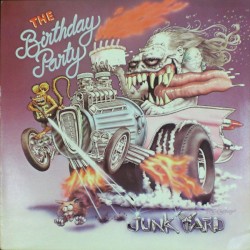
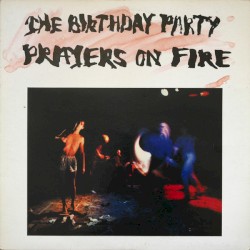
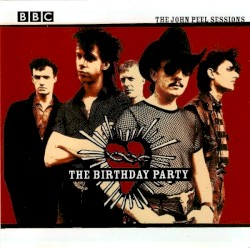
In 1980, the Birthday Party moved from Melbourne to London, where they were championed by broadcaster John Peel. They subsequently released two albums: Prayers on Fire (1981) and Junkyard (1982). Disillusioned by their stay in London, the band's sound and live shows became increasingly violent. They broke up soon after relocating to West Berlin in 1982. The creative core of the Birthday Party – singer and songwriter Nick Cave, multi-instrumentalist and songwriter Mick Harvey, and singer, songwriter and guitarist Rowland S. Howard – later went on to acclaimed careers.
History
Early years and The Boys Next Door (1973–1978)
The nucleus of the band first met at the private boys' school Caulfield Grammar School, in suburban Melbourne, in the early seventies. A rock group was formed in 1973, with Nick Cave (vocals), Mick Harvey (guitar), and Phill Calvert (drums), with other students John Cocivera, Brett Purcell and Chris Coyne (on guitar, bass and saxophone respectively). Most were also members of the school choir. The band played under various names at parties and school functions with a mixed repertoire of David Bowie, Lou Reed, Roxy Music, Alice Cooper and the Sensational Alex Harvey Band, among others. Saxophonist Chris Coyne went on to join the Paul Kelly Band in the 1980s.
After their final school year in 1975 the band decided to continue as a four-piece group, with friend Tracy Pew picking up the bass. Greatly affected by the punk explosion of 1976 which saw Australian bands The Saints and Radio Birdman making their first recordings and tours, the Boys Next Door, as they were now called, began performing punk and proto-punk cover versions, such as "Blitzkrieg Bop" and "Gloria", and a few original songs. By November 1977 their set was dominated by fast original new wave material, such as "Sex Crimes" and "Masturbation Generation". In 1978 they contributed three tracks to Suicide Record's compilation album, Lethal Weapons. Two of these songs were also released as a single.
The Boys' second guitarist, Rowland S. Howard, joined in 1978, and about this time the group's sound changed dramatically. The addition of Howard's guitar was a catalyst (his later use of audio feedback being a hallmark of the group) but there were other changes, as well: their sound drew upon punk, rockabilly, free jazz and blues, but defied categorization. Many songs were driven by prominent, repetitive basslines and frenetic, minimalist drumming. In producer/engineer Tony Cohen they found a collaborator sympathetic to their experimentation and their refusal to repeat themselves, and in manager Keith Glass they found an enthusiastic financial backer. Glass' label Missing Link Records released all of the early Birthday Party records.
Name change and relocations (1978–1982)
The Boys Next Door's best known song, "Shivers", written by Howard, and first performed and recorded by his band the Young Charlatans, was banned by radio stations because of a reference to suicide. After recordings and moderate success in Australia (including hundreds of live shows) they headed for London in 1980, changed their name to the Birthday Party and launched into a period of innovative and aggressive music-making. Some sources say the band took its new name from the Harold Pinter play The Birthday Party; others (including Ian Johnston's Cave biography) state it was prompted by Cave misremembering, or intentionally misattributing, the name to a non-existent birthday party scene in the Dostoyevsky novel Crime and Punishment. In a 2008 interview, Rowland S. Howard gave his own recollection: "The name The Birthday Party came up in conversation between Nick and myself. There's this apocryphal story about it coming from a Dostoyevsky novel. It may have had various connotations, but what he and I spoke about was a sense of celebration and making things into more an occasion and ritual".
正文摘自英文维基百科「The Birthday Party (band)」,按 CC BY-SA 4.0 使用;删去了参考文献、外部链接、表格和图片;篇幅所限只节选了前面一部分,全文见原条目。
资料卡
- 成立
- 1977 年
- 成立于
- 墨尔本
- 来自
- 澳大利亚
- 活跃起始
- 1976 年
- 活跃结束
- 1983 年
- 流派
- 后朋克、哥德摇滚
- 唱片公司
- Missing Link Records、4AD
- 官方网站
- thebirthdayparty.com.au
资料来自 Wikidata Q1147045(CC0)。
榜单和奖项里的专辑(1)
曲库里的其他专辑(2)
完整作品表见 MusicBrainz。
EP、单曲和其他(4)
风格、年代相近的艺人
- 尼克凯夫与坏种子澳大利亚 · 1983– · 另类摇滚、实验摇滚