乐单

照片:Suyash Dwivedi,CC BY-SA 4.0,Wikimedia Commons
Hariprasad Chaurasia
- 生卒
- 1938 –
- 国家/地区
- 印度
- 流派
- 印度古典音乐
介绍
这个词条没有中文维基百科条目,下面是英文维基百科的原文。
Hariprasad Chaurasia (born 1 July 1938) is an Indian classical flautist and composer who plays the bansuri in the Hindustani classical tradition. Starting in the late 1950s, he developed the bansuri as a concert instrument through an approach drawing on vocal and instrumental techniques of Hindustani music, and became one of India's internationally known classical musicians.
Born into a family with no professional musical background, Chaurasia initially trained as a wrestler at the insistence of his father while secretly studying music. He began his professional career with All India Radio (AIR) in Cuttack in 1957 before being transferred to Bombay in 1962, where he became active in both classical music and the Hindi film industry. He later became a disciple of Annapurna Devi of the Maihar gharana. Alongside his classical career he worked extensively as a studio flautist, formed the film-composing partnership Shiv-Hari with santoor player Shivkumar Sharma producing notable filmscores like Silsila (1981) and Chandni (1989). He also collaborated with musicians including George Harrison, Zakir Hussain, John McLaughlin and Jan Garbarek.
He received the Sangeet Natak Akademi Award in 1984, the Padma Bhushan in 1992 and India's second highest civilian honour, the Padma Vibhushan in 2000. In 2011 he was elected a Fellow of the Sangeet Natak Akademi, its highest honour.
Early life and education
Chaurasia was born in Allahabad (present day Prayagraj) in the United Provinces (present Uttar Pradesh). His mother died when he was six years old, after which he was brought up by his father, Chhedilal Pehelwan, who was a professional wrestler.< and his elder sister. He had to learn music without his father's knowledge, as his father wanted him to become a wrestler. Chaurasia did go to the Akhada and trained with his father for some time, although he also started learning stenography and Hindustani vocal music from his neighbour, Pandit Rajaram at the age of 15. Later, he switched to playing the flute under the tutelage of Bholanath Prasanna of Varanasi for eight years.
He has stated, "I was not any good at wrestling. I went there only to please my father. But maybe because of the strength and stamina I built up then, I'm able to play the bansuri even to this day."
Career
Chaurasia first worked as a stenographer in Allahabad while continuing to practise music privately. He joined the All India Radio, Cuttack, Odisha in 1957 and worked as a composer and performer. This relocation helped him him to leave Allahabad and pursue music as a profession. Here after working four year he was transferred to Mumbai. Much later, while working for All India Radio, he received guidance from the reclusive surbahar player Annapurna Devi of Maihar gharana, daughter of Baba Allaudin Khan. She only agreed to teach him if he was willing to unlearn all that he had learnt until then. Another version is that she only agreed to teach him after he took the decision to switch from right-handed to left-handed playing to show her his commitment. In any case Chaurasia plays left-handed to this day.
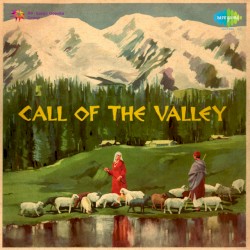
In 1967, Chaurasia, santoor player Shivkumar Sharma and slide guitarist Brij Bhushan Kabra recorded the instrumental album Call of the Valley, it marked the beginning of Chaurasia's long professional association with Sharma. The album was widely circulated in India and abroad and became one of the best-known recordings associated with the three musicians, and a milestone in world music. AllMusic reviewer Ken Hunt advises that "If the newcomer buys only one Indian classical recording, it should be "Call of the Valley"." It is listed in the book 1001 Albums You Must Hear Before You Die.
Starting 1970s, in a career stretching over six decades, Chaurasia toured locally and internationally extensively, as a soloist and in jugalbandi performances, performing at venues like Carnegie Hall, the Royal Albert Hall and the Kremlin.
Film music
Apart from classical music, Hariprasad has collaborated with Shivkumar Sharma, forming a composing duo called Shiv-Hari. The pair composed music for many popular movies, including Silsila and Chandni, and created some highly popular songs, such as "Dekha Ek Khwab", "Yeh Kahan Aa Gaye Hum", "Neela Aasman So Gaya" and "Rang Barse". The duo encouraged actor Amitabh Bachchan to sing in the film Silsila, including on song "Rang Barse".
Chaurasia also collaborated with Bhubaneswar Mishra, forming the pair "Bhuban-Hari" (in line with Shiv-Hari), and the pair composed music for many Odia films including Samaya (1975) and Gapa Hele Bi Sata (1976), creating numerous songs that were hugely popular in the state. These include Muje janena kaha baata (sung by Suman Kalyanpur; movie: Gapa helebi Sata); and all songs from Maa o Mamata, and many more.
正文摘自英文维基百科「Hariprasad Chaurasia」,按 CC BY-SA 4.0 使用;删去了参考文献、外部链接、表格和图片;篇幅所限只节选了前面一部分,全文见原条目。
资料卡
- 出生
- 1938 年 7 月 1 日
- 出生地
- 普拉亚格拉吉
- 国籍
- 印度
- 活跃起始
- 1957 年
- 职业
- 作曲家、笛手、大学教师
- 乐器
- 印度竹笛、笛
- 流派
- 印度古典音乐
- 所属团体
- Shiv-Hari
- 使用语言
- 英语
- 获奖
- Sangeet Natak Akademi Award、莲花装勋章、莲花赐勋章
- 官方网站
- hariprasadchaurasia.com
资料来自 Wikidata Q212512(CC0)。