 乐单
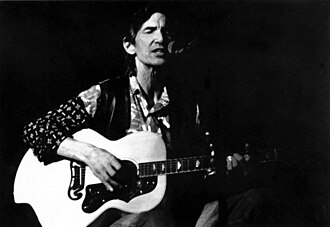
照片:Schorle,CC BY-SA 3.0,Wikimedia Commons
汤斯·范·赞特
- 生卒
- 1944 – 1997
- 国家/地区
- 美国
- 外文名
- Townes Van Zandt
- 流派
- 乡村音乐、民俗音乐、布鲁斯
介绍
这个词条没有中文维基百科条目,下面是英文维基百科的原文。
John Townes Van Zandt (March 7, 1944 – January 1, 1997) was an American singer-songwriter. He wrote numerous songs, such as "Pancho and Lefty", "If I Needed You", "Snake Mountain Blues", "Our Mother the Mountain", "Waitin' Round to Die", and "To Live's to Fly". His musical style has often been described as melancholic and features rich, poetic lyrics. During his early years, Van Zandt was respected for his guitar playing and fingerpicking ability.
Much of Van Zandt's life was spent touring bars, music clubs, colleges, folk venues, and festivals, often lodging in motel rooms or the homes of friends. He suffered from drug addiction and alcoholism, and was diagnosed with bipolar disorder. When he was young, the now-discredited insulin shock therapy erased much of his long-term memory.
In 1983, Willie Nelson and Merle Haggard covered and popularized Van Zandt's song "Pancho and Lefty", reaching number one on the Billboard country music chart. Van Zandt's influence has been cited by countless artists across multiple genres and his music has been recorded or performed by Bob Dylan, Willie Nelson, Lyle Lovett, Alison Krauss, Merle Haggard, Norah Jones, Emmylou Harris, Counting Crows, Steve Earle, Colter Wall, Billy Strings, Jason Isbell, Jason Molina, Michael Weston King, Doc Watson, Cowboy Junkies, Kurt Vile, Rowland S. Howard, and Terry Allen.
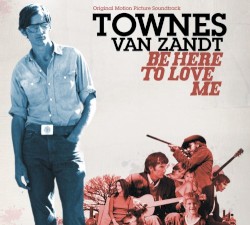
Van Zandt died on New Year's Day 1997 at the age of 52 from cardiac arrhythmia caused by health problems stemming from years of substance abuse. A revival of interest in Van Zandt blossomed in the 2000s. The decade saw the publication of two books, a documentary film (Be Here to Love Me), and numerous magazine articles about him.
Biography
Early life
Born in Fort Worth, Texas, into a wealthy family, Van Zandt was a great-great-great-grandson of Isaac Van Zandt (a prominent leader of the Republic of Texas) and a great-great-grandnephew of K. M. Van Zandt (a major in the Confederate army and one of the founders of Fort Worth).
Townes' parents were Harris Williams Van Zandt and Dorothy Townes. He had two siblings, Bill (1949–2009) and Donna (1941–2011). Harris was a corporate lawyer and his career required the family to move several times during the 1950s and 1960s. In 1952, the family relocated from Fort Worth to Midland, Texas for six months before moving to Billings, Montana.
At Christmas in 1956, Townes's father gave him a guitar, which he practiced while wandering the countryside. He later told an interviewer that "seeing Elvis Presley on the Ed Sullivan Show was the starting point for me becoming a guitar player... I just thought that Elvis had all the money in the world, all the Cadillacs and all the girls, and all he did was play the guitar and sing. That made a big impression on me." In 1958, the family moved to Boulder, Colorado. Van Zandt remembered his time in Colorado fondly and often visited it as an adult. He later referred to Colorado in "My Proud Mountains", "Colorado Girl", and "Snowin' on Raton". Townes was a good student and active in team sports. In grade school, he was found to have a high IQ, and his parents began grooming him to become a lawyer or senator. Fearing that his family would move again, he willingly decided to attend the Shattuck School in Faribault, Minnesota. He scored 1170 on the SAT in January 1962. His family soon moved to Houston, Texas.
In 1962, he enrolled at the University of Colorado Boulder, wrote poetry, and listened to records by Lightnin' Hopkins and Hank Williams. In the spring of his second year, his parents flew to Boulder to bring Townes back to Houston, worried about his binge drinking and episodes of depression. They admitted him to the University of Texas Medical Branch in Galveston, where he was diagnosed with manic depression. He received three months of insulin shock therapy, which erased much of his long-term memory. Afterwards, his mother said that her "biggest regret in life was that she had allowed that treatment to occur". In 1965, he was accepted into the University of Houston's pre-law program. Soon after, he attempted to join the Air Force, but was rejected because of a doctor's diagnosis that labelled him "an acute manic-depressive who has made minimal adjustments to life". After Townes's father died in January 1966 at age 52, he quit school and went on the road for the first time having been inspired by his singer-songwriter heroes to pursue a career in playing music.
Early musical career
In 1965, Van Zandt began playing regular shows at the Jester Lounge in Houston for $10 per night. After the Jester closed, he began to regularly perform (and occasionally live) at Sand Mountain Coffee House. In these Houston clubs, he met fellow musicians Lightnin' Hopkins, Guy Clark, Jerry Jeff Walker, and Doc Watson. His repertoire consisted mostly of covers of songs written by Hopkins, Bob Dylan, and others, as well as original novelty songs like "Fraternity Blues." In 1966, Harris Van Zandt encouraged his son to stop playing covers and write his own songs.
正文摘自英文维基百科「Townes Van Zandt」,按 CC BY-SA 4.0 使用;删去了参考文献、外部链接、表格和图片;篇幅所限只节选了前面一部分,全文见原条目。
资料卡
- 本名
- John Townes Van Zandt
- 出生
- 1944 年 3 月 7 日
- 出生地
- 沃思堡
- 去世
- 1997 年 1 月 1 日
- 去世地
- 纳什维尔
- 国籍
- 美国
- 活跃起始
- 1965 年
- 职业
- 创作歌手、歌手、词曲作家、吉他手、录音艺术家、作曲家、音乐家
- 乐器
- 吉他、人声
- 流派
- 乡村音乐、民俗音乐、布鲁斯
- 唱片公司
- Fat Possum Records、Sugar Hill Records、Tomato
- 使用语言
- 英语
- 获奖
- Americana Music Association President's Award(2007)
- 官方网站
- townesvanzandt.com
资料来自 Wikidata Q740729(CC0)。
本站收录的歌(1)
- Pancho and Lefty1983
曲库里的其他专辑(15)
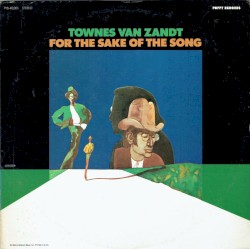
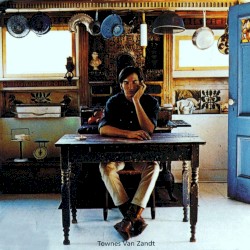
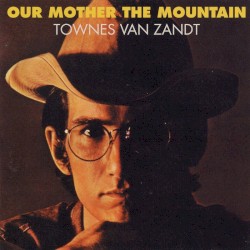
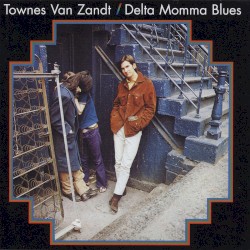
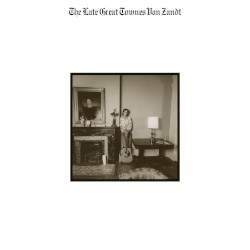

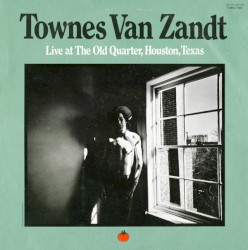
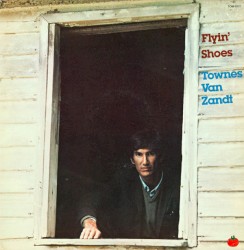
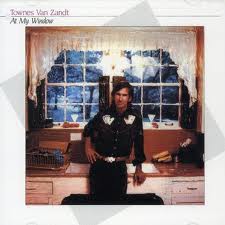
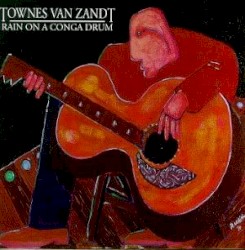
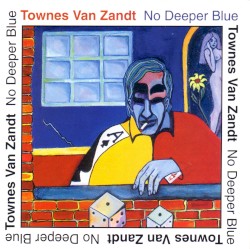

完整作品表见 MusicBrainz。
风格、年代相近的艺人
- 鲍勃·迪伦美国 · 1941– · 摇滚乐、布鲁斯
- 史蒂夫·厄尔美国 · 1955– · 乡村音乐、乡村摇滚
- 诺拉·琼斯美国 · 1979– · 爵士乐、滑顺爵士乐
- 威利·尼尔森美国 · 1933– · 乡村音乐、流行音乐
- 谢里尔·克罗美国 · 1962– · 摇滚乐、乡村音乐
- 尼尔·杨加拿大 · 1945– · 乡村音乐、油渍摇滚
- 蒂娜·特纳美国 · 1939–2023 · 摇滚乐、灵魂乐
- 露辛达·威廉斯美国 · 1953– · 另类乡村、民俗音乐
- 利昂·拉塞尔美国 · 1942–2016 · 乡村音乐、布鲁斯
- 琼·贝兹美国 · 1941– · 民俗音乐、乡村音乐
- 珍妮丝·贾普林美国 · 1943–1970 · 迷幻摇滚、蓝调摇滚
- 乐队合唱团加拿大 · 摇滚乐、另类乡村