乐单
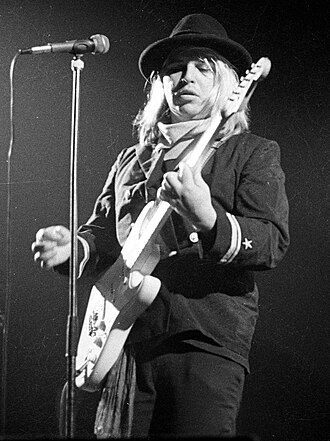
照片:Yves Lorson,CC BY 2.5,Wikimedia Commons
The Gun Club
- 成立 / 解散
- 1980 –
- 国家/地区
- 美国
- 流派
- 朋克摇滚
- 成员
- Dee Pop、Jeffrey Lee Pierce、基德·孔戈·鲍尔斯、Patricia Morrison、Rob Graves
介绍
这个词条没有中文维基百科条目,下面是英文维基百科的原文。
The Gun Club were an American rock band from Los Angeles that existed from 1979 to 1996, formed and led by singer-songwriter and guitarist Jeffrey Lee Pierce. They were notable as one of the first bands in the punk rock subculture to incorporate influences from blues, rockabilly, and country music. The Gun Club has been called a "tribal psychobilly blues" band, as well as initiators of punk blues and cowpunk
History
Early days (1976–1980)
By 1976, Jeffrey Lee Pierce was playing early rock n' roll tunes like Elvis Presley's "Fever" in L.A. garage bands, and by 1977 "discovers and becomes obsessed with reggae artist Bob Marley". Pierce was also the former head of the Blondie fan club in Los Angeles and previously a member of the Red Lights, the E-Types, the Individuals, Phast Phreddie & Thee Precisions, and the Cyclones. Some of Pierce’s compositions from this period of his career were later recorded by Tav Falco's Panther Burns for "The Journey Is Long : the Jeffrey Lee Pierce Sessions Project” album.
The Gun Club's precursor band, the Creeping Ritual, formed in late 1979. Along with Pierce (lead vocals and guitar), the first lineup consisted of Brian Tristan AKA Kid Congo Powers (lead guitar), Don Snowden (bass), who was at the time a music critic for the Los Angeles Times and Brad Dunning (drums), now a prominent designer and writer. In April 1980, they changed their name to "The Gun Club" on a suggestion by singer Keith Morris, then Pierce's roommate and also singer for Circle Jerks.
In his autobiography, Kid Congo Powers reflects on meeting Pierce for the first time, at a Pere Ubu show : "One balmy evening at the beginning of August 1979, I was standing in line outside the Whisky a Go Go to get into a Pere Ubu show...I spotted somebody moving toward me out of the corner of my eye. I looked up slowly, not really wanting to engage with anyone at all, and saw this truly eccentric-looking individual standing directly in front of me… “Hi, I’m Jeff,” he said... I’d seen him before, browsing through the racks of reggae imports at Bomp!, the record store…he said, “You should be in a band with me.”... We went into the club. Pere Ubu blew our minds to smithereens. My brain was whirling with all the possibilities open to me, having taken the decision to form a band with my new friend... the way it had been proposed, so matter-of-factly, and Jeffrey’s confidence in me, even though we were total strangers, made it seem entirely possible."("Some New Kind of Kick: A Memoir", Kid Congo Powers; 2022).
Kid Congo commented on the "influences (of) freeform jazz, literature, Lowry, Burroughs. We (were) intellectual, narcissistic," and that the early Gun Club incarnation were "too arty for rock people, far too rock for arty people, too cuckoo for the blues crowd and too American for punk".
In New York Night Train fanzine, Congo Powers relates that “I remember the first songs we tried to learn was a version of (the) Winston Rodney Burning Spear (track), “People Get Ready”…We played "My Brand of Blues" by Marvin Rainwater, "Bo Diddley is a Gunslinger” - those were the first songs we learned...and some original songs because Jeffrey was already writing songs. And so we hammered out some kind of weird sounds that kind of was a pre-Gun Club…Jeffrey was quite obnoxious - already at the time. He was already “l’enfant terrible.”
Further commenting on the early days of the band, Congo Powers stated that it was his “first dealings with improvisation…(b)ecause it always was improvised songs with The Gun Club from the early days until the last days. We didn’t know when the parts (of the songs) were going to come or how long Jeffery (sic) might draw it out or if we were going to freak out or if we were going to stay cool. That was a huge turning point in sound and showed us what we could do. It shocked and surprised us…We were super irreverent, super nihilistic…We were out to destroy music as much as we were out to create it".
In July 1980 The Gun Club play Club 88 in central Los Angeles, a gig which is memorialised in Brendan Mullen’s book, "We Got the Neutron Bomb", where he describes “Jeffrey dressed in a black suit with a white shirt and a black string tie and a black hat, looking like something out of a Flannery O'Connor short story”, while Gun Club drummer Terry Graham, in his book “Punk Like Me,” reminisces, "(w)e land our first show…at Club 88 ( which ) earned us a lifetime ban…One thing is for sure: Gun Club doesn't sound like any other band in town…Our show at Club 88 confirms our status as the only blues band that plays punk and the only punk band that plays blues." By October 1980, L.A. Weekly writes, "The Gun Club are resurfacing again with their organized rhythm & blues with an undercurrent of psychosis." The Cramps are recorded as having attended these shows.
正文摘自英文维基百科「The Gun Club」,按 CC BY-SA 4.0 使用;删去了参考文献、外部链接、表格和图片;篇幅所限只节选了前面一部分,全文见原条目。
资料卡
- 成立
- 1980 年
- 成立于
- 洛杉矶
- 来自
- 美国
- 活跃起始
- 1980 年
- 流派
- 朋克摇滚
- 唱片公司
- I.R.S.唱片、乞丐宴会唱片、Ruby Records
- 成员
- Dee Pop、Jeffrey Lee Pierce、基德·孔戈·鲍尔斯、Patricia Morrison、Rob Graves
- 官方网站
- thegunclub.net
资料来自 Wikidata Q1398604(CC0)。
榜单和奖项里的专辑(1)
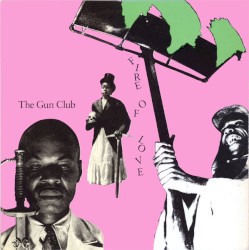
曲库里的其他专辑(6)
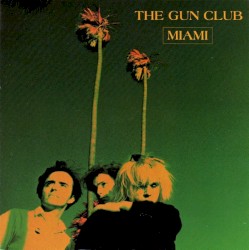
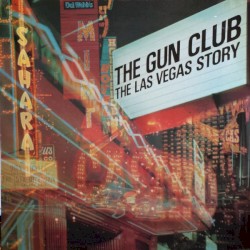
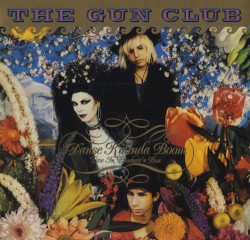
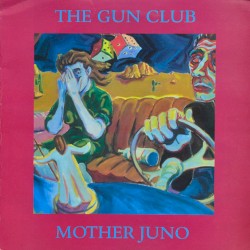
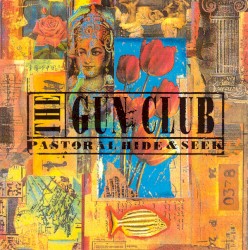
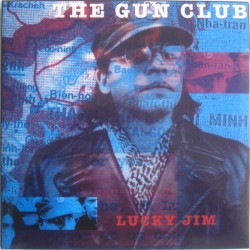
完整作品表见 MusicBrainz。