 乐单
介绍
这个词条没有中文维基百科条目,下面是英文维基百科的原文。
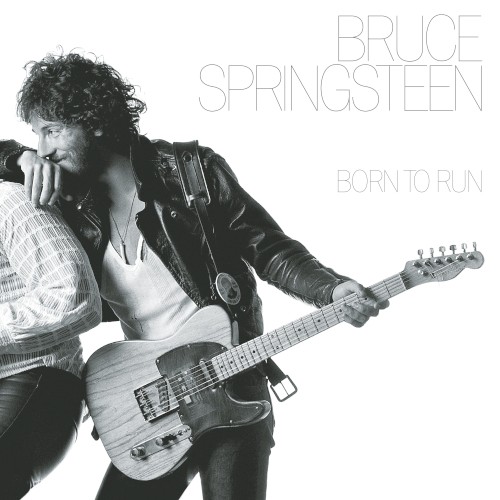
"Thunder Road" is a song written and recorded by American singer-songwriter Bruce Springsteen. It is the opening track on his breakthrough album Born to Run. While never charting substantially as a single, "Thunder Road" is nevertheless considered one of Springsteen's greatest songs and one of the top rock songs in history. It is ranked number 111 on Rolling Stone's 500 Greatest Songs of All Time list.
Composition and recording
"Thunder Road" was written by Springsteen while at his living room piano in Long Branch, New Jersey. In October 1974, it existed as a solo recording, "Chrissie's Song", that included the line, "leave what you've lost, leave what's grown cold, Thunder Road". By early 1975, Springsteen had combined lyrics from another composition, "Walking in the Street", forming a new song, "Wings for Wheels", which he debuted on February 5, 1975, at a benefit for a local club, The Main Point, radio broadcast in the Philadelphia area, and featuring four yet-to-be-released Born to Run songs. Still unsatisfied, he finished dismantling "Walking in the Street", imported its main coda into "Wings for Wheels" as an instrumental ending, and renamed the song "Thunder Road". Springsteen stated at a 1978 concert that the name of his song had been inspired by seeing a poster of the 1958 Robert Mitchum film Thunder Road, though he did not see the film itself.
On April 13, 1975, music critic and record producer Jon Landau officially joined the album's production team, marking the start of a life-long professional relationship. At Landau's suggestion, production was moved from 914 Sound Studios to Record Plant studios in Manhattan. When sessions began on April 18, Jimmy Iovine, fresh from recording John Lennon's "Walls and Bridges", replaced Louis Lahav (who returned to Israel in March) as engineer. Springsteen later describes Iovine as a "brilliant imposter" and a "young studio dog with fastest learning curve I've ever seen". After three intensive days (April 18, 19 and 23) working on "Thunder Road", nothing further was noted in studio logs until July 15–16, when final overdubs and mixing were done.
In his autobiography, Springsteen says he loosely envisioned Born to Run as a series of vignettes, following its character throughout the day, with "Thunder Road" serving as an "invitation" to the album and opening with a harmonica that suggests the beginning of a new day. Springsteen also describes Landau as an "astute arranger and editor" who "guarded against overplaying and guided our record toward a more streamlined sound". Speaking to author Brian Hiatt about "Thunder Road" in 2005, Landau states it "was fantastic, but it was a little unwieldy, a little unfocused, a little more like a jam piece. … I remember talking with Bruce about a few ideas about how to just reshuffle the deck a little bit, and keep the song building from the very beginning right through the end."
Lyrics and music
The lyrics to "Thunder Road" describe a young woman named Mary, her boyfriend, and their "one last chance to make it real". Musically, the song opens with a quiet piano (Roy Bittan) and harmonica (Springsteen) introduction, meant, as Springsteen said years later in the Wings for Wheels documentary, as a signifier that something was about to happen. The title phrase is not used until the middle section of the song. After the closing line, a tenor saxophone and Fender Rhodes duet is played by Clarence Clemons and Bittan in the instrumental coda.
In this song, Springsteen mentions Roy Orbison "singing for the lonely" on the radio. Orbison, one of whose best-known songs is "Only the Lonely" (1960), was a huge influence on Springsteen.
On July 17, 2021, after 46 years, Jon Landau, Springsteen's longtime manager and co-producer of Born to Run, said the line "Mary's dress waves" was corrected to read "Mary's dress sways" on brucespringsteen.net. It was referred to as a "typo".
During Springsteen's writing of the lyrics to "Thunder Road", instead of "skeleton frames of burned out Chevrolets", he had written, "skeletons found by exhumed shallow graves". E Street drummer Max Weinberg convinced Springsteen to move away from the darker lyrics and stay consistent with the blue-collar spirit of the album.
Reception
In 2004, "Thunder Road" was ranked number one on the list of the "885 All-Time Greatest Songs" compiled by WXPN, the University of Pennsylvania's public radio station. The song came in at number 226 in Q magazine's list of the "1001 Greatest Songs Ever" in 2003, in which they described the song as "best for pleading on the porch". Julia Roberts, when asked which song lyric described her most accurately, chose "Thunder Road"'s "You ain't a beauty, but hey, you're alright." The song is featured in the book 31 Songs by British author Nick Hornby.
正文摘自英文维基百科「Thunder Road (song)」,按 CC BY-SA 4.0 使用;删去了参考文献、外部链接、表格和图片;篇幅所限只节选了前面一部分,全文见原条目。
资料卡
- 作品性质
- 歌曲
- 表演者
- 布鲁斯·斯普林斯廷
- 收录于 / 属于
- Born to Run
- 流派
- 摇滚乐
- 唱片公司
- 哥伦比亚唱片、索尼音乐集团
- 作词
- 布鲁斯·斯普林斯廷
- 制作人
- 乔恩·兰多
资料来自 Wikidata Q1573287(CC0)。
制作名单
- 录音室
- 混音:The Record Plant(Midtown Manhattan);录音:914 Sound Studios(New York);录音:The Record Plant(Midtown Manhattan)
- ISRC
- USSM17500803、USSM19904335
制作
- 工程师
- לואי להב、Jimmy Iovine
- 混音
- Jimmy Iovine
- 制作人
- Mike Appel、Jon Landau、布鲁斯·斯普林斯廷
演奏与演唱
- 罗兹电钢琴
- Roy Bittan
- 钟琴
- Roy Bittan
- 萨克斯
- Clarence Clemons
- 风琴
- Danny Federici
- 吉他
- 布鲁斯·斯普林斯廷
- 口琴
- 布鲁斯·斯普林斯廷
- 贝斯
- Garry Tallent
- 鼓
- Max Weinberg
- 和声
- Mike Appel、Roy Bittan、史提芬·云·桑特
- 主唱
- 布鲁斯·斯普林斯廷
词曲与编曲
- 编曲
- 布鲁斯·斯普林斯廷
- 作曲
- 布鲁斯·斯普林斯廷
- 作词
- 布鲁斯·斯普林斯廷
名单来自 MusicBrainz(CC0)这条录音的关系数据,由志愿者录入,不一定齐全。
更多资料
在哪听
布鲁斯·斯普林斯廷 的专辑
艺人页 ›
布鲁斯·斯普林斯廷 的其他歌(本站收录)
- Born to Run布鲁斯·斯普林斯廷 · 1975
- Because the Night帕蒂·史密斯 · 1978
- 费城大街布鲁斯·斯普林斯廷 · 1994