 乐单
介绍
这个词条没有中文维基百科条目,下面是英文维基百科的原文。
"West End Girls" is a song by the English synth-pop duo Pet Shop Boys. Written by Neil Tennant and Chris Lowe, the song was released twice as a single. The lyrics, concerned with class and the pressures of inner-city life in London, are inspired partly by T. S. Eliot's poem The Waste Land (1922). The track was generally well received by contemporary music critics and has been frequently cited as a highlight in the duo's career.
The first version of the song was produced by Bobby Orlando and was released on Columbia Records' Bobcat Records imprint in April 1984, becoming a club hit in the United States and some European countries. After the duo signed with EMI, the song was re-recorded with producer Stephen Hague for their first studio album, Please (1986). In October 1985, the new version was released, reaching number one in the United Kingdom and the United States in 1986.
In 1987, the song won Best Single at the Brit Awards and Best International Hit at the Ivor Novello Awards. In 2005, 20 years after its release, it was awarded Song of The Decade between 1985 and 1994 by the British Academy of Composers and Songwriters. A critic's poll in 2020 by The Guardian selected "West End Girls" as the greatest UK number-one single. Despite not being considered a hip-hop track, it is one of the very first songs heavily influenced by rap or spoken-word to top the charts on both the UK singles chart and the US Billboard Hot 100, though its classification as rap has been a source of controversy.
The song was performed by the Pet Shop Boys at the 2012 Summer Olympics closing ceremony.
Background
Recording and production
Bobby O version
In 1983, Neil Tennant met producer Bobby Orlando, while on an assignment in New York interviewing Sting for Smash Hits. After listening to some demos, Orlando offered to produce for the duo.
In 1983 and 1984, the duo recorded twelve songs with Orlando at Unique Studios in New York, "West End Girls", "Opportunities (Let's Make Lots of Money)", "One More Chance", "I Want a Lover", "That's My Impression", "A Man Could Get Arrested", "I Get Excited", "Two Divided by Zero", "Rent", "It's a Sin", "Pet Shop Boys", and "Later Tonight". Orlando played most of the instruments on "West End Girls", including the jazz riff at the end. Lowe played one chord and the bassline. It included a drum part lifted from Michael Jackson's "Billie Jean", and an arrangement involving what Tennant called "Barry White chords". Orlando was thrilled by the song's production; his idea was to make a rap record in a British accent.
In April 1984, "West End Girls" was released, becoming a club hit in Los Angeles and San Francisco, and a minor dance hit in Belgium and France, but was only available in the United Kingdom as a 12-inch import. In March 1985, after long negotiations, Pet Shop Boys cut their contractual ties with Orlando, and hired manager Tom Watkins, who signed them with EMI.
Stephen Hague version
An entire week had been spent re-recording and rearranging "West End Girls" with producer Stephen Hague at Advision Studios, using Studio Two housed with an Otari 24-track tape machine and an SSL console.
The song, according to engineer David Jacob, was musically "constructed with only four basic rhythmical patterns throughout", with no 'real' instruments production-wise except for one cymbal. The rhythmic foundations were laid down with an Oberheim DMX drum machine. In addition to that, the synthesizer strings that run throughout the song were created using a blend of string sounds from an E-mu Emulator I and an Emulator II.
The bass part is a composite of different sounds from an Emulator II, a Yamaha DX7 and a Roland Jupiter-6, all of which were connected by MIDI. It had been played by hand to "lend more fluidity to the track", although initially there was a bit of difficulty in keeping the part in time with the drum machine.
The song features a cowbell-like sound, which is in fact a combination of a cowbell and an Emulator II choir sound recorded into a Roland MSQ-700 sequencer, and spun in manually at appropriate places in the song.
The trumpet solo in this version was played by Hague on the Emulator. According to Jacob, "it took about six hours to get the trumpet to sound genuine, purposely playing wrong notes to make it sound more 'jazz'".
The traffic noise which introduces the song was recorded by Hague using a Sony Professional Walkman on Gosfield Street outside Advision. By examining the original source tape, the sing-song voice heard at the beginning was discovered to be saying "Get on the mic-ro-ph-one" by a random WHAM! fan on the street.
In addition to the rap verses and choruses sung by Tennant (each using different microphones—one for verse and another for choruses), singer Helena Springs was brought in to sing background vocals—parts of these were sampled into the Emulator to be used wherever wanted in the track.
They re-released the song in late 1985, topping the charts in both the UK and the US.
正文摘自英文维基百科「West End Girls」,按 CC BY-SA 4.0 使用;删去了参考文献、外部链接、表格和图片;篇幅所限只节选了前面一部分,全文见原条目。
资料卡
- 作品性质
- 单曲
- 表演者
- 宠物店男孩
- 发行日期
- 1984 年 4 月 9 日
- 流派
- 合成器流行乐
- 语言
- 英语
- 唱片公司
- EMI、Parlophone
- 作词
- 尼尔·田纳特、Chris Lowe
- 制作人
- Bobby Orlando
资料来自 Wikidata Q180418(CC0)。
更多资料
在哪听
宠物店男孩 的专辑
艺人页 ›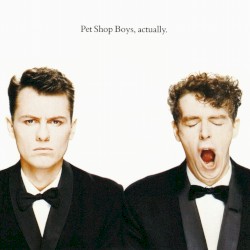
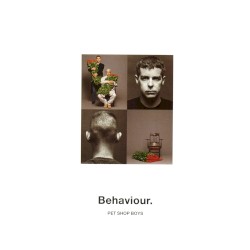

风格、年代相近的歌
- 宛如祈祷者麦当娜 · 1989
- I Wanna Dance with Somebody (Who Loves Me)惠特妮·休斯顿 · 1987
- 纠缠三角恋新秩序 · 1986
- Everybody Wants to Rule the World惊惧之泪 · 1985
- 一次又一次辛蒂·罗波 · 1984
- Jump范·海伦 · 1983
- Beat It迈克尔·杰克逊 · 1983
- 蓝色星期一新秩序 · 1983
- Little Red Corvette王子 · 1983
- Billie Jean迈克尔·杰克逊 · 1982
- Hungry Like the Wolf杜兰杜兰 · 1982
- 非洲托托合唱团 · 1982