 乐单
Tutti Frutti (1955)
- 演唱
- 小理查德、Little Richard and His Band
- 发行
- 1955-12
- 作曲
- 小理查德、Dorothy LaBostrie、Joe Lubin
- 作词
- 小理查德、Joe Lubin、Dorothy LaBostrie
介绍
这个词条没有中文维基百科条目,下面是英文维基百科的原文。
"Tutti Frutti" (Italian for "all fruits") is a song written by Little Richard and Dorothy LaBostrie, recorded in 1955, which was Richard's first major hit. With its energetic refrain and its hard-driving sound and wild lyrics, it became not only a model for many future Little Richard songs, but also for rock and roll itself.
Its refrain is often transcribed as "A-wop-bop-a-loo-mop-a-lop-bam-boom!" and was a verbal rendition of a drum pattern imagined by Little Richard. The song introduced several of rock music's most characteristic musical features with the preference of a loud volume, powerful vocal style, and distinctive beat and rhythm.
In 2007, an eclectic panel of recording artists ranked "Tutti Frutti" at No. 1 on Mojo's "The Top 100 Records That Changed The World" and hailed the recording as "the sound of the birth of rock and roll". In 2009, the U.S. Library of Congress National Recording Registry added the recording to its registry, saying the "unique vocalizing over the irresistible beat announced a new era in music". In April 2012, Rolling Stone magazine declared the refrain "the most inspired rock lyric ever recorded". It was inducted into the Grammy Hall of Fame in 1998.
Original recording by Little Richard
Although "Little Richard" Penniman had recorded for RCA and Peacock Records since 1951, his records had been relatively undistinguished and did not result in the commercial success for which his producers hoped. In February 1955, he sent a demo tape to Specialty Records, which was heard by Specialty owner Art Rupe. Rupe heard promise in the tapes and arranged a recording session for Little Richard at Cosimo Matassa's J & M Studio in New Orleans in September 1955, with Robert "Bumps" Blackwell as producer and Fats Domino's backing band. The band included Lee Allen and Alvin "Red" Tyler on saxophones, Huey Smith on piano, Frank Fields on double bass, Justin Adams on guitar and Earl Palmer on drums.
As the session wore on, Little Richard became frustrated that his anarchic performance style was not being fully captured on tape. During a lunch break, he started pounding a piano and singing a ribald song that he wrote and composed, and which he had been performing live for a few years. According to some accounts, he first wrote and performed the song while working as a janitor in a bus station. The song that he sang was a piece of music that he "had polished in clubs across the South". Little Richard sang:
After this lively performance, Blackwell knew the song was going to be a hit, but recognized that the lyrics, with their "minstrel modes and sexual humor", needed to be revised for lyrical purity.
Blackwell contacted local songwriter Dorothy LaBostrie to revise the lyrics, with Little Richard still playing in his characteristic style. According to Blackwell, LaBostrie "didn't understand melody" but she was definitely a "prolific writer".
The original lyrics, in which "Tutti Frutti" verses contained descriptions of anal sex, were:
These were replaced with:
"Aw rooty" was a slang expression meaning "All right". According to Charles Connor, Little Richard's drummer, the original lyrics were:
In addition to Penniman and LaBostrie, a third name—Lubin—is credited as co-writer. Some sources considered this a pseudonym used by Specialty label owner Art Rupe to claim royalties on some of his label's songs, but others refer to songwriter Joe Lubin.
As possible evidence that the "sexual song" theory was created later, songwriter LaBostrie was quoted as saying, "Little Richard didn't write none of 'Tutti Frutti'. I'll tell you exactly how I came to write that. I used to live on Galvez Street and my girlfriend and I liked to go down to the drug store and buy ice cream. One day we went in and saw this new flavor, Tutti Frutti. Right away I thought, 'Boy, that's a great idea for a song'. So I kept it in the back of my mind until I got to the studio that day. I also wrote the flip side of 'Tutti Frutti', 'I'm Just A Lonely Guy', and a spiritual, 'Blessed Mother', all in the same day." However, Phil Walden, co-founder of Capricorn Records, said that as a teenager, he had seen Little Richard perform an "off-color" version of "Tutti Frutti" before the song was recorded. LaBostrie was still receiving royalty checks on the average of $5,000 every three to six months from the song in the 1980s.
正文摘自英文维基百科「Tutti Frutti (song)」,按 CC BY-SA 4.0 使用;删去了参考文献、外部链接、表格和图片;篇幅所限只节选了前面一部分,全文见原条目。
资料卡
- 作品性质
- 音乐作品/乐曲
- 表演者
- Little Richard and His Band
- 发行日期
- 1955 年 12 月
- 流派
- 摇滚
- 语言
- 英语
- 作曲
- 小理查德、Dorothy LaBostrie、Joe Lubin
- 作词
- 小理查德、Joe Lubin、Dorothy LaBostrie
资料来自 Wikidata Q2001828(CC0)。
更多资料
在哪听
小理查德 的专辑
艺人页 ›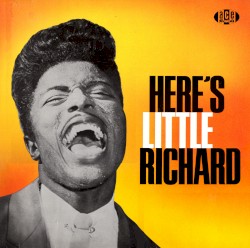
小理查德 的其他歌(本站收录)
- Good Golly Miss Molly小理查德 · 1958
风格、年代相近的歌
- Shout埃兹利兄弟乐队 · 1959
- Johnny B. Goode恰克·贝瑞 · 1958
- 夏日布鲁斯艾迪·科克兰 · 1958
- 那将是今天蟋蟀乐队 · 1957
- 监狱摇滚埃尔维斯·普雷斯利 · 1957
- 巨大火球杰瑞·李·刘易斯 · 1957
- Peggy Sue巴迪·霍利 · 1957
- Maybellene恰克·贝瑞 · 1955
- 猎狗威利·梅·桑顿 · 1952