 乐单
介绍
这个词条没有中文维基百科条目,下面是英文维基百科的原文。
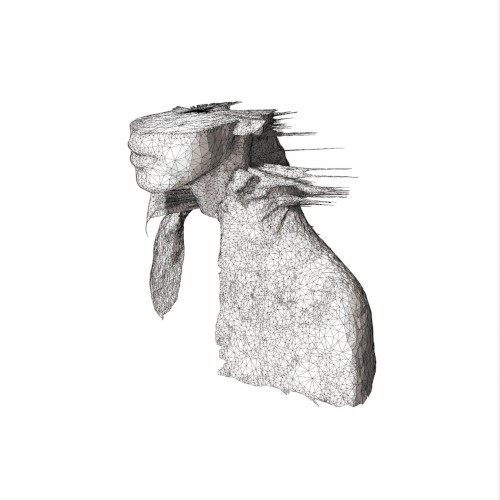
"Clocks" is a song by the British rock band Coldplay. It was released on 17 March 2003 by Parlophone in the United Kingdom. It was written and composed as a collaboration among all the members of the band for their second album, A Rush of Blood to the Head. The song is built around a piano riff, and features cryptic lyrics concerning themes of contrast and urgency. Several remixes of the track exist, and its riff has been widely sampled.
The record was initially released in the United States as the album's second single on 11 November 2002, reaching number 29 on the Billboard Hot 100 and number nine on the Billboard Modern Rock Tracks chart. It was then released in the United Kingdom on 17 March 2003 as the third single from A Rush of Blood to the Head, reaching number nine on the UK Singles Chart. Music critics praised the song's piano melody, and it went on to win Record of the Year at the 2004 Grammy Awards.
"Clocks" is considered to be one of Coldplay's signature songs, and is often ranked among the greatest songs of the 2000s and of all time. In 2010, the single was placed at 490th on Rolling Stone's "500 Greatest Songs of All Time" list. In 2011, NME placed it amongst the "150 Best Tracks of the Past 15 Years".
Recording
"Clocks" was written and composed during the late stages of production of Coldplay's second album, A Rush of Blood to the Head. A riff popped into Chris Martin's mind late one night in Liverpool when he came into the studio, where he then developed it on piano. According to singer Chris Martin, "Clocks" was inspired by the English rock band Muse. Martin presented the riff to the band's guitarist, Jonny Buckland, who then added a layer of guitar chords to the basic track: "He picked up his guitar [a sure sign that he likes a song] and played these brilliant chords ... It was like a chemical reaction process."
Before writing and composing "Clocks", the band had already written ten songs for the album. However, because A Rush of Blood to the Head was nearing completion, they thought it was too late to include the new song on it. Hence, they recorded a demo and saved it with other unfinished tracks, labelling it "Songs for #3"; the band intended these tracks for what would be their third album (which would eventually become the 2005 album X&Y).
By June 2002, Coldplay were ready to present the new album to their record label Parlophone. However, Martin felt it was "rubbish" and that the band were far from being completely satisfied with the album, so the release was ultimately delayed. After a headlining tour, Coldplay went on working on their third album. Phil Harvey, the band's manager and a friend of Martin, heard it and pressed him to rework "Clocks" immediately. Harvey pointed out that, with its lyrics that speak of urgency, its meaning contradicted Martin's idea of stashing the track. The singer further developed the song while the other band members supplemented his work with their ideas based on the main piano track, adding the guitars, bass and drums. After "Clocks" was finished, Harvey came up with the track's outro, but since he could not play guitar, he whistled the melody to guitarist Jonny Buckland. Coldplay recorded the song very quickly because the schedule of A Rush of Blood to the Head had already been delayed; the album was released two months later.
Composition
"Clocks" is an alternative rock and psychedelic rock song. It features a repeating piano melody and a minimalist, atmospheric soundscape of synthesizer pads, drums, electric guitar, and bass guitar. Martin applied an ostinato, as well as a descending scale on the piano chord progression, which switches from major to minor chords.
The themes of the lyrics include contrast, contradictions and urgency. According to Jon Wiederhon of MTV News, "Martin seems to address the helplessness of being in a dysfunctional relationship he doesn't necessarily want to escape." The lyrics are cryptic; the ending lines of the second verse emphasise contradicting emotion: "Come out upon my seas/Cursed missed opportunities/Am I a part of the cure/Or am I part of the disease?" The song's title also "metaphorically alludes" to its lyrics, "pushing one to wonder about the world's obsession with time while connecting it to the theory: make the best of it when we’re here, present and alive."
The song is written in the key of E♭ Mixolydian and a main chord progression of E♭–B♭m–Fm. E♭ Mixolydian is the fifth mode of A♭ major leading to some transcriptions using this key.
正文摘自英文维基百科「Clocks (song)」,按 CC BY-SA 4.0 使用;删去了参考文献、外部链接、表格和图片;篇幅所限只节选了前面一部分,全文见原条目。
资料卡
- 作品性质
- 单曲、歌曲
- 表演者
- 酷玩乐团
- 发行日期
- 2002 年 12 月 10 日
- 收录于 / 属于
- 玩过头
- 时长
- 5 分 07 秒
- 流派
- 另类摇滚、迷幻摇滚、舞台摇滚、流行摇滚
- 语言
- 英语
- 唱片公司
- Parlophone
- 作词
- 克里斯·马丁
- 制作人
- 肯·尼尔森
- 上一部
- 科学家
- 下一部
- 上帝在你的脸上留下微笑
资料来自 Wikidata Q615063(CC0)。
制作名单
- ISRC
- GBAYE0200771、GBAYE1600193、GBHCD1711384
制作
- 工程师
- Ken Nelson、Rik Simpson
- 混音
- 酷玩乐团、Ken Nelson、Mark Phythian
- 制作人
- 酷玩乐团、Ken Nelson
- 录音
- Ken Nelson、Mark Phythian
演奏与演唱
- 电贝斯
- Guy Berryman
- 电吉他
- Jonny Buckland
- 鼓
- Will Champion
- 打击乐
- Will Champion
- 原声吉他
- Chris Martin
- 钢琴
- Chris Martin
- 和声
- Will Champion
- 主唱
- Chris Martin
词曲与编曲
- 词曲
- Guy Berryman、Jonny Buckland、Will Champion、Chris Martin
名单来自 MusicBrainz(CC0)这条录音的关系数据,由志愿者录入,不一定齐全。
更多资料
在哪听
酷玩乐团 的专辑
艺人页 ›

酷玩乐团 的其他歌(本站收录)
- 填满你的心酷玩乐团 · 2005
- Viva La Vida酷玩乐团 · 2008
风格、年代相近的歌
- 梦碎大道年轻岁月 · 2004
- 向前U2 · 2001
- Beautiful DayU2 · 2000
- Smooth桑塔纳 · 1999
- Sunny Came Home肖恩·科尔 · 1997