 乐单
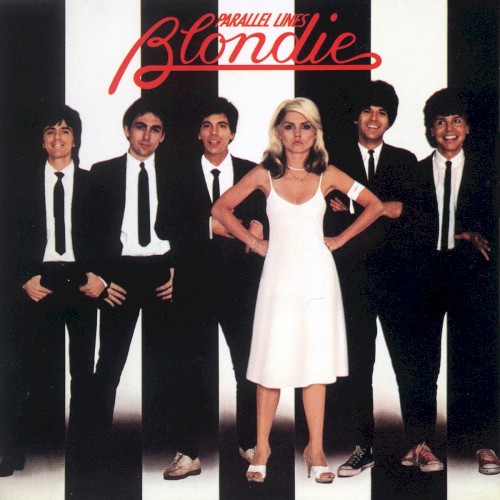
玻璃心 (1978)
介绍
这个词条没有中文维基百科条目,下面是英文维基百科的原文。
"Heart of Glass" is a song by the American new wave band Blondie, written by singer Debbie Harry and guitarist Chris Stein, and produced by Mike Chapman. It was featured on the band's third studio album, Parallel Lines (1978), and was released as the album's third single in January 1979 by Chrysalis Records, reaching number one on the charts in several countries, including the US Billboard Hot 100 and the UK Singles Chart. The accompanying music video was directed by Stanley Dorfman and filmed in a short-lived club.
"Heart of Glass" ranked at number 66 in the UK's official list of biggest selling singles of all-time in 2018, with sales of 1.32 million copies, being the 9th best selling single of the 1970s in the UK. It was inducted into the Grammy Hall of Fame as a recording of "qualitative or historical significance" in 2015. Harry herself stated that "Heart of Glass" was, along with "Rapture", the song she was proudest of having written.
In December 2004, Rolling Stone ranked the song number 255 on its list of the 500 greatest songs of all time. It was ranked at number 259 when the list was updated in April 2010 and at number 138 in their 2021 update. Slant Magazine placed it at number 42 on their list of the greatest dance songs of all time and Pitchfork named it the 18th best song of the 1970s. Billboard magazine included "Heart of Glass" in their lists of the best pop songs and dance songs of all time in 2023 and 2025.
In 2020, Harry and Stein sold their future royalties to the song and the rest of Blondie's catalog to Hipgnosis Songs Fund, which now belongs to Sony Music Publishing.
Background
Debbie Harry and Chris Stein wrote an early version of "Heart of Glass", called "Once I Had a Love", in 1974–75. This earlier version was initially recorded as a demo in 1975. The song had a slower, funkier sound with a basic disco beat. For this reason the band referred to it as "The Disco Song". This original version was inspired by The Hues Corporation's hit disco song "Rock the Boat" (1974). The song was re-recorded in a second demo with the same title in 1978, when the song was made a bit more pop-oriented. Harry said that "'Heart of Glass' was one of the first songs Blondie wrote, but it was years before we recorded it properly. We'd tried it as a ballad, as reggae, but it never quite worked", and that "the lyrics weren't about anyone. They were just a plaintive moan about lost love." It was only when the band met with producer Mike Chapman to start work on Parallel Lines that Harry recalled Chapman "asked us to play all the songs we had. At the end, he said: 'Have you got anything else?' We sheepishly said: 'Well, there is this old one.' He liked it – he thought it was fascinating and started to pull it into focus."
Exactly who decided to give the song a more pronounced disco vibe is subject to differing recollections. On some occasions, the producer Mike Chapman has stated that he convinced Harry and Stein to give the song a disco twist. On other occasions, Chapman has credited Harry with the idea. As a band, Blondie had experimented with disco before, both in the predecessors to "Heart of Glass" and in live cover songs that the band played at shows. Bassist Gary Valentine noted that the set list for early Blondie shows often included disco hits such as "Honey Bee" or "My Imagination". The song's eventual title was taken from the 1976 film of the same name by Werner Herzog, although none of the group had actually seen the movie. As noted by Bob Stanley, the track "blended [Blondie's] NYC punk stance with sleek sequenced disco at a time when the two forms were still seen to be diametrically opposed".
In an interview published in the February 4, 1978, edition of NME, Debbie Harry expressed her affinity for the Euro disco music of Giorgio Moroder, stating that "It's commercial, but it's good, it says something... that's the kind of stuff that I want to do". A notable example of this type of musical experimentation occurred when Blondie covered Donna Summer's "I Feel Love" at the Blitz Benefit on May 7, 1978. In his history of CBGB, music writer Roman Kozak described this event: "When Blondie played for the Johnny Blitz benefit in May 1978, they surprised everyone with a rendition of Donna Summer's 'I Feel Love'. In the middle of the great rock versus disco split, it was arguably the first time in New York that a rock band had played a disco song. Blondie went on to record 'Heart of Glass,' other groups recorded other danceable songs, and dance rock was born."
For the single release, Chapman remixed the track, with the double-tracked bass drum further accentuated.
正文摘自英文维基百科「Heart of Glass (song)」,按 CC BY-SA 4.0 使用;删去了参考文献、外部链接、表格和图片;篇幅所限只节选了前面一部分,全文见原条目。
资料卡
- 作品性质
- 音乐作品/乐曲
- 表演者
- 金发美女
- 发行日期
- 1978 年
- 收录于 / 属于
- 平行线
- 时长
- 3 分 33 秒
- 流派
- 摇滚
- 语言
- 英语
- 唱片公司
- RCA唱片
- 作曲
- 黛比·哈里、克莱姆·柏克、克里斯·史坦
- 作词
- 黛比·哈里、克莱姆·柏克、克里斯·史坦
资料来自 Wikidata Q635756(CC0)。
制作名单
- 录音室
- 录音:The Record Plant(Midtown Manhattan)
- ISRC
- USCH37800025、USCH37800029、USCH37900017
制作
- 工程师
- Peter Coleman
- 助理工程师
- Gray Russell
- 制作人
- Mike Chapman
- 助理制作人
- Peter Coleman
演奏与演唱
- 鼓
- Clem Burke
- 键盘
- Jimmy Destri
- 贝斯
- Nigel Harrison
- 吉他
- Frank Infante、Chris Stein
- 演唱
- 黛比·哈里
词曲与编曲
- 词曲
- 黛比·哈里、Chris Stein
名单来自 MusicBrainz(CC0)这条录音的关系数据,由志愿者录入,不一定齐全。
更多资料
在哪听
金发美女 的专辑
艺人页 ›
金发美女 的其他歌(本站收录)
- Dreaming金发美女 · 1979
风格、年代相近的歌
- Beat It迈克尔·杰克逊 · 1983
- 你的每一次呼吸警察乐队 · 1983
- Little Red Corvette王子 · 1983
- Edge of Seventeen史蒂薇·妮克丝 · 1982
- 我行我素琼·杰特 · 1981
- 今晚又来了菲尔·柯林斯 · 1981
- 压力下的你我皇后乐团 · 1981
- Love Will Tear Us Apart欢乐分队 · 1980
- London Calling冲撞乐队 · 1979
- Comfortably Numb平克·弗洛伊德 · 1979
- What a Fool Believes杜比兄弟合唱团 · 1979
- 摇滚龙虾轰炸机合唱团 · 1978