乐单
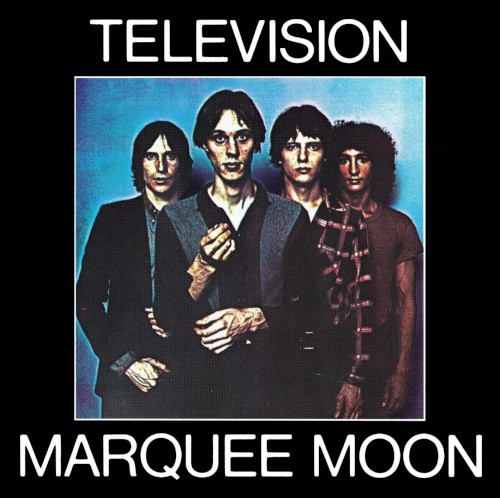
华盖之月 (1977)
滚石 500(2020) #107滚石 500(2003) #1281001 张专辑
- 艺人
- 电视乐队
- 发行
- 1977-02-08
- 类型
- 专辑
- 唱片公司
- 艾丽卡唱片
- 制作人
- 安迪·约翰斯、汤姆·韦兰
- 版本
- MusicBrainz 上有 25 个发行版本
曲目
- A1See No Evil3:56
- A2Venus3:48
- A3Friction4:43
- A4Marquee Moon9:58
- B1Elevation5:08
- B2Guiding Light5:36
- B3Prove It5:04
- B4Torn Curtain7:00
8 首 · 约 45 分钟 · 依据 1977-02-08 US 发行的版本,在 MusicBrainz 看这个版本。
介绍
这个词条没有中文维基百科条目,下面是英文维基百科的原文。
Marquee Moon is the debut album by the American rock band Television, released on February 8, 1977, by Elektra Records. In the years leading up to the album, Television had become a prominent act in the New York music scene and generated interest from a number of record labels, eventually signing a record deal with Elektra. The group rehearsed extensively in preparation for Marquee Moon before recording it at A & R Recording in November 1976. It was produced by the band's frontman Tom Verlaine and sound engineer Andy Johns.
For Marquee Moon, Verlaine and fellow guitarist Richard Lloyd abandoned contemporary punk rock's power chords in favor of rock and jazz-inspired interplay, melodic lines, and counter-melodies. The resulting music is largely hook-driven with complex instrumental parts (particularly on longer tracks such as "Marquee Moon"), while evoking themes of adolescence, discovery, and transcendence through imagery in urban, pastoral, and nocturnal modes, including references to the geography of Lower Manhattan. Influenced by Bohemian and French poetry, Verlaine's lyrics also feature puns and double entendres intended to give the songs an impressionistic quality in describing his perception of an experience.
Released to widespread acclaim, Marquee Moon was hailed by critics as an original musical development in rock music. The critical recognition helped the album achieve unexpected commercial success in the United Kingdom, despite poor sales in the United States. Among the most acclaimed music releases in history, it consistently features in professionally curated lists of top albums, including various iterations of Rolling Stone magazine's "The 500 Greatest Albums of All Time", on which it ranked 128th in the 2003 list and 107th in the 2020 list. Marquee Moon also proved to be a foundational record of alternative rock, as Television's innovative instrumentation on the album strongly influenced subsequent post-punk, new wave, and indie rock movements of the 1980s and rock guitar playing in general.
Background
By the mid-1970s, Television had become a leading act in the New York music scene. They first developed a following from their residency at the Lower Manhattan club CBGB, where they helped persuade club manager Hilly Kristal to feature more unconventional musical groups. The band had received interest from labels by late 1974, but chose to wait for an appropriate record deal. They turned down a number of major labels, including Island Records, for whom they had recorded demos with producer Brian Eno. Eno produced demos of "Prove It", "Friction", "Venus", and "Marquee Moon" in December 1974, but Television frontman Tom Verlaine did not approve of Eno's sound: "He recorded us very cold and brittle, no resonance. We're oriented towards really strong guitar music ... sort of expressionistic."
After founding bassist Richard Hell left in 1975, Television enlisted Fred Smith, whom they found more reliable and rhythmically adept. The band quickly developed a rapport and a musical style that reflected their individual influences: Smith and guitarist Richard Lloyd had a rock and roll background, drummer Billy Ficca was a jazz enthusiast, and Verlaine's tastes varied from the rock group 13th Floor Elevators to jazz saxophonist Albert Ayler. That same year, Television shared a residency at CBGB with singer and poet Patti Smith, who had recommended the band to Arista Records president Clive Davis. Although he had seen them perform, Davis was hesitant to sign them at first. He was persuaded by Smith's then boyfriend Allen Lanier to let them record demos, which Verlaine said resulted in "a much warmer sound than Eno got". However, Verlaine still wanted to find a label that would allow him to produce Television's debut album himself, even though he had little recording experience.
Recording and production
In August 1976, Television signed a recording deal with Elektra Records, which promised Verlaine he could produce the band's first album with the condition that he would be assisted by a well-known recording engineer. Verlaine, who did not want to be guided in the studio by a famous producer, enlisted engineer Andy Johns based on his work for the Rolling Stones' 1973 album Goats Head Soup. Lloyd was also impressed by Johns, who he said had produced "some of the great guitar sounds in rock". Johns was credited as the co-producer on Marquee Moon. Elektra did not query Television's studio budget for the recording.
正文摘自英文维基百科「Marquee Moon」,按 CC BY-SA 4.0 使用;删去了参考文献、外部链接、表格和图片;篇幅所限只节选了前面一部分,全文见原条目。
资料卡
- 作品性质
- 音乐专辑
- 表演者
- 电视乐队
- 发行日期
- 1977 年 2 月
- 录制时间
- 1976 年
- 时长
- 45 分 54 秒
- 流派
- 后朋克、摇滚乐、艺术朋克
- 语言
- 英语
- 唱片公司
- 艾丽卡唱片
- 制作人
- 安迪·约翰斯、汤姆·韦兰
资料来自 Wikidata Q432372(CC0)。
制作名单
- 厂牌
- Elektra(目录号 7E-1098)
- 录音室
- lacquer cut at:Sterling Sound(Chelsea);母带:Sterling Sound, Inc.(New York);混音:Atlantic Studios(Midtown Manhattan);录音:A&R Recording Studio(New York)
制作
- 制作人
- Andy Johns(其中 7 首)、汤姆·韦兰(其中 7 首)
- 助理工程师
- Jim Boyer(其中 7 首)
- 工程师
- Andy Johns(其中 7 首)
- 助理混音
- Jimmy Douglass(其中 7 首)、Randy Mason(其中 7 首)
- 混音
- Andy Johns(其中 7 首)
演奏与演唱
- 电吉他
- Richard Lloyd、汤姆·韦兰
- 贝斯
- Fred Smith
- 主唱
- 汤姆·韦兰
- 鼓
- Billy Ficca(其中 7 首)
- 和声
- Richard Lloyd(第 A1、A2、A3、B1、B4 首)、Fred Smith(第 A1、A2、A3、B1、B4 首)
- 演唱
- Richard Lloyd(第 A1、A2、A3、B1、B4 首)、Fred Smith(第 A1、A2、A3、B1、B4 首)
- 键盘
- 汤姆·韦兰(第 B2、B4 首)
- 鼓类乐器
- Billy Ficca(第 A4 首)
词曲与编曲
- 作曲
- 汤姆·韦兰、Richard Lloyd(第 B2 首)
- 作词
- 汤姆·韦兰
名单来自 MusicBrainz(CC0)这一发行版本的关系数据,由志愿者录入,不一定齐全。
更多资料与乐评
在哪听
电视乐队 的其他专辑
艺人页 ›
相似的专辑

同在 1977 年发行