乐单
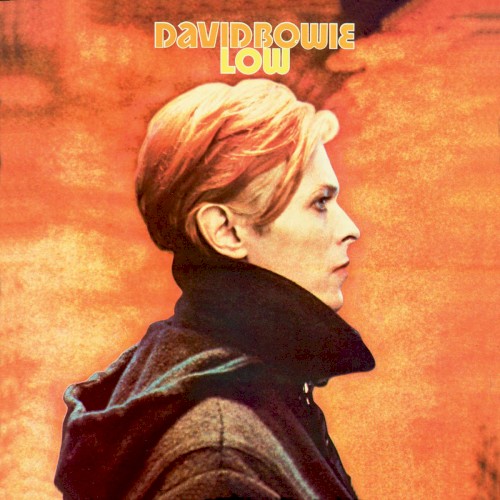
低 (1977)
滚石 500(2020) #206滚石 500(2003) #2491001 张专辑
- 艺人
- 大卫·鲍伊
- 发行
- 1977-01-14
- 类型
- 专辑
- 唱片公司
- RCA Victor
- 制作人
- 托尼·维斯康蒂
- 版本
- MusicBrainz 上有 25 个发行版本
曲目
- 1Speed of Life2:47
- 2Breaking Glass1:53
- 3What in the World2:23
- 4Sound and Vision3:03
- 5Always Crashing in the Same Car3:34
- 6Be My Wife2:57
- 7A New Career in a New Town2:53
- 8Warszawa6:24
- 9Art Decade3:47
- 10Weeping Wall3:28
- 11Subterraneans5:39
11 首 · 约 39 分钟 · 依据 1977-01 US 发行的版本,在 MusicBrainz 看这个版本。
介绍
这个词条没有中文维基百科条目,下面是英文维基百科的原文。
Low is the eleventh studio album by the English musician David Bowie, released on 14 January 1977 through RCA Records. The first of three collaborations with the producer Tony Visconti and the musician Brian Eno that became known as the Berlin Trilogy, the project originated following Bowie's move to France in 1976 with his friend Iggy Pop to rid themselves of their drug addictions. There, Bowie produced and co-wrote Pop's debut solo studio album, The Idiot, featuring sounds Bowie would explore on his next record. After completing The Idiot, sessions for Low began at Hérouville's Château d'Hérouville in September 1976 and ended in October at Hansa Studios in West Berlin, where Bowie and Pop had relocated.
An art rock record influenced by German bands such as Tangerine Dream, Neu!, Harmonia and Kraftwerk, Low features Bowie's first explorations in electronic and ambient styles. Side one consists primarily of short, direct avant-pop song-fragments, with mostly downbeat lyrics reflecting Bowie's state of mind, and side two comprises longer, mostly instrumental tracks, conveying musical observations of Berlin. Visconti created the distinctive drum sound using an Eventide H910 Harmonizer, a pitch-shifting device. The cover artwork, a profile of Bowie from the film The Man Who Fell to Earth (1976), was intended as a visual pun, meaning "low profile".
RCA refused to issue Low for three months, fearing it would be a commercial failure. Upon release, it divided critical opinion and received little promotion from RCA or Bowie, who opted to tour as Pop's keyboardist. Nevertheless, it reached number 2 in the UK and number 11 in the US. Two singles were released: "Sound and Vision", a UK top five hit, and "Be My Wife". The success prompted RCA to release The Idiot in March 1977. In mid-1977, Bowie performed on Pop's follow-up album Lust for Life before recording his next album, "Heroes", which expanded on Low's musical approach and features a similar mix of songs and instrumentals.
In later decades, critics have rated Low one of Bowie's best works, and it has appeared on several lists of the greatest albums of all time. It influenced numerous post-punk bands and its drum sound has been widely imitated. A forerunner in the development of the post-rock genre of the 1990s, Low has been reissued several times and was remastered in 2017 as part of the A New Career in a New Town (1977–1982) box set.
Background and inspiration
In 1974, David Bowie developed a cocaine addiction. It worsened over the next two years, affecting his physical and mental state. He recorded Young Americans (1975) and Station to Station (1976), and filmed The Man Who Fell to Earth (1976), while under the drug's influence. Bowie attributed his growing addiction to Los Angeles, where he moved from New York City in early 1975. His drug intake escalated to the point where, decades later, he recalled almost nothing of the recording of Station to Station.
After completing Station to Station in December 1975, Bowie began work on a soundtrack for The Man Who Fell to Earth with Paul Buckmaster, who worked with Bowie on the 1969 album Space Oddity. Bowie expected to be wholly responsible for the music, but withdrew his work when he was invited to submit it along with the work of other composers: "I just said, 'Shit, you're not getting any of it.' I was so furious, I'd put so much work into it." Station to Station's co-producer Harry Maslin argued Bowie was "burned out" and could not complete the work. Bowie later sent the film's director Nicolas Roeg a copy of Low with a note that read, "This is what I wanted to do for the soundtrack. It would have been a wonderful score."
With the soundtrack abandoned, Bowie decided he was ready to free himself from the Los Angeles drug culture and move back to Europe. He began rehearsals for the Isolar tour to promote Station to Station in January 1976; the tour began on 2 February. Though it was critically acclaimed, Bowie became a controversial figure during the tour. Speaking as his persona the Thin White Duke, he made statements about Adolf Hitler and Nazi Germany that some interpreted as expressing sympathy for or promoting fascism. Bowie later blamed his erratic behaviour during this period on his addictions and precarious mental state, stating: "It was a dangerous period for me. I was at the end of my tether physically and emotionally and had serious doubts about my sanity."
正文摘自英文维基百科「Low (David Bowie album)」,按 CC BY-SA 4.0 使用;删去了参考文献、外部链接、表格和图片;篇幅所限只节选了前面一部分,全文见原条目。
资料卡
- 作品性质
- 音乐专辑
- 表演者
- 大卫·鲍伊
- 发行日期
- 1977 年 1 月 14 日
- 时长
- 38 分 48 秒
- 流派
- 实验摇滚、艺术摇滚、先锋流行、电子音乐、氛围音乐
- 语言
- 英语
- 唱片公司
- RCA Victor
- 制作人
- 托尼·维斯康蒂
资料来自 Wikidata Q837214(CC0)。
制作名单
- 厂牌
- RCA(目录号 CPL1-2030)
- 录音室
- 混音:Hansa Studios(Berlin);录音:Château d'Hérouville(Hérouville);录音:Hansa Studios(Berlin);录音:Cherokee Studios(Hollywood)
制作
- 制作人
- Tony Visconti、大卫·鲍伊
- 工程师
- Eduard Meyer、Laurent Thibault(其中 10 首)、Tony Visconti(其中 10 首)、David Hines(第 11 首)
- 混音
- Tony Visconti
- 音频工程
- Tony Visconti(第 6 首)
演奏与演唱
- 吉他
- Carlos Alomar(其中 8 首)、Ricky Gardiner(第 2、3、4、5、6、7 首)、布莱恩·伊诺(第 5 首)、大卫·鲍伊(第 6 首)
- 贝斯
- George Murray(其中 8 首)
- 鼓
- Dennis Davis(第 1、2、4、5、6、7 首)
- 和声
- 大卫·鲍伊(第 2、3、4、5、6、8 首)、伊基·波普(第 3 首)、布莱恩·伊诺(第 4 首)、玛丽·霍普金(第 4 首)
- 主唱
- 大卫·鲍伊(第 2、3、4、5、6、8 首)、玛丽·霍普金(第 4 首)
- 钢琴
- Roy Young(第 1、4、7 首)、布莱恩·伊诺(第 7、8 首)、大卫·鲍伊(第 7 首)、保罗·巴克马斯特(第 11 首)
- 法菲萨风琴
- Roy Young(第 3、5、6 首)
- 张伯伦键盘
- 大卫·鲍伊(第 1、5 首)、布莱恩·伊诺(第 8 首)
- Minimoog 合成器
- 布莱恩·伊诺(第 2、8 首)
- 模拟合成器
- 布莱恩·伊诺(第 7、8 首)、J. Peter Robinson(第 11 首)
- 打击乐
- Dennis Davis(第 3 首)
- 合成器
- 布莱恩·伊诺(第 3 首)、大卫·鲍伊(第 10 首)
- 上低音萨克斯
- 大卫·鲍伊(第 4 首)
- 口琴
- 大卫·鲍伊(第 7 首)
- 演奏
- 布莱恩·伊诺(第 8 首)
- 鼓机
- 大卫·鲍伊(第 9 首)
- 大提琴
- Eduard Meyer(第 9 首)
- 颤音琴
- 大卫·鲍伊(第 10 首)
- 木琴
- 大卫·鲍伊(第 10 首)
- 演唱
- 大卫·鲍伊(第 10 首)
- 罗兹电钢琴
- 大卫·鲍伊(第 11 首)、J. Peter Robinson(第 11 首)
- 次中音萨克斯
- 大卫·鲍伊(第 11 首)
- 键盘
- 保罗·巴克马斯特(第 11 首)
- 弦乐合成器
- J. Peter Robinson(第 11 首)
词曲与编曲
- 编曲
- 大卫·鲍伊、布莱恩·伊诺(第 8 首)
- 作曲
- 大卫·鲍伊(其中 10 首)、布莱恩·伊诺(第 8 首)
- 作词
- 大卫·鲍伊(第 3、4、5、6、11 首)
- 词曲
- 大卫·鲍伊(第 2 首)、Dennis Davis(第 2 首)、George Murray(第 2 首)
名单来自 MusicBrainz(CC0)这一发行版本的关系数据,由志愿者录入,不一定齐全。
更多资料与乐评
在哪听
大卫·鲍伊 的其他专辑
艺人页 ›

相似的专辑

同在 1977 年发行