乐单
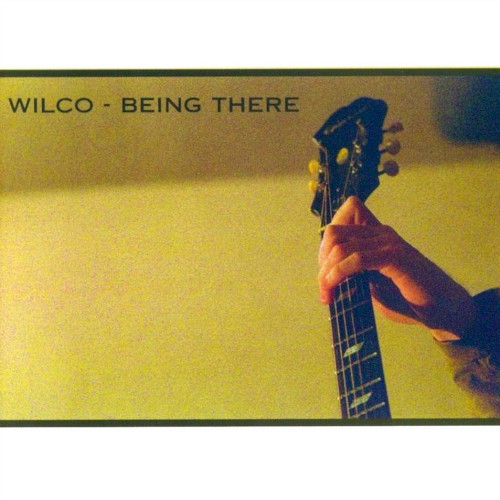
Being There (1996)
曲目
第 1 张 · CD
- 1Misunderstood6:28
- 2Far, Far Away3:20
- 3Monday3:34
- 4Outtasite (Outta Mind)2:35
- 5Forget the Flowers2:47
- 6Red‐Eyed and Blue2:45
- 7I Got You (At the End of the Century)3:57
- 8What’s the World Got in Store3:10
- 9Hotel Arizona3:38
- 10Say You Miss Me4:08
第 2 张 · CD
- 1Sunken Treasure6:51
- 2Someday Soon2:33
- 3Outta Mind (Outta Sight)3:21
- 4Someone Else’s Song3:21
- 5Kingpin5:17
- 6(Was I) In Your Dreams3:31
- 7Why Would You Wanna Live4:16
- 8The Lonely 14:49
- 9Dreamer in My Dreams6:44
19 首 · 约 77 分钟 · 依据 1996-10-29 US 发行的版本,在 MusicBrainz 看这个版本。
介绍
这个词条没有中文维基百科条目,下面是英文维基百科的原文。
Being There is the second studio album by the American rock band Wilco, released on October 29, 1996, by Reprise Records. Despite its release as a double album, Being There was sold at a single album price as a result of a deal between lead singer Jeff Tweedy and the band's label Reprise Records. Compared to their debut album A.M. (1995), the album was an improvement for the band in both sales and critical reception. Taking its name from the 1979 film of the same name, the self-produced album featured more surrealistic and introspective writing than on A.M. This was due in part to several significant changes in Tweedy's life, including the birth of his first child. Musically, it juxtaposed the alternative country styles songs reminiscent of Uncle Tupelo with psychedelic, surreal songs. It was the only Wilco album with steel guitarist Bob Egan, their first with multi-instrumentalist Jay Bennett and their last with multi-instrumentalist Max Johnston.
Background
Jeff Tweedy formed Wilco in 1994 after creative differences between Jay Farrar and Tweedy caused the breakup of Uncle Tupelo. The band entered the recording studio almost immediately afterwards to record and release A.M. in 1995, which saw disappointing sales. Jay Farrar's new band Son Volt released Trace in late 1995 to critical praise and good sales numbers. Trace also provided a college rock hit song in "Drown", which entered the top ten of the Billboard Mainstream Rock Tracks chart, further increasing competition between the two bands.
Tweedy felt that Wilco was incomplete without a second guitarist due to the departure of Brian Henneman after the A.M. recording sessions. Wilco's road manager Bob Andrews helped Tweedy get in contact with Jay Bennett, a multi-instrumentalist who had been looking for a new band to join since his power pop band Titanic Love Affair had been dismissed from its record label. Bennett joined Wilco after Tweedy sent him a few Uncle Tupelo songs and a copy of A.M.; Tweedy had been intrigued by the fact that Bennett could play keyboards, an instrument no other Wilco member played.
Production
The first conceptions of material for the album came during a particularly stressful time in Tweedy's life. Tweedy had recently quit smoking marijuana, attendance at Wilco concerts was dwindling, and Tweedy was trying to manage his marriage, a mortgage, and the birth of his first child. He responded to these pressures:
I was a later bloomer. I was in my thirties before I even came to terms with the idea that I was making a living as a recording artist. I was in a punk band for a long time and thought it was my life. I was a bass player in a band making fifty dollars a night, paying eighty dollars a month in rent, making indie records and not getting paid for them, and having this naive sense of well-being that I would always do this and never have much more responsibility than that. I went from that to being a dad and a major-label recording artist who had the pressure of supporting a family and also making something I felt good about artistically.
For Being There, Tweedy wanted to blend the experiences he had making music with the ones he had listening to music. One of the first songs that Tweedy wrote was "Misunderstood", a song about a tortured musical artist from the point of view of a fan. The song contains several overt references to the breakup of Uncle Tupelo, including the addition of insults that Farrar used against Tweedy—specifically one calling him a "mama's boy". Part of the song's lyrics ("Take the guitar player for a ride/See, he ain't never been satisfied/He thinks he owes some kind of debt/Be years before he gets over it") are originally from Peter Laughner, an underground alternative rock artist from Cleveland that died at 24 in 1977, taken from his song "Amphetamine". The song concludes with the artist lashing out against the listener with satirical self-pity, a rebellion against the way that fans saw Uncle Tupelo as only an archetype of Gram Parsons inspired country rock. To induce a feeling of chaos on the track, the members of Wilco recorded a track where the members switched to novel instruments and placed sections of it into the song. The theme of a "tortured artist" is found in other songs as well; the end of "Sunken Treasure" features Tweedy calling for the renewal of his youth as a punk rocker.
正文摘自英文维基百科「Being There (Wilco album)」,按 CC BY-SA 4.0 使用;删去了参考文献、外部链接、表格和图片;篇幅所限只节选了前面一部分,全文见原条目。
资料卡
- 作品性质
- 音乐专辑
- 表演者
- 威尔科
- 发行日期
- 1996 年 10 月 29 日
- 流派
- 另类摇滚
- 语言
- 英语
- 唱片公司
- 重复唱片
- 制作人
- 杰夫·特威迪
资料来自 Wikidata Q792071(CC0)。
制作名单
- 厂牌
- Reprise Records(目录号 9 46236-2)
- 录音室
- 母带:Gateway Mastering Studios(Portland);录音:Ocean Way Nashville(Nashville);混音:Chicago Recording Company(Chicago);录音:Chicago Recording Company(Chicago);混音:Andora Studios(Hollywood);录音:Warzone Recorders(Chicago);混音:Ocean Way Nashville(Nashville);录音:Moonshine Studios(Atlanta)
制作
- 母带处理
- Bob Ludwig
- 录音
- Skip Bryant、Ron Lowe、Jim Rondinelli、Mike Scotella、Chris Shepard、Martin Stebbing、Lou Whitney
- 混音
- Chris Shepard(其中 8 首)、Jim Scott(第 3、4、7、8、9 首)、Jim Rondinelli(第 6、8 首)、Skip Saylor(第 6、8 首)
演奏与演唱
- 鼓
- Jay Bennett、Ken Coomer
- 风琴
- Jay Bennett
- 钢琴
- Jay Bennett、John Stirratt
- 吉他
- Jay Bennett、Ken Coomer、杰夫·特威迪
- 膝上钢棒吉他
- Jay Bennett
- 手风琴
- Jay Bennett
- 口琴
- Jay Bennett
- 打击乐
- Ken Coomer
- 共鸣吉他
- Max Johnston
- 小提琴(民间)
- Max Johnston
- 班卓琴
- Max Johnston
- 曼陀林
- Max Johnston
- 贝斯
- John Stirratt、杰夫·特威迪
- 小提琴
- John Stirratt、Jessy Greene(第 8 首)
- 和声
- Jay Bennett、Ken Coomer、Max Johnston、John Stirratt
- 主唱
- 杰夫·特威迪
- 踏板钢棒吉他
- Bob Egan(第 2 首)、Greg Leisz(第 8 首)
- 小号
- Gary Grant(第 3 首)、Jerry Hey(第 3 首)
- 次中音萨克斯
- Dan Higgins(第 3 首)、Larry Williams(第 3 首)
- 上低音萨克斯
- Dan Higgins(第 3 首)
- 钢棒吉他
- Bob Egan(第 9 首)
词曲与编曲
- 作曲
- 杰夫·特威迪(其中 10 首)
- 作词
- 杰夫·特威迪(其中 10 首)
- 器乐编曲
- Jerry Hey(第 3 首)
名单来自 MusicBrainz(CC0)这一发行版本的关系数据,由志愿者录入,不一定齐全。
更多资料与乐评
在哪听
威尔科 的其他专辑
艺人页 ›
相似的专辑
同在 1996 年发行