乐单
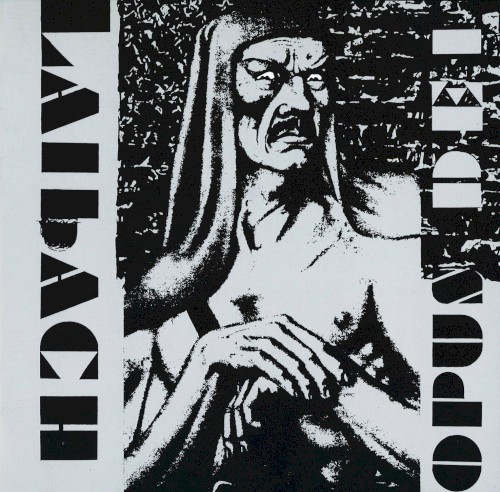
Opus Dei (1987)
曲目
- 1Leben heißt Leben5:29
- 2Geburt einer Nation4:22
- 3Leben-Tod3:59
- 4F.I.A.T.5:13
- 5Opus Dei5:05
- 6Trans-national4:29
- 7How the West Was Won4:27
- 8The Great Seal4:17
- 9Herz-felde4:46
- 10Jägerspiel7:24
- 11Koža (Skin)3:51
- 12Krst (Baptism)5:40
12 首 · 约 59 分钟 · 依据 1987 US 发行的版本,在 MusicBrainz 看这个版本。
介绍
这个词条没有中文维基百科条目,下面是英文维基百科的原文。
Opus Dei is the third studio album by the Slovenian and Yugoslav avant-garde music group Laibach, released on 23 March 1987 by Mute Records. It features "Geburt einer Nation" ("birth of a nation"), a German language cover version of Queen's "One Vision", and two reworkings of "Live Is Life" by the Austrian pop rock band Opus'. The Opus song became the German language "Leben heißt Leben" and the English language "Opus Dei". "The Great Seal" is the national anthem of the NSK State, the lyrics taken from Winston Churchill's 1940 "We shall fight on the beaches" speech. A new arrangement of the song appears on Laibach's seventh studio album Volk (2006), with the title "NSK". On Volk, the song is credited to Laibach and Slavko Avsenik Jr.
There are two further connections with Queen's A Kind of Magic studio album. Although the drum loop in "Trans-National" is nearly identical to that in Queen's "Don't Lose Your Head", it is composed in fact from samples from the introduction musical theme from the Yugoslavian epic partisan film Battle of Neretva (1969), composed by Bernard Herrmann. The elements of "How the West Was Won" (specifically the rhythm and harmonised guitars) are inspired by Queen's "Gimme the Prize (Kurgan's Theme)".
The album was included in the musical reference book 1001 Albums You Must Hear Before You Die (2006). In 2023, Consequence ranked it at number 6 in its list of the "50 Best Industrial Albums of All Time". Al Jourgensen of the American industrial metal band Ministry named it one of the ten essential industrial records.
In December 2024, Laibach released Opus Dei Revisited, a "collection of new versions which radically interrogate the source material". The release consists of two complete versions, the first reworked by the band themselves and the second by Rico Conning, who produced and mixed the original album.
The cover picture is a reworked version of the Werner Peiner painting A Demon of the Hour (Terror) from 1944.
正文摘自英文维基百科「Opus Dei (album)」,按 CC BY-SA 4.0 使用;删去了参考文献、外部链接、表格和图片。
资料卡
- 作品性质
- 音乐专辑
- 表演者
- 莱巴赫
- 发行日期
- 1987 年 3 月 23 日
- 流派
- 军事工业音乐
- 语言
- 多语种
- 唱片公司
- 静音唱片
- 制作人
- Rico Conning
资料来自 Wikidata Q914302(CC0)。
制作名单
- 厂牌
- Wax Trax! Records(目录号 WAXCD 030)
制作
- 制作人
- Rico Conning(其中 8 首)
词曲与编曲
- 译词
- 莱巴赫(第 1、2 首)、Ivo Štandeker(第 2 首)
- 作曲
- 莱巴赫(第 1 首)、Milan Fras(第 5 首)、Dejan Knez(第 5 首)、Ivan Novak(第 5 首)
- 作词
- 莱巴赫(第 5 首)
名单来自 MusicBrainz(CC0)这一发行版本的关系数据,由志愿者录入,不一定齐全。
更多资料与乐评
在哪听
莱巴赫 的其他专辑
艺人页 ›

相似的专辑




同在 1987 年发行