乐单
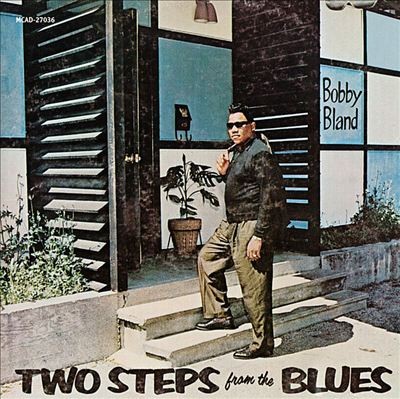
Two Steps from the Blues (1961)
曲目
- A1Two Steps From the Blues2:35
- A2Cry, Cry, Cry2:43
- A3I'm Not Ashamed2:36
- A4Don't Cry No More2:28
- A5Lead Me On2:06
- A6I Pity the Fool2:43
- B1I've Just Got to Forget You2:34
- B2Little Boy Blue2:39
- B3St. James Infirmary2:26
- B4I'll Take Care of You2:26
- B5I Don't Want No Woman2:40
- B6I've Been Wrong So Long2:19
12 首 · 约 30 分钟 · 依据 1961 US 发行的版本,在 MusicBrainz 看这个版本。
介绍
这个词条没有中文维基百科条目,下面是英文维基百科的原文。
Two Steps from the Blues is the debut album by American blues singer Bobby Bland, in 1961. It compiles five songs recorded between 1956 and 1960 and seven songs recorded in two sessions from August 3 to November 12, 1960. The sessions took place at Universal Recording Corporation in Chicago, where Bland and his backing band moved after a series of successful singles and albums. The backing band was composed of Joe Scott and Melvin Jackson (trumpet), Pluma Davis (trombone), Robert Skinner and L. A. Hill (tenor saxophone), Rayfield Devers (baritone saxophone), Teddy Reynolds (piano), Clarence Holloman (guitar on some tracks, notably "I Don't Want No Woman," where Bobby Bland shouts, "Look out, Clarence!" in the middle of the guitar solo), Wayne Bennett (guitar on other tracks), Hamp Simmons (bass), and John "Jabo" Starks (drums). Scott also served as an arranger.
The album was critically and commercially successful. It produced two singles, "I Pity The Fool" and "Don't Cry No More", which charted at number 1 and 2 on the Billboard R&B chart, respectively. Two Steps from the Blues was ranked at number 217 on Rolling Stone magazine's list of the 500 Greatest Albums of All Time.
Recording
Bobby Bland was an established artist who produced several top-ten singles, such as "Further Up the Road" (1957), "Little Boy Blue" (1958) and "I'll Take Care of You" (1959), and recorded two successful albums, Blues Consolidated and Like Er Red Hot for Duke Records. Moving to Chicago on August 3, 1960, to the Universal Studio, Don Robey suggested with arranger Joe Scott, who wrote most of Bland songs, to produce a third album. It was decided that nine new songs should appear in Two Steps from the Blues. Bland was backed by "a tight, well-rehearsed, bombastic, blues band", as biographer Charles Farley noted, consisting of Joe Scott and Melvin Jackson on trumpet, Pluma Davis on trombone, Robert Skinner and L. A. Hill on tenor saxophone, Rayfield Devers on baritone saxophone, Teddy Reynolds on piano, Wayne Bennett on guitar, Hamp Simmons on bass, and John "Jabo" Starks on drums. Starks explained that one side was done in a few days and the second side was finished after a several-weeks-long break.
Three songs from the first session were later included on Two Steps from the Blues: the slow with funky leanings "Cry, Cry, Cry", which was listed on David Marsh's "1001 Greatest Singles Ever Made" for Scott's arrangement and Bland's singing, later peaked at number 9 on Billboard R&B chart as the A-side of the ballad "I've Been Wrong So Long", staying there for eighteen weeks; "I've Been Wrong So Long", on which biographer Farley especially praised Bennett's guitar skills, calling him the "most articulate blues guitarist ever"; and "Two Steps from the Blues", which was initially written by Texas Johnny Brown and recorded as a demo tape. The title track was later rearranged by Bennett, and Brown received a small salary. The big band-like "Close to You" and "dirgelike blues" "How Does a Cheatin' Woman Feel", which was too similar to "I'll Take Care of You", were excluded from the album, but included as bonus tracks on re-releases.
The second session, taking place on November 12, 1960, produced Joe Primrose's "St. James Infirmary" and the moody "I've Just Got to Forget You". The latter was lifted only as the b-side of "Keep on Loving Me (You'll See the Change)" (1970). The third song on that session is "Don't Cry No More", featuring a faster rhythm, later charted at number 2 on Billboard R&B. "I Pity the Fool" was written by Joe Medwick and became Bland's second number-one hit on the R&B chart. The other five songs in the album were recorded before Two Steps from the Blues: "I Don't Want No Woman", recorded on a January 22, 1957 session with "I Smell Trouble", the first was compared with "It's My Life Baby," but had no blowers; "Little Boy Blue" (1958), "I'm Not Ashamed" (1959), "I'll Take Care of You" (1959) and "Lead Me On" (1960).
Reception
The album was released on January 1, 1961, and became a commercial and critical success. Especially Bland's strong and emotional voice and Scott's thoughtful arrangements were praised by critics. Stephen Thomas Erlewine of AllMusic calls the album, "one of the great records in electric blues and soul-blues." Furthermore, "it's one of the key albums in modern blues, marking a turning point when juke joint blues were seamlessly blended with gospel and Southern soul, creating a distinctly Southern sound where all of these styles blended so thoroughly it was impossible to tell where one began and one ended." Geoff Brown commented in Mojo: "no song is wasted and hardly a note sounds false as Bland's blues-wearied voice, driven to anguished screams, grapples with the vicissitudes of life and love, his torment echoed and bolstered by Joe Scott’s memorable horn arrangements."
正文摘自英文维基百科「Two Steps from the Blues」,按 CC BY-SA 4.0 使用;删去了参考文献、外部链接、表格和图片;篇幅所限只节选了前面一部分,全文见原条目。
资料卡
- 作品性质
- 音乐专辑
- 表演者
- 巴比·布兰德
- 发行日期
- 1961 年 1 月 1 日
- 流派
- 灵魂蓝调
- 唱片公司
- Duke Records
- 下一部
- Here's the Man!
资料来自 Wikidata Q7859256(CC0)。
制作名单
- 厂牌
- Duke(目录号 DLP 74)
词曲与编曲
- 作曲
- Don Robey(第 A2、A4、A5、A6、B5 首)、[traditional](第 B3 首)
- 作词
- Don Robey(第 A2、A4、A5、A6、B5 首)、[traditional](第 B3 首)
- 词曲
- Don Robey(第 A1、A3、B6 首)、Joseph Scott(第 A3、B2 首)、John Riley Brown(第 A1 首)、LaCharles Harper(第 B2 首)、Ray Agee(第 B6 首)
- 编曲
- Joe Primrose(第 B3 首)
名单来自 MusicBrainz(CC0)这一发行版本的关系数据,由志愿者录入,不一定齐全。
更多资料与乐评
在哪听
巴比·布兰德 的其他专辑
艺人页 ›
相似的专辑