乐单
曲目
- 1I´m a Fool to Want You3:26
- 2For Heaven’s Sake3:29
- 3You Don’t Know What Love Is3:51
- 4I Get Along Without You Very Well3:02
- 5For All We Know2:56
- 6Violets for Your Furs3:26
- 7You’ve Changed3:20
- 8It’s Easy to Remember4:03
- 9But Beautiful4:32
- 10Glad to Be Unhappy4:10
- 11I’ll Be Around3:27
- 12The End of a Love Affair4:48
- 13Prelude to a Kiss5:35
- 14A Ghost of a Chance4:27
- 15Gone With the Wind3:24
- 16Come Rain or Come Shine4:22
- 17What’s New?4:16
- 18Fine and Mellow6:21
- 19When Your Lover Has Gone2:30
- 20Don’t Explain2:52
20 首 · 约 78 分钟 · 依据 1958 XW 发行的版本,在 MusicBrainz 看这个版本。
介绍
这个词条没有中文维基百科条目,下面是英文维基百科的原文。
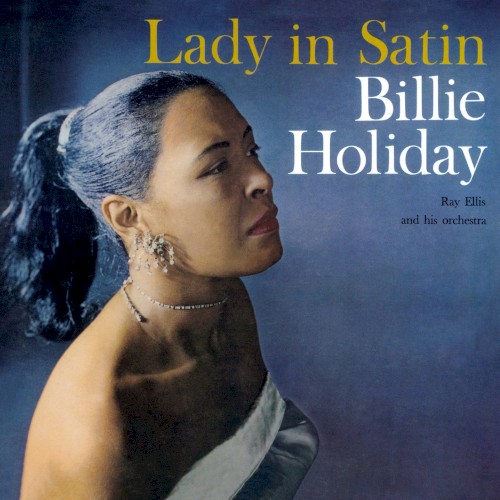
Lady in Satin is the eleventh studio album by jazz singer Billie Holiday, released in 1958 on Columbia Records, catalogue CL 1157 in mono and CS 8048 in stereo. It is the penultimate album completed by the singer. Her final album, "Billie Holiday" was released just before her death; the album was retitled Last Recording, and re-released just after her death. Lady in Satin was produced by Irving Townsend and engineered by Fred Plaut.
Background
For the majority of the 1950s, Billie Holiday was signed to jazz producer Norman Granz's Clef Records, which was later absorbed into the newly founded Verve Records by 1956. All of her work for Norman Granz consisted of small jazz combos, reuniting her with musicians she recorded with back in the 1930s when she made her first recordings with Teddy Wilson. There were talks in the early 1950s of Holiday making albums, or songbooks, dedicated to composers such as George and Ira Gershwin and Jerome Kern, but they fell through and ended up going to Ella Fitzgerald when she signed to Verve. By 1957, Holiday had recorded twelve albums for Granz and was unhappy. Therefore, she decided not to renew her contract.
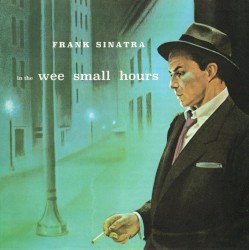
By October 1957, Holiday contacted Columbia producer Irving Townsend and expressed interest in recording with bandleader Ray Ellis. Originally, she wanted to do an album with bandleader Nelson Riddle after hearing his arrangements for Frank Sinatra's albums, particularly In the Wee Small Hours, but after hearing Ellis's version of "For All We Know", she wanted to record with him. When Holiday came to Townsend about the album, he was surprised:
It would be like Ella Fitzgerald saying that she wanted to record with Ray Conniff. But she said she wanted a pretty album, something delicate. She said this over and over. She thought it would be beautiful. She wasn't interested in some wild swinging jam session ... She wanted that cushion under her voice. She wanted to be flattered by that kind of sound.
Townsend got in touch with Ellis about the album. Ellis, having heard Holiday's work throughout the 1930s and 1940s, was excited for the project, saying, "I couldn't believe it ... I didn't know she was aware of me." Townsend arranged a meeting for both Holiday and Ellis to sign a contract with Columbia. Columbia provided an unlimited budget for the album. The musicians in the orchestra were paid $60 for the three sessions and Holiday was paid $150 per side in advance. Townsend went on to set up the recording dates for late February 1958.
Content
When Holiday signed her contract for Columbia, the label looked at it as a new beginning as this was her return to the label after sixteen years. During Holiday's time with Norman Granz's label, she revisited old material she had previously recorded and songs that were well known in her repertoire, such as "My Man", "Lover, Come Back to Me", "I Cover the Waterfront", "Them There Eyes", and "I Only Have Eyes for You". Columbia wanted Holiday to do an album of songs she had never recorded before, so the material for Lady in Satin derived from the usual sources for Holiday in her three-decade career, that of the Great American Songbook of classic pop. Also, unlike the bulk of Holiday's recordings with Norman Granz and her early years at Columbia in the 1930s and early 1940s, rather than in the setting of a jazz combo Holiday returns to the backdrop of full orchestral arrangements as done during her Decca years eight years earlier. She wanted the album to be in the same contemporary vein of Frank Sinatra or Ella Fitzgerald on her Song Books series.
Ray Ellis made his arrangements of the songs to match Holiday's voice. By the mid- to late-1950s, Holiday's voice had changed drastically due to years of alcohol and drug abuse, altering its texture and giving it a fragile, raspy sound. Despite her voice's condition, its distinctive edge had not been lost, and the style of phrasing that had made her a popular jazz singer remained at her command. Ray Ellis said of Holiday's voice:
I heard her voice [and] I dug it. I was in love with that voice and I was picturing a very evil, sensuous, sultry, very evil ... probably one of the most evil voices I've heard in my life ... Evil is earthy to me. When you say someone is evil, it means very, very bad. I don't mean bad.
Ellis used a 40-piece orchestra, complete with horns, strings, reeds, and even a three-piece choir. It would turn out to be Holiday's most expensive music production. Soloists on the album included Mel Davis, Urbie Green, and the bebop trombone pioneer J. J. Johnson.
正文摘自英文维基百科「Lady in Satin」,按 CC BY-SA 4.0 使用;删去了参考文献、外部链接、表格和图片;篇幅所限只节选了前面一部分,全文见原条目。
资料卡
- 作品性质
- 音乐专辑
- 表演者
- 比莉·荷莉戴
- 发行日期
- 1958 年 6 月
- 录音地点
- CBS30街录音室
- 流派
- 声乐爵士
- 语言
- 英语
- 唱片公司
- 哥伦比亚唱片
- 制作人
- 厄文·汤申德
资料来自 Wikidata Q285175(CC0)。
制作名单
- 厂牌
- Efor, S.L
演奏与演唱
- 主唱
- 比莉·荷莉戴(第 1、4、5、8、12 首)
- 指挥
- Ray Ellis(第 1、4、5、8 首)
- 长笛
- Danny Bank(第 1、4、5、8 首)、Phil Bodner(第 1、4、5、8 首)、Thomas Parshley(第 1、4、5、8 首)、Romeo Penque(第 1、4、5、8 首)
- 中提琴
- Sidney Brecher(第 1、4、5、8 首)、Richard Dickler(第 1、4、5、8 首)
- 大提琴
- Maurice Brown(第 1、4、5、8 首)、David Soyer(第 1、4、5、8 首)
- 小号
- Billy Butterfield(第 1、4、5、8 首)、Mel Davis(第 1、4、5、8 首)、Bernie Glow(第 1、4、5、8 首)
- 吉他
- Barry Galbraith(第 1、4、5、8 首)
- 小提琴
- Emanuel Green(第 1、4、5、8 首)、Harry Hoffman(第 1、4、5、8 首)、Harry Katzman(第 1、4、5、8 首)、Leo Kruczek(第 1、4、5、8 首)、Milton Lomask(第 1、4、5、8 首)、Harry Melnikoff(第 1、4、5、8 首)、George Ockner(第 1、4、5、8 首)、Sam Rand(第 1、4、5、8 首)
- 长号
- Jack Green(第 1、4、5、8 首)、Urbie Green(第 1、4、5、8 首)、J.J. Johnson(第 1、4、5、8 首)
- 贝斯
- Milt Hinton(第 1、4、5、8 首)
- 鼓
- Osie Johnson(第 1、4、5、8 首)
- 低音长号
- Tom Mitchell(第 1、4、5、8 首)
- 竖琴
- Janet Putnam(第 1、4、5、8 首)
- 钢琴
- 马尔·沃尔德鲁(第 1、4、5、8 首)
- 乐团
- Ray Ellis and His Orchestra(第 1、4、5、8 首)
- 和声
- Elise Bretton(第 1、4、5、8 首)、Miriam Workman(第 1、4、5、8 首)
- 演出
- Ray Ellis and His Orchestra(第 12 首)
词曲与编曲
- 作曲
- 理察·罗杰斯(第 8、10 首)、霍奇·卡迈克尔(第 4 首)、J. Fred Coots(第 5 首)、Carl Fischer(第 7 首)、Jimmy Van Heusen(第 9 首)、Edward Redding(第 12 首)、杜克·艾灵顿(第 13 首)、Herb Magidson(第 15 首)、Allie Wrubel(第 15 首)、哈罗德·阿兰(第 16 首)、Bob Haggart(第 17 首)、比莉·荷莉戴(第 18 首)
- 作词
- Lorenz Hart(第 8、10 首)、Johnny Burke(第 9、17 首)、Jane Brown Thompson(第 4 首)、Sam M. Lewis(第 5 首)、Bill Carey(第 7 首)、Edward Redding(第 12 首)、Irving Gordon(第 13 首)、Irving Mills(第 13 首)、Herb Magidson(第 15 首)、Johnny Mercer(第 16 首)、比莉·荷莉戴(第 18 首)
- 词曲
- Joel Herron(第 1 首)、弗兰克·辛纳特拉(第 1 首)、Jack Wolf(第 1 首)
名单来自 MusicBrainz(CC0)这一发行版本的关系数据,由志愿者录入,不一定齐全,人数太多只列了前面一部分。
更多资料与乐评
在哪听
比莉·荷莉戴 的其他专辑
艺人页 ›


相似的专辑