乐单
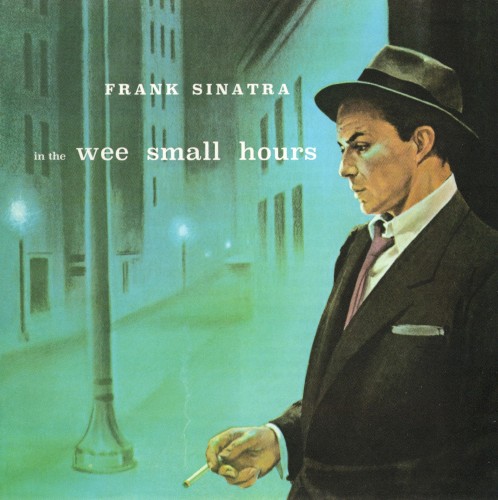
In the Wee Small Hours (1955)
滚石 500(2020) #282滚石 500(2003) #1001001 张专辑
- 艺人
- 弗兰克·辛纳特拉
- 发行
- 1955-04-25
- 类型
- 专辑
- 唱片公司
- Capitol唱片
- 制作人
- Voyle Gilmore
- 版本
- MusicBrainz 上有 22 个发行版本
曲目
- A1In the Wee Small Hours of the Morning3:01
- A2Mood Indigo3:30
- A3Glad to Be Unhappy2:35
- A4I Get Along Without You Very Well3:43
- A5Deep in a Dream2:49
- A6I See Your Face Before Me3:24
- A7Can't We Be Friends?2:48
- A8When Your Lover Has Gone3:10
- B1What Is This Thing Called Love2:36
- B2Last Night When We Were Young3:17
- B3I'll Be Around2:59
- B4Ill Wind3:46
- B5It Never Entered My Mind2:42
- B6Dancing on the Ceiling2:57
- B7I'll Never Be the Same3:06
- B8This Love of Mine3:34
16 首 · 约 50 分钟 · 依据 1955-04-25 US 发行的版本,在 MusicBrainz 看这个版本。
介绍
这个词条没有中文维基百科条目,下面是英文维基百科的原文。
In the Wee Small Hours is the ninth studio album by the American singer Frank Sinatra, released on April 25, 1955, by Capitol Records. Produced by Voyle Gilmore with arrangements by Nelson Riddle, the album's songs deal with themes such as introspection, melancholy, lost love, failed relationships, depression and night life; as such, it has been called one of the first concept albums. The cover artwork reflects these themes, portraying Sinatra alone at night on an eerie and deserted city street awash in blue-tinged street lights.
The album was a commercial success, cementing Sinatra's career resurgence after releasing a string of hit singles and two prior albums with Capitol, and winning an Academy Award for his role in the 1953 film From Here to Eternity. In the Wee Small Hours peaked at number two on the US Billboard 200 chart, where it stayed for 18 weeks, becoming Sinatra's highest-charting album since Songs by Sinatra in 1947. It was issued as two 10-inch LP discs, but also as one 12-inch record LP, making it one of the first of its kind in the pop field. It was also issued as four four-song 45 rpm EP discs sold in cardboard sleeves with the same cover as the LPs. The success of the album helped popularize the 12-inch LP in popular music, and the 10-inch format quickly fell into obsolescence.
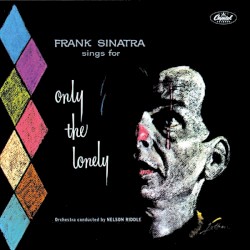
Critically acclaimed since its initial release, Rolling Stone ranked it number 100 on their list of The 500 Greatest Albums of All Time in 2003, dropping it to number 101 in the 2012 revision and to number 282 in the 2020 update; it maintained its ranking of 282 in the 2023 update as well. Sinatra would successfully continue recording "concept" albums with later releases such as Songs for Swingin' Lovers! (1956), Where Are You? (1957), Only the Lonely (1958) and No One Cares (1959).
Background
By the early 1950s, Sinatra saw his career in decline, his teen "bobby soxer" audience having lost interest in him as he entered his late 30s. In 1951, he went so far as to attempt suicide, according to one author. Later that year, a second season of The Frank Sinatra Show was aired on CBS, but failed to receive the same positive reception the first season had, with its host having lost his previous energy. Later, Sinatra was dropped from Columbia.
Against the wishes of his colleagues, on March 14, 1953, vice president of A&R at Capitol Alan Livingston signed Sinatra to a seven-year deal. The deal proved to be a success; later that year in August, Sinatra appeared as Private Angelo Maggio in the film From Here to Eternity. The film was successful and his performance was acclaimed, winning the Academy Award for Best Supporting Actor and the Golden Globe Award for Best Supporting Actor. With this new popularity, he recorded two 10-inch LP albums, Songs for Young Lovers and Swing Easy!, which both peaked at number three on the Billboard album chart, with the latter reaching number five on the UK Album Charts. His performance as the lead character in The Man with the Golden Arm earned him nominations for Best Actor at the Academy Awards and the BAFTA awards.
Relationship troubles
By the time he recorded In the Wee Small Hours, Sinatra witnessed the end of several relationships. He and his first wife, Nancy Barbato, separated on Valentine's Day 1950. While still married, he began a relationship with Ava Gardner. After he and Barbato divorced in October 1951, he married Gardner ten days later. But they were both jealous of the other's extramarital affairs. The relationship deteriorated during the recording of Songs for Young Lovers.
Gardner left Sinatra two months after the release of From Here to Eternity, divorcing in 1957. She said, "We don't have the ability to live together like any normal married couple." It is assumed that this album's grouping of "love gone bad" songs, and Sinatra's poignant renderings, were a direct result of Sinatra's failing relationship with Gardner, to the point that these are called "Ava Songs".
Riddle credited Sinatra's loss of Gardner with his ability to sing the type of songs contained in this album. The failure of this relationship did not shatter Sinatra but instead caused him to sing more emotionally. In the midst of these personal disturbances, Sinatra began selecting songs for a new album. He would rehearse each one of them reiteratively at home with Bill Miller, his pianist.
Recording
Sinatra's vision for the album distinguished him from many other pop acts of the time, most of whom put out records that were little more than collections of already released singles. He created a firm distinction between songs intended as singles for radio airplay and for jukeboxes, and those songs he intended to package together in an album. Thus, the sessions intended for album releases tended to be more serious, with a focus on artistic experimentation rather than strict commercial success.
正文摘自英文维基百科「In the Wee Small Hours」,按 CC BY-SA 4.0 使用;删去了参考文献、外部链接、表格和图片;篇幅所限只节选了前面一部分,全文见原条目。
资料卡
- 作品性质
- 音乐专辑
- 表演者
- 弗兰克·辛纳特拉
- 发行日期
- 1955 年 4 月 25 日
- 流派
- 爵士乐
- 语言
- 英语
- 唱片公司
- Capitol唱片
- 制作人
- Voyle Gilmore
资料来自 Wikidata Q221573(CC0)。
制作名单
- 厂牌
- Capitol Records(目录号 W 581)
- 录音室
- 录音:KHJ Studios(Hollywood)
制作
- 制作人
- Voyle Gilmore
- 录音
- John Palladino
演奏与演唱
- 指挥
- 纳尔逊·里德尔
- 钢琴
- Bill Miller
- 乐团
- Nelson Riddle and His Orchestra
- 演唱
- 弗兰克·辛纳特拉
- 吉他
- George van Eps(其中 15 首)
- 小提琴
- Harry Bluestone(其中 12 首)、Mischa Russell(其中 12 首)、Paul Shure(其中 12 首)、Felix Slatkin(其中 12 首)、Victor Bay(其中 8 首)、Alex Beller(其中 8 首)、Nathan Ross(其中 7 首)、Marshall Sosson(其中 7 首)、Walter Edelstein(第 A1、A4、A8、B2、B8 首)、David Frisina(第 A1、A4、A8、B8 首)、Henry Hill(第 A1、A4、A8、B8 首)、Erno Neufeld(第 A1、A4、A8、B8 首)
- 竖琴
- Kathryn Julye(其中 12 首)
- 低音提琴
- Phil Stephens(其中 11 首)、Morty Corb(第 A1、A4、A8、B8 首)、Meyer "Mike" Rubin(第 A1、A4、A8、B8 首)
- 中提琴
- Alvin Dinkin(其中 8 首)、Stanley Harris(第 A1、A4、A8、B8 首)、Paul Robyn(第 A1、A4、A8、B8 首)、Dave Sterkin(第 A1、A4、A8、B8 首)、Eleanor Slatkin(第 A2、A6、B1、B4 首)
- 大提琴
- Edgar Lustgarten(其中 8 首)、Eleanor Slatkin(其中 8 首)、Ray Kramer(其中 7 首)、Kurt Reher(其中 7 首)、Cy Bernard(第 A5、B2、B5、B7 首)、James Arkatov(第 A5、B5、B7 首)、Armand Kaproff(第 A5、B5、B7 首)
- 钢片琴
- Paul Smith(其中 8 首)
- 鼓
- Alvin Stoller(其中 8 首)、Louis Singer(第 A1、A4、A8、B8 首)
- 小号
- Harry “Sweets” Edison(其中 7 首)
- 萨克斯
- Mahlon Clark(第 A2、A6、B1、B2、B4 首)、Champ Webb(第 A2、A6、B1、B2、B4 首)、Skeets Herfurt(第 A2、A6、B1、B4 首)、Ted Nash(第 A2、A6、B1、B4 首)、Ted Nash(第 A2、A6、B1、B4 首)、Irving “Babe” Russin(第 A2、A6、B1、B4 首)
- 木管
- Mahlon Clark(第 A2、A6、B1、B2、B4 首)、Champ Webb(第 A2、A6、B1、B2、B4 首)、Skeets Herfurt(第 A2、A6、B1、B4 首)、Ted Nash(第 A2、A6、B1、B4 首)、Ted Nash(第 A2、A6、B1、B4 首)、Irving “Babe” Russin(第 A2、A6、B1、B4 首)
- 圆号
- John Cave(第 A5、B5、B7 首)、Vincent DeRosa(第 A5、B5、B7 首)、Joseph Eger(第 A5、B5、B7 首)
- 长笛
- Arthur Gleghorn(第 A5、B5、B7 首)、Luella Howard(第 A5、B5、B7 首)
词曲与编曲
- 编曲
- 纳尔逊·里德尔
- 作曲
- 理察·罗杰斯(第 A3、B5、B6 首)
- 作词
- Lorenz Hart(第 A3、B5、B6 首)
包装与设计
- 美术指导
- Tommy Steele
名单来自 MusicBrainz(CC0)这一发行版本的关系数据,由志愿者录入,不一定齐全,人数太多只列了前面一部分。
更多资料与乐评
在哪听
弗兰克·辛纳特拉 的其他专辑
艺人页 ›
相似的专辑