乐单
曲目
- 1Roots Bloody Roots3:32
- 2Attitude4:15
- 3Cut‐Throat2:45
- 4Ratamahatta4:31
- 5Breed Apart4:01
- 6Straighthate5:21
- 7Spit2:46
- 8Lookaway5:26
- 9Dusted4:04
- 10Born Stubborn4:08
- 11Jasco1:57
- 12Itsári4:49
- 13Ambush4:40
- 14Endangered Species5:19
- 15Dictatorshit1:26
- 16Procreation (of the Wicked)3:40
- 17Symptom of the Universe4:17
17 首 · 约 67 分钟 · 依据 1996 US 发行的版本,在 MusicBrainz 看这个版本。
介绍
这个词条没有中文维基百科条目,下面是英文维基百科的原文。
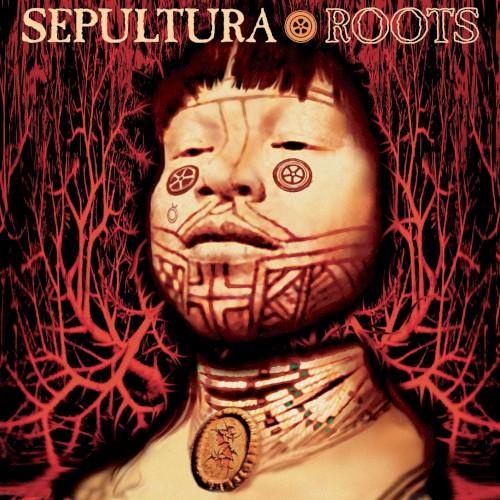
Roots is the sixth studio album by Brazilian heavy metal band Sepultura. It was released in Europe on February 20, 1996 (1996-02-20) and in the U.S. three weeks later on March 12 by Roadrunner Records. It is the band's last studio album to feature founder and vocalist/rhythm guitarist Max Cavalera, who left in late 1996 at the conclusion of a run of European dates in support of the album.
Following the shift to slower tempos and Latin-tinged rhythms on Chaos A.D., Roots delves further into Brazilian musical textures and features significant contributions from iconic Brazilian musician Carlinhos Brown, who guided and arranged the sections throughout the album that feature ensemble percussion playing. Both in sound and overall aesthetic, Roots is a conscious nod to Brazil's marginalized indigenous population and cultures. The song "Itsári" features a Xavante chant that re-appears on the song "Born Stubborn" and serves as a loose thematic thread for the album, which showcases the band's increased affinity for experimentation and collaboration.
"Lookaway" features guest appearances by Korn vocalist Jonathan Davis, then-Korn drummer David Silveria, House of Pain/Limp Bizkit turntablist DJ Lethal, and Faith No More/Mr. Bungle vocalist Mike Patton. Riff-wise, Roots also draws influence from the then-surging nu metal movement, specifically Korn (whose first two albums were also produced by Roots producer Ross Robinson) and Deftones. After leaving the band, Max Cavalera continued pursuing the nu metal and "world" stylings of Roots with his band Soulfly.
Roots has received critical acclaim as a seminal work in Sepultura's discography. It has proven commercially successful, selling over two million copies worldwide, and remains Sepultura's highest-charting album, peaking at 27 on the Billboard 200.
Initial inspiration and recording
Roots is the product of a concerted effort on the band's part to embrace its Brazilian heritage, including indigenous sounds that were unfamiliar to the Sepultura's members up to that point. The album reflects Sepultura's heightened focus on the music, culture, politics, and history of their native country. The overarching concept was inspired by the film At Play in the Fields of the Lord (particularly the scene in which Tom Berenger's character parachutes into an Amazonian village populated by the Niaruna people). The movie inspired Max Cavalera to try and record with a Native Brazilian tribe. After convincing Roadrunner Records to support the project, Cavalera contacted Angela Pappiani, at the time the communications coordinator for Brazil's Núcleo de Cultura Indígena (Indigenous Culture Center). Nearly one year after Cavalera's initial contact, Pappiani arranged for a small party including band, herself, Robinson, and then-manager Gloria Cavalera to travel to Mato Grosso, Brazil to visit the Xavante tribe and record with them. At the time, the members of Sepultura were only peripherally aware of the indigenous tribes residing in Brazil's interior.
In a 2016 interview with Nashville Scene, Igor Cavalera remembered:
Every second of that trip was insane in a very inspiring way. But there's a few things that really stand out. Like when they explained to us that the only way they wrote music was if someone in the tribe dreamed of the music. They couldn't just write a lyric or a melody. It has to be transmitted to them in a dream. From a musician's point of view, it was like, "Wow, this is a completely different way of approaching music."University of Iowa anthropology professor Laura Graham explained the role of music in Xavante culture to PopMatters in 2016:
For them, music functions as a medium for entering into other realms—whether they be other dimensions of existence or other cultures. Well before they had any contact with white people, part of their culture has always entailed that men engage the spirit world, especially through music. This happens in their dreams. Not all, but most of their music is inspired—you could say "composed", although they say received—in their dreams through encounters with other worlds. When people come and visit the community from the outside, one of the things the Xavante ask them to do is sing them a song. Music is this medium for entering into relations with others—others meaning spiritual beings or, for example, white society or other cultures. The Xavante want to be known and they want their culture to be known. They want their music to be known because they think it's beautiful and view it as a contribution to humanity. It's like, "We have something beautiful to contribute to humanity—and, by the way, here we are suffering. We want people to know who we are and that we exist." And so when they got this proposal from a musical group that wanted to come jam and share music with them, they loved it.
正文摘自英文维基百科「Roots (Sepultura album)」,按 CC BY-SA 4.0 使用;删去了参考文献、外部链接、表格和图片;篇幅所限只节选了前面一部分,全文见原条目。
资料卡
- 作品性质
- 音乐专辑
- 表演者
- 神碑合唱团
- 发行日期
- 1996 年 2 月 20 日
- 流派
- 熏黑死亡金属、蛊戮金属、新金属
- 语言
- 英语
- 唱片公司
- Roadrunner唱片
- 制作人
- 罗斯·罗宾逊
资料来自 Wikidata Q852919(CC0)。
制作名单
- 厂牌
- Roadrunner Records(目录号 RR 262.042)
制作
- 混音
- Andy Wallace、Steve Sisco(其中 15 首)
- 制作人
- 神碑合唱团、Ross Robinson(其中 16 首)、DJ Lethal(第 8 首)、Andy Wallace(第 17 首)
- 工程师
- Rob Agnello(其中 15 首)、Chuck Johnson(其中 15 首)、Richard Kaplan(其中 15 首)
演奏与演唱
- 吉他
- Max Cavalera(其中 16 首)、Andreas Kisser(其中 13 首)
- 贝斯
- Paulo Jr.(其中 16 首)
- 主唱
- Max Cavalera(其中 13 首)
- 鼓
- Igor Cavalera(其中 12 首)
- 打击乐
- Igor Cavalera(第 2、5、9、10、12 首)、神碑合唱团(第 4、13、14 首)、卡利尼·奥斯布朗(第 4 首)、Ross Robinson(第 4 首)、David Silveria(第 4 首)、Paulo Jr.(第 12 首)
- 和声
- Andreas Kisser(第 6、9、13 首)
- berimbau
- Max Cavalera(第 2、5 首)、卡利尼·奥斯布朗(第 13 首)
- 演唱
- Max Cavalera(第 4、17 首)、卡利尼·奥斯布朗(第 4 首)、乔纳森·戴维斯(第 8 首)、麦克·莫拉斯基(第 8 首)
- 原声吉他
- Andreas Kisser(第 11、12 首)、Max Cavalera(第 12 首)
- 非洲鼓
- 卡利尼·奥斯布朗(第 4 首)、Igor Cavalera(第 9 首)
- 苏尔多鼓
- 卡利尼·奥斯布朗(第 4 首)
- 葫芦沙铃
- 卡利尼·奥斯布朗(第 13 首)
- 西塔琴
- Andreas Kisser(第 13 首)
- 鼓类乐器
- 卡利尼·奥斯布朗(第 14 首)、Igor Cavalera(第 16 首)
词曲与编曲
- 作曲
- 神碑合唱团(其中 14 首)、卡利尼·奥斯布朗(第 4 首)、DJ Lethal(第 8 首)、Andreas Kisser(第 11 首)、[traditional](第 12 首)、Geezer Butler(第 17 首)、托尼·艾奥米(第 17 首)、奥齐·奥斯本(第 17 首)、Bill Ward(第 17 首)
- 作词
- Max Cavalera(其中 10 首)、Andreas Kisser(第 5、9 首)、D‐Low(第 2 首)、卡利尼·奥斯布朗(第 4 首)、神碑合唱团(第 4 首)、乔纳森·戴维斯(第 8 首)、Geezer Butler(第 17 首)、托尼·艾奥米(第 17 首)、奥齐·奥斯本(第 17 首)、Bill Ward(第 17 首)
- 器乐编曲
- Andreas Kisser(第 16 首)
- 词曲
- Martin Eric Ain(第 16 首)、Thomas Gabriel Warrior(第 16 首)
名单来自 MusicBrainz(CC0)这一发行版本的关系数据,由志愿者录入,不一定齐全。
更多资料与乐评
在哪听
神碑合唱团 的其他专辑
艺人页 ›


相似的专辑

同在 1996 年发行