乐单
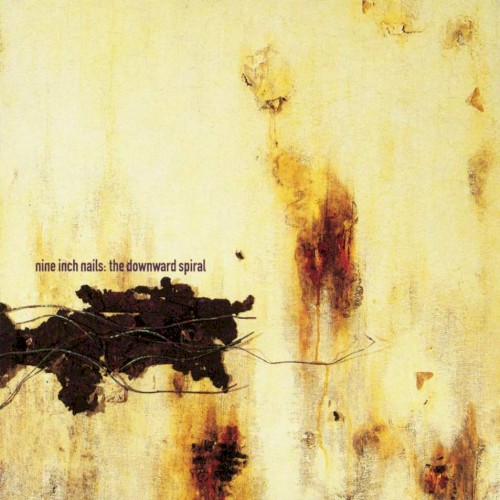
The Downward Spiral (1994)
滚石 500(2020) #122滚石 500(2003) #2001001 张专辑
- 艺人
- 九吋钉乐团
- 发行
- 1994-03-08
- 类型
- 专辑
- 唱片公司
- Nothing唱片、新视镜唱片公司
- 制作人
- 特伦特·雷泽诺、弗拉德 (制片人)
- 版本
- MusicBrainz 上有 37 个发行版本
曲目
- 1Mr Self Destruct4:30
- 2Piggy4:25
- 3Heresy3:54
- 4March of the Pigs2:59
- 5Closer6:13
- 6Ruiner4:59
- 7The Becoming5:32
- 8I Do Not Want This5:41
- 9Big Man With a Gun1:36
- 10A Warm Place3:23
- 11Eraser4:54
- 12Reptile6:52
- 13The Downward Spiral3:57
- 14Hurt6:14
14 首 · 约 65 分钟 · 依据 1994-03-08 US 发行的版本,在 MusicBrainz 看这个版本。
介绍
这个词条没有中文维基百科条目,下面是英文维基百科的原文。
The Downward Spiral is the second studio album by the American industrial rock band Nine Inch Nails. It was released on March 8, 1994, by Nothing Records and Interscope Records in the United States and Island Records in Europe. Considered one of the most influential and emblematic works of the 1990s, this concept album chronicles the self-destructive descent of a misanthropic protagonist into madness, dehumanization, and suicide. Through a metaphorical "downward spiral", the album explores themes such as alienation, addiction, religion, violence, sex, power, depression, and the complete loss of control over oneself and one's surroundings.
The album was recorded primarily by Trent Reznor at the house where the Manson Family committed the Tate–LaBianca murders in 1969, which Reznor made into a home studio dubbed "Le Pig", a reference to the message written in blood on the door by the killers. At the time Reznor suffered from isolation, struggled with depression and drug addiction, and wanted to move away from the abrasive, direct sound of his previous EP, Broken (1992), toward something more textural, atmospheric, and cinematic. The album was influenced by David Bowie's Low and Pink Floyd's The Wall, and combined elements of industrial rock, techno, heavy metal, ambient, and electronica.
The production involved British producer Flood (who had previously worked on Pretty Hate Machine (1989) and Broken) engineer Alan Moulder on the final mix, drummer Chris Vrenna, and notable contributions from musicians such as Adrian Belew (formerly of King Crimson) on guitars and Stephen Perkins (of Jane's Addiction) on percussion. Reznor made extensive use of tools like Pro Tools, TurboSynth, Zoom 9030, Akai and Kurzweil samplers, and processed guitars and vocals into abstract and expressive textures, achieving a "full-range" sound that eschews conventional verse-chorus structures and embraces dissonance, industrial noise, and unusual time signature changes.
The album made a commercial impact despite its rawness. It debuted at number 2 on the Billboard 200, sold millions of copies (achieving quadruple Platinum in the US) and cemented Nine Inch Nails as a cultural phenomenon. However, it also attracted controversy: it was criticized by social conservatives for its graphic lyrics (as in "Big Man with a Gun") erroneously linked to events like the Columbine massacre, and sparked debates about censorship and artistic responsibility.
Writing and recording
Reznor conceived of The Downward Spiral after Nine Inch Nails' run in the lineup of the Lollapalooza festival tour, feeling increasingly alienated and uninterested. The band's concerts were known for their radical onstage dynamic in which members acted aggressively, injured themselves, destroyed instruments, and polluted stages. Reznor had begun to feud with TVT Records, resulting in him co-founding Nothing Records with his then-manager John Malm Jr. as a subsidiary of Interscope. Simultaneously, he began fleshing out the concept for The Downward Spiral, focusing on the life and death of a misanthropic man who rebels against humanity, and kills God before attempting suicide. Reznor frequently struggled with drug addiction and depression, and the themes of the album gradually allegorized his living situation. His peers at some point recommended him the antidepressant Prozac, but he declined to be medicated.
Reznor wanted the album's sound to diverge from the abrasion of Broken, emphasizing mood, texture, restraint and subtlety, although he was unsure about its musical direction. He decided to utilize "full range" sound, focusing on texture and space, and avoiding conventional usage of guitars or synthesizers with a recognizable sound palette. Subsequently, he mainly worked with a Macintosh computer, using music editor programs on the computer to distort frequencies in guitar and bass parts as a form of sound design, and creating collages of sounds with Pro Tools.
Reznor searched for a location for a studio in Los Angeles and moved to 10050 Cielo Drive in 1992 for recording Broken and The Downward Spiral, a decision made against his initial choice to record the album in New Orleans. 10050 Cielo Drive is referred to as the "Tate House" since Sharon Tate was murdered by members of the Manson Family in 1969; Reznor named the studio "Le Pig" after the message that was scrawled on the front door with Tate's blood by her murderers, and stayed there with Malm for 18 months. He called his first night in 10050 Cielo Drive "terrifying" because he already knew it and read books related to the incident. Reznor chose the Tate house to calibrate his engineering skills and the band bought a large mixing console and two Studer multitrack tape machines as resources, a move that he believed was cheaper than renting a recording studio.
正文摘自英文维基百科「The Downward Spiral」,按 CC BY-SA 4.0 使用;删去了参考文献、外部链接、表格和图片;篇幅所限只节选了前面一部分,全文见原条目。
资料卡
- 作品性质
- 音乐专辑
- 表演者
- 九吋钉乐团
- 发行日期
- 1994 年 3 月 8 日
- 录制时间
- 1992 年、1993 年
- 时长
- 1 小时 5 分
- 流派
- 工业摇滚
- 语言
- 英语
- 唱片公司
- Nothing唱片、新视镜唱片公司
- 制作人
- 特伦特·雷泽诺、弗拉德 (制片人)
资料来自 Wikidata Q784933(CC0)。
制作名单
- 厂牌
- Interscope Records(目录号 7 92346-2)、TVT Records(目录号 7 92346-2)、BMG Direct Marketing, Inc.(目录号 D102767)
制作
- 制作人
- 特伦特·雷泽诺、Flood(其中 8 首)
- 混音
- Alan Moulder(其中 12 首)、Sean Beavan(第 9 首)、Bill Kennedy(第 9 首)、特伦特·雷泽诺(第 14 首)
- 编程
- 特伦特·雷泽诺(第 1、5 首)、Flood(第 5 首)、托米·李(第 9 首)
演奏与演唱
- 演出
- 特伦特·雷泽诺(其中 10 首)
- 电贝斯
- 特伦特·雷泽诺(第 1、2、5、14 首)
- 主唱
- 特伦特·雷泽诺(第 1、2、5、14 首)
- 电吉他
- 特伦特·雷泽诺(第 1、2、5 首)
- 合成器
- 特伦特·雷泽诺(第 2、5、14 首)、Flood(第 7 首)
- 吉他
- 艾德灵·比劳(第 1、7 首)、Danny Lohner(第 9 首)、特伦特·雷泽诺(第 14 首)
- 键盘
- 特伦特·雷泽诺(第 1、5 首)
- 鼓
- 特伦特·雷泽诺(第 2、8 首)、Flood(第 8 首)、Stephen Perkins(第 8 首)、Andy Kubiszewski(第 13 首)、Chris Vrenna(第 14 首)
- 钢琴
- 特伦特·雷泽诺(第 2、14 首)
- 风琴
- 特伦特·雷泽诺(第 2 首)
- 打击乐
- 特伦特·雷泽诺(第 2 首)
- 和声
- 特伦特·雷泽诺(第 5 首)
词曲与编曲
- 编曲
- 特伦特·雷泽诺
- 作曲
- 特伦特·雷泽诺
- 作词
- 特伦特·雷泽诺(其中 13 首)
名单来自 MusicBrainz(CC0)这一发行版本的关系数据,由志愿者录入,不一定齐全。
更多资料与乐评
在哪听
九吋钉乐团 的其他专辑
艺人页 ›
相似的专辑

同在 1994 年发行