 乐单
The Disposable Heroes of Hiphoprisy
- 成立 / 解散
- 1990 –
- 国家/地区
- 美国
- 流派
- 嘻哈音乐
- 成员
- 麦克·弗兰迪
介绍
这个词条没有中文维基百科条目,下面是英文维基百科的原文。
The Disposable Heroes of Hiphoprisy were an American hip-hop musical ensemble, active during the early 1990s. The band was formed in 1990 by Michael Franti (vocals, production, misc. instruments) and Rono Tse (drums, percussion, programming), who had worked together in The Beatnigs. They released two albums, the critically acclaimed Hypocrisy Is the Greatest Luxury in 1992, and Spare Ass Annie and Other Tales (with William S. Burroughs) in 1993.
Their first live performance was on August 23, 1991 at the Kennel Club in San Francisco.
The group was associated with contemporary bands, including House of Pain and Pop Will Eat Itself. They also were somewhat reminiscent of Gil Scott-Heron due to the half-spoken vocal styles of Franti and the up-front political messages in the music. The Disposable Heroes played many concerts, sometimes opening the bill for more well-known acts such as U2 (on their landmark Zoo TV Tour), Rage Against the Machine, Nirvana and Arrested Development. Guitarist Charlie Hunter made his recording debut with the Disposable Heroes before earning fame in jazz.
Career
Michael Franti and Rono Tse had both been members of industrial hip-hop band The Beatnigs, which released one album on Alternative Tentacles and undertook several international tours before breaking up.
Explaining the name of the new group, The Disposable Heroes of Hiphoprisy, Franti said in 1992 that
"If you're a young black person, your only role models are athletes and entertainers. You see these people used by the corporate system to make money, after which they're thrown on the scrap heap. they're disposable heroes...the name Hiphoprisy deals with the fact that, inevitably, there is hypocrisy in all of our lives, including mine"
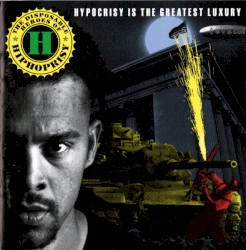
Their debut album, Hypocrisy Is the Greatest Luxury, received critical and underground acclaim upon its release in 1992, but was not commercially successful. Franti's lyrics address a wide range of social issues, from Mass Media bias and abuse ("Television, the Drug of the Nation") to racial equality ("Socio-Genetic Experiment", in large part inspired by Franti's childhood as a biracial child adopted by a white family), and Homophobia (in "Language of Violence"). The album also included a cover of the Dead Kennedys track "California über alles" (with updated lyrics about Governor Pete Wilson). "Television," which received wide airplay on college and alternative radio stations, had previously been recorded by Michael Franti's first band, The Beatnigs. In common with other bands of the time on both sides of the Atlantic Ocean, the Disposable Heroes of Hiphoprisy used sampling and scratching as a primary tool of music recording, and mixed rock, hip-hop and jazz. The album was listed in the book 1001 Albums You Must Hear Before You Die.
Among their contemporaries, the band had strong artistic, political, and personal ties to both Meat Beat Manifesto and Consolidated. The recording of Hypocrisy is the Greatest Luxury was co-produced by Consolidated's Mark Pistel, and prolific Meat Beat Manifesto frontman Jack Dangers assisted with mixing.
In 1993, the duo worked with William S. Burroughs, recording music for a collaborative album entitled Spare Ass Annie and Other Tales. This album diverged greatly from the style of the band's previous work, as they were largely providing musical background and accompaniment to Burroughs' spoken readings from several of his books. The Disposable Heroes split up shortly after.
Peter Jenner, who had managed Pink Floyd and The Clash, managed the group.
Legacy
Michael Franti later formed Spearhead, while Tse worked with the Mystik Journeymen. In 1995, Franti said of Spearhead "The big problem with Disposable Heroes was that it was a record people listened to because it was good for them - kind of like broccoli. I want Spearhead to be more like sweet potatoes."
The style of turntablism developed by the Disposable Heroes of Hiphoprisy was influential on DJ Product©1969, who credited his work, including as a member of the rap rock band Hed PE, as being influenced by Disposable Heroes.
"Television, the Drug of The Nation" was listed at number 401 on NME's The 500 Greatest Songs of All Time in 2014.
正文摘自英文维基百科「The Disposable Heroes of Hiphoprisy」,按 CC BY-SA 4.0 使用;删去了参考文献、外部链接、表格和图片。
资料卡
- 成立
- 1990 年
- 成立于
- 旧金山湾区
- 来自
- 美国
- 活跃起始
- 1990 年
- 流派
- 嘻哈音乐
- 唱片公司
- 4th & B'way唱片公司
- 成员
- 麦克·弗兰迪
资料来自 Wikidata Q1754173(CC0)。
榜单和奖项里的专辑(1)
有关联的艺人
- 麦克·弗兰迪美国 · 1966– · 嘻哈音乐、放克
成员、所属团体、受到的影响,来自 Wikidata。
风格、年代相近的艺人
- 埃米纳姆美国 · 1972– · 嘻哈音乐、恐怖核
- 吐派克·夏库尔美国 · 1971–1996 · 西海岸嘻哈、匪帮说唱
- 玛丽亚·凯莉美国 · 1969– · 当代节奏布鲁斯、流行音乐
- 联合公园美国 · 1996– · 嘻哈音乐、另类金属
- 50 Cent美国 · 1975– · 东海岸嘻哈、匪帮说唱
- 肯伊·威斯特美国 · 1977– · 嘻哈音乐、流行音乐
- 布鲁诺·马尔斯美国 · 1985– · 流行音乐、当代节奏布鲁斯
- 史努比狗狗美国 · 1971– · 西海岸嘻哈、匪帮放克
- 德瑞医生美国 · 1965– · 匪帮说唱、匪帮放克
- 杰斯美国 · 1969– · 东海岸嘻哈、黑手党说唱
- 艾斯·库伯美国 · 1969– · 西海岸嘻哈、匪帮说唱
- 小韦恩美国 · 1982– · 南部嘻哈、硬核说唱