 乐单
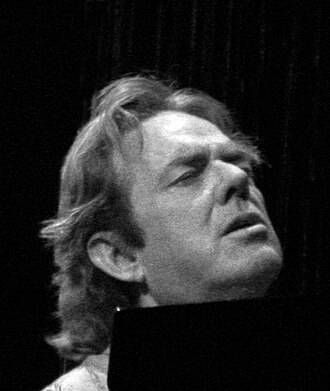
照片:Bede735c,CC BY-SA 3.0,Wikimedia Commons
吉米·韦布
- 生卒
- 1946 –
- 国家/地区
- 美国
- 外文名
- Jimmy Webb
- 流派
- 乡村音乐
介绍
这个词条没有中文维基百科条目,下面是英文维基百科的原文。
Jimmy Layne Webb (born August 15, 1946) is an American songwriter, composer, and singer. He achieved success at an early age, winning the Grammy Award for Song of the Year at the age of 21.
Webb has written multiple platinum-selling songs, including "Up, Up and Away", "By the Time I Get to Phoenix", "MacArthur Park", "Wichita Lineman", "Worst That Could Happen", "Galveston", and "All I Know".
He had successful collaborations with Glen Campbell, Michael Feinstein, Linda Ronstadt, the 5th Dimension, the Highwaymen, the Supremes, Art Garfunkel, Richard Harris, and Carly Simon.
Webb was inducted into the Songwriters Hall of Fame in 1986 and the Nashville Songwriters Hall of Fame in 1990. He received the National Academy of Songwriters Lifetime Achievement Award in 1993, the Songwriters Hall of Fame Johnny Mercer Award in 2003, the ASCAP "Voice of Music" Award in 2006 and the Ivor Novello Special International Award in 2012.
According to BMI, his song "By the Time I Get to Phoenix" was the third most performed song in the 50 years between 1940 and 1990.
Webb is the only artist ever to receive Grammy Awards for music, lyrics and orchestration.
Early life
Webb was born on August 15, 1946, in Elk City, Oklahoma, and raised in Laverne, Oklahoma. He grew up in a religiously conservative family; His father, Robert Lee Webb, was a Baptist minister and veteran of the United States Marine Corps who presided over rural churches in southwestern Oklahoma and west Texas. With his mother's encouragement, Webb learned piano and organ and by the age of 12 was playing in the choir of his father's churches, accompanied by his father on guitar and his mother on accordion. His father restricted radio listening to country music and white gospel.
During the late 1950s, Webb began applying his creativity to the music he was playing at his father's church, frequently improvising and rearranging the hymns. He began to write religious songs at this time, but his musical direction was soon influenced by the new music being played on the radio, including the music of Elvis Presley. In 1961, at the age of 14, he bought his first record, "Turn Around, Look at Me", by Glen Campbell. Webb said he was drawn to the singer's distinctive voice and they became friends a few years later.
In 1964, Webb and his family moved to Southern California, where he attended San Bernardino Valley College, studying music. During this time, he lived in Colton, with his family. Following the death of his mother, Sylvia, in 1964, his father made plans to return to Oklahoma. Webb decided to stay in California to continue his music studies and to pursue a career as a songwriter in Los Angeles. He would later recall his father warning him about his musical aspirations, saying that "This songwriting thing is going to break your heart." Seeing that his son was determined, however, he gave him $40, saying "It's not much, but it's all I have."
Career
Early success, 1965–1969
After transcribing other people's music for a small music publisher in Hollywood, Webb was signed to a songwriting contract with Jobete Music, the publishing arm of Motown Records. The first commercial recording of a Jimmy Webb song was "My Christmas Tree" by The Supremes, which appeared on their 1965 Merry Christmas album. The following year, Webb met singer and producer Johnny Rivers, who signed him to a publishing deal and recorded his song "By the Time I Get to Phoenix" on his 1966 album Changes.
In 1967, Rivers released Rewind, an album featuring seven Webb songs, including "Do What You Gotta Do" and "Tunesmith", a song also recorded that year by Vikki Carr for her album It Must Be Him. That same year, Rivers turned to Webb for material for a new group Rivers was producing called the 5th Dimension. Webb contributed five songs to their debut album, Up, Up and Away, including the title track, which was released as a single in May 1967 and reached the Top Ten. The group's follow-up album, The Magic Garden, was also released in 1967 and featured eleven additional Webb songs, including "Worst That Could Happen".
In November 1967, Glen Campbell released his version of "By the Time I Get to Phoenix", which reached number 26. At the 1968 Grammy Awards, "Up, Up and Away" was named Record of the Year (1967) and Song of the Year (1967). "Up, Up and Away" and "By the Time I Get to Phoenix" received eight Grammy Awards between them.
In 1968, Time acknowledged Webb's range, proficiency, and "gift for strong, varied rhythms, inventive structures, and rich, sometimes surprising harmonies". That year, the string of successful Webb songs continued with the 5th Dimension's "Paper Cup" and "Carpet Man" reaching the Top 40, Glen Campbell's "Wichita Lineman" selling over a million copies, and Johnny Maestro & the Brooklyn Bridge scoring a gold record with "Worst That Could Happen", a song originally recorded by the 5th Dimension.
正文摘自英文维基百科「Jimmy Webb」,按 CC BY-SA 4.0 使用;删去了参考文献、外部链接、表格和图片;篇幅所限只节选了前面一部分,全文见原条目。
资料卡
- 本名
- Jimmy Layne Webb
- 出生
- 1946 年 8 月 15 日
- 出生地
- 埃尔克城
- 国籍
- 美国
- 活跃起始
- 1965 年
- 职业
- 创作歌手、作曲家、词曲作家、钢琴家、电影配乐作曲家、录音艺术家、音乐制作人、歌手、音乐家
- 乐器
- 钢琴
- 流派
- 乡村音乐
- 唱片公司
- 史诗唱片、贝尔唱片
- 使用语言
- 英语
- 获奖
- Johnny Mercer Award(2003)、Oklahoma Music Hall of Fame(2013)
- 官方网站
- jimmywebb.com
资料来自 Wikidata Q1287983(CC0)。
曲库里的其他专辑(2)
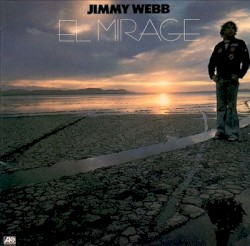

完整作品表见 MusicBrainz。
风格、年代相近的艺人
- 鲍勃·迪伦美国 · 1941– · 摇滚乐、布鲁斯
- 桃莉·巴顿美国 · 1946–2026 · 乡村音乐、谣曲
- 蒂娜·特纳美国 · 1939–2023 · 摇滚乐、灵魂乐
- 琼·贝兹美国 · 1941– · 民俗音乐、乡村音乐
- 克里斯·克里斯托弗森美国 · 1936–2024 · 乡村音乐、当代民俗音乐
- 琳达·罗什塔美国 · 1946– · 流行摇滚、乡村音乐
- 罗莉·塔琳美国 · 1932–2022 · 乡村音乐、honky tonk
- 杰克逊·布朗美国 · 1948– · 摇滚乐、乡村音乐
- 詹姆士·泰勒美国 · 1948– · 流行摇滚、民谣摇滚
- 爱美萝·哈里斯美国 · 1947– · 乡村音乐、美洲音乐
- 维隆·杰宁斯美国 · 1937–2002 · 乡村音乐、叛道乡村
- 唐·亨利美国 · 1947– · 摇滚乐、乡村音乐