 乐单
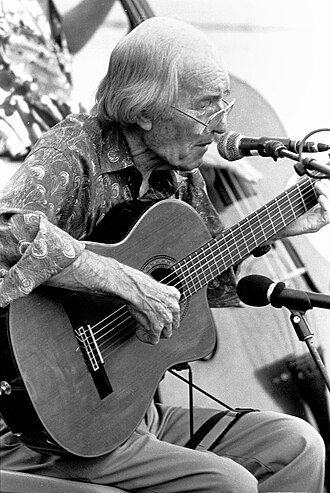
照片:Raymond Fudge Silver Spring, Maryland,CC BY-SA 2.0,Wikimedia Commons
查理·伯德
- 生卒
- 1925 – 1999
- 国家/地区
- 美国、巴西
- 外文名
- Charlie Byrd
- 流派
- 爵士乐
介绍
这个词条没有中文维基百科条目,下面是英文维基百科的原文。
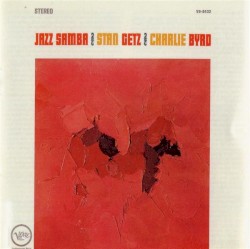
Charlie Lee Byrd (September 16, 1925 – December 2, 1999) was an American jazz guitarist who played fingerstyle on a classical guitar. Byrd was best known for his association with Brazilian music, especially bossa nova. In 1962, he collaborated with Stan Getz on the album Jazz Samba, a recording which brought bossa nova into the mainstream of North American music.
Early life
Charlie Byrd was born in 1925 in Suffolk, Virginia, and grew up in the borough of Chuckatuck. His father, a mandolinist and guitarist, taught him how to play the acoustic steel guitar at age 10. Byrd had three brothers, Oscar, Jack, and Gene "Joe" Byrd, who was an upright bass player. In 1942, Byrd entered the Virginia Polytechnic Institute (VPI, now better known as Virginia Tech) and played in the school orchestra. In 1943, he was drafted into the United States Army, saw combat in World War II, and was stationed in Paris in 1945. There he played in an Army Special Services band and toured occupied Europe in the all-soldier production G.I. Carmen.
After the war, Byrd returned to the United States and studied composition and jazz theory at the Harnett National Music School in Manhattan, New York City. During this time, he began playing a classical guitar. His first nylon string classical guitar is believed to be a 1933 Vincente Tatay which he purchased in a NYC music store. (source - Elana Byrd - Sister in-law) After moving to Washington, D.C., in 1950, he studied classical guitar with Sophocles Papas for several years. In 1954, he became a pupil of the Spanish classical guitarist Andrés Segovia and spent time studying with him in Italy.
Byrd's earliest and greatest influence was the gypsy jazz guitarist Django Reinhardt, whom he saw perform in Paris.
Career
In 1957, Byrd met double bassist Keter Betts in a Washington, D.C., club called the Vineyard. The two men began performing gigs together, and by October were frequently performing at a club called the Showboat. In 1959, they joined Woody Herman's band and toured Europe for three weeks as part of a State Department-sponsored goodwill tour. The other members of the band were Vince Guaraldi, Bill Harris, Nat Adderley, and drummer Jimmy Campbell. Byrd led his own groups that sometimes featured his brother Joe. Byrd was also active as a teacher in the late 1950s; he trained guitar students at his home in Washington, D.C., each being required to audition before he agreed to be their teacher.
Byrd was introduced to Brazilian music by Felix Grant, a friend and radio host who had contacts in Brazil in the late 1950s, and who was well-known there by 1960 due to the efforts of Brazilian radio broadcaster Paulo Santos. Following a 1961 diplomatic tour of South America (including Brazil) for the State Department, Byrd returned home and met with Stan Getz at the Showboat Lounge. Byrd invited Getz back to his home to listen to some bossa nova recordings by João Gilberto and Antonio Carlos Jobim which he had brought back. Getz liked what he heard and the two decided that they wanted to make an album of the songs. The task of creating an authentic sound, however, proved much more challenging than either had anticipated.
Getz convinced Creed Taylor at Verve Records to produce the album. Taylor and Byrd assembled a group of musicians they knew. These early sessions did not turn out to either man's liking, so Byrd gathered a group of musicians that had been to Brazil with him previously and practiced with them in Washington, D.C., until he felt they were ready to record. The group included his brother Gene ("Joe") Byrd, as well as Keter Betts, Bill Reichenbach and Buddy Deppenschmidt. Reichenbach and Deppenschmidt were drummers, and the combination made it easier to achieve samba rhythm. Finally the group was deemed ready and Getz and Taylor arrived in Washington, D.C., on February 13, 1962. They recorded in a building adjacent to All Souls Unitarian Church because of the building's excellent acoustics.
Jazz Samba was released in April 1962, and by September it had entered the Billboard pop album chart. By March of the following year the album had moved to number one. The term "bossa nova" was not used until later. The album remained on the charts for seventy weeks, and Getz soon beat John Coltrane in a DownBeat poll. One of the album's most popular tunes was a Jobim hit, titled "Desafinado".
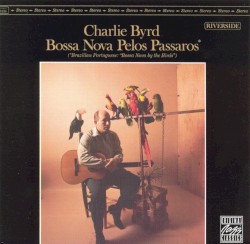
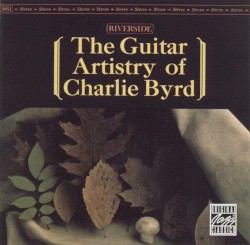
Following the success of Jazz Samba, Byrd signed with Riverside Records, which reissued six of his albums recorded for the small Offbeat label, a subsidiary of Washington Records.
正文摘自英文维基百科「Charlie Byrd」,按 CC BY-SA 4.0 使用;删去了参考文献、外部链接、表格和图片;篇幅所限只节选了前面一部分,全文见原条目。
资料卡
- 出生
- 1925 年 9 月 16 日
- 出生地
- 萨福克
- 去世
- 1999 年 12 月 2 日、1999 年 11 月 30 日
- 去世地
- 安纳波利斯
- 国籍
- 美国、巴西
- 活跃起始
- 1957 年
- 职业
- 吉他手、作曲家、爵士音乐家、爵士吉他手、古典吉他手、音乐家
- 乐器
- 吉他
- 流派
- 爵士乐
- 唱片公司
- 萨沃伊唱片、哥伦比亚唱片、Concord唱片公司
- 使用语言
- 葡萄牙语、英语
资料来自 Wikidata Q469262(CC0)。
榜单和奖项里的专辑(1)
曲库里的其他专辑(2)
完整作品表见 MusicBrainz。
风格、年代相近的艺人
- 艾瑞莎·弗兰克林美国 · 1942–2018 · 灵魂乐、放克
- 弗兰克·扎帕美国 · 1940–1993 · 摇滚乐、实验音乐
- 芭芭拉·琼·斯特赖桑德美国 · 1942– · 传统流行乐、爵士乐
- 琼·贝兹美国 · 1941– · 民俗音乐、乡村音乐
- 史提夫·汪达美国 · 1950– · 节奏布鲁斯、灵魂乐
- 戴安娜·罗斯美国 · 1944– · 流行音乐、灵魂乐
- 妮娜·西蒙美国 · 1933–2003 · 爵士乐、灵魂乐
- 昆西·琼斯美国 · 1933–2024 · 爵士乐、灵魂乐
- 贝蒂·米勒美国 · 1945– · 流行音乐、摇滚乐
- 埃塔·詹姆丝美国 · 1938–2012 · 布鲁斯、灵魂乐
- 贺比·汉考克美国 · 1940– · 爵士乐、咆勃爵士乐
- 法兹·多米诺美国 · 1928–2017 · 摇滚、节奏布鲁斯