 乐单
霍尔格·克苏卡伊
- 生卒
- 1938 – 2017
- 国家/地区
- 但泽自由市、纳粹德国
- 外文名
- Holger Czukay
- 流派
- 德国摇滚、氛围音乐
介绍
这个词条没有中文维基百科条目,下面是英文维基百科的原文。
Holger Schüring (24 March 1938 – 5 September 2017), known professionally as Holger Czukay (), was a German musician who co-founded the krautrock group Can. Described as "successfully bridg[ing] the gap between pop and the avant-garde", Czukay also created early important examples of ambient music, explored "world music" well before the term was coined, and was a pioneer of sampling.
Biography
Early life
Czukay was born Holger Schüring on 24 March 1938 in the Free City of Danzig (present-day Gdańsk, Poland). According to Holger, his grandfather told Third Reich officials that their family "must be Aryan", and came up with a family tree supporting the claim. The family also changed their Polish last name "Czukay" to Schüring, a Dutch name. In early 1945, after World War II, his family was expelled from Poland. They booked tickets for a passage on the ship MV Wilhelm Gustloff, which was due to depart on 13 January 1945, but at the last moment his grandmother changed her mind and took them to the railway station, where they boarded a train carrying wounded soldiers to Berlin. The Gustloff was sunk by a Soviet torpedo, and almost ten thousand passengers died.
The Czukay family resettled in Limburg an der Lahn, and when Holger was in his teens, moved to Duisburg, where he attended the Gerhard Mercator Scientific School and worked part-time in a radio and TV repair shop. While working at the shop he became fond of the aural qualities of radio broadcasts (anticipating his use of shortwave radio broadcasts as musical elements) and became familiar with the rudiments of electrical repair and engineering. Around that time, in the late fifties, Czukay was playing double bass in local jazz bands, including his own Holger Czukay Quintet. His fascination with music led to Czukay relocating to East Berlin and enrolling at the Hochschule für Musik Hanns Eisler Berlin in February 1962. Holger was expelled from the Berlin Music Academy, but kept pursuing his music studies.
Czukay signed up to Karlheinz Stockhausen's new-music course in Cologne, studying under Stockhausen from 1963 to 1966. While studying he met his future Can bandmates—Irmin Schmidt and David C. Johnson. In May 1966, Czukay resettled to St Gallen (Switzerland) taking up a lecturing post in music at the Institut auf dem Rosenberg. One of his pupils, Michael Karoli, familiarised Czukay with the contemporary rock music, introducing him to The Beatles, Velvet Underground, and Frank Zappa. Holger particularly liked "I Am the Walrus", impressed by its unusual musical structure and blasts of AM radio noise; perpetrating "avant-garde pranks in a pop/rock context". Czukay and Karoli played with rock pianist Tony Ashton and several members of his band, Remo Four, proposing an idea to form an experimental band, but didn't follow it through. When Michael was finishing school, Czukay was fired from the Institut auf dem Rosenberg, as Czukay explained, "for being too … er … intriguing!"
In late 1967, Czukay got a letter from Irmin inviting Holger to form a group in Cologne. Czukay brought Karoli with him.
Career
Czukay co-founded Can in 1968, where he played bass guitar, and undertook most of the recording and engineering for the group. During live performances Holger wore his signature white gloves using them while playing bass to protect his fingertips for tape editing, and also to absorb sweat. Rosko Gee, former bassist of the British band Traffic, joined the band in 1977, with Czukay handling only tapes and sound effects on the album Saw Delight, his final LP with the group before departing for a solo career. Czukay had been sidelined due to creative disputes and his failure to progress as a bassist, admitting his shortcomings on the instrument which he had taken up "almost by default" in the early days of Can.
After his departure from Can, Czukay recorded several solo albums. One of his trademarks was the use of shortwave radio sounds and his early pioneering of sampling, in those days involving the painstaking cutting and splicing of magnetic tapes. He would tape-record various sounds and snippets from shortwave and incorporate them into his compositions. He also used shortwave as a live, interactive musical instrument (such as on 1991's Radio Wave Surfer), a method of composition he termed "radio painting". Czukay stated "If you want to make something new, you shouldn't think too far beyond one certain idea".
Czukay continued to work with the former members of Can: playing bass on Irmin Schmidt's soundtrack pieces released in Filmmusik Vol.2 (1981), recording Full Circle (1982) with Jaki Liebezeit, and mastering Michael Karoli's debut album Deluge (1984). Czukay further collaborated with other musicians, including a series of albums with Jah Wobble and David Sylvian, two younger British musicians who shared his interest in blending pop music with experimental recording and sampling techniques. Other collaborators include U.N.K.L.E., Brian Eno, Eurythmics, and German Neue Deutsche Welle band Trio.
正文摘自英文维基百科「Holger Czukay」,按 CC BY-SA 4.0 使用;删去了参考文献、外部链接、表格和图片;篇幅所限只节选了前面一部分,全文见原条目。
资料卡
- 本名
- Holger Schüring
- 艺名 / 别名
- Holger Czukay
- 出生
- 1938 年 3 月 24 日
- 出生地
- 格但斯克
- 去世
- 2017 年 9 月 5 日
- 去世地
- 魏勒斯维斯特
- 国籍
- 但泽自由市、纳粹德国、西德、德国
- 活跃起始
- 1968 年
- 活跃结束
- 2017 年
- 职业
- 作曲家、贝斯手、吉他手、词曲作家、视频艺术家、音乐家、录音艺术家
- 乐器
- 贝斯
- 流派
- 德国摇滚、氛围音乐
- 唱片公司
- 静音唱片
- 所属团体
- 罐头、Technical Space Composer's Crew
- 使用语言
- 德语
- 官方网站
- czukay.de
资料来自 Wikidata Q699355(CC0)。
榜单和奖项里的专辑(1)
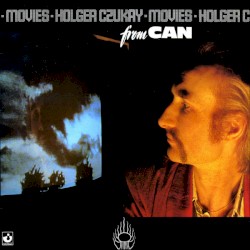
曲库里的其他专辑(4)
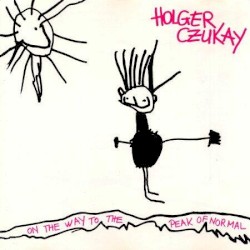
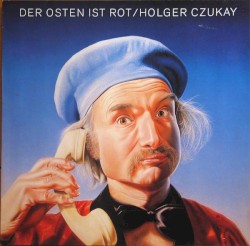
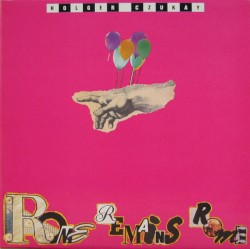
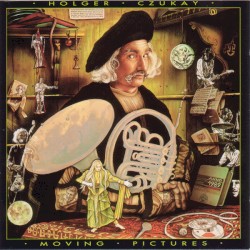
完整作品表见 MusicBrainz。
有关联的艺人
- 罐头德国 · 1968– · 交响摇滚、德国摇滚
成员、所属团体、受到的影响,来自 Wikidata。