 乐单

照片:docmonstereyes from USA,CC BY 2.0,Wikimedia Commons
阿非利加·班巴塔
- 生卒
- 1957 – 2026
- 国家/地区
- 美国
- 外文名
- Afrika Bambaataa
- 流派
- 嘻哈音乐、电子浩室、电子音乐、电子碎拍、电声音乐
介绍
这个词条没有中文维基百科条目,下面是英文维基百科的原文。
Lance Taylor (April 17, 1957 – April 9, 2026), known professionally as Afrika Bambaataa (), was an American disc jockey, rapper and record producer. He was notable for releasing a series of genre-defining electro tracks in the 1980s that influenced the development of hip-hop culture. Bambaataa was one of the originators of breakbeat DJing.
Through his co-opting of his street gang Black Spades into the music and culture-oriented organization Universal Zulu Nation, he helped spread hip-hop culture throughout the world.
In May 2016, Bambaataa left his position as head of the Universal Zulu Nation due to multiple allegations of child sexual abuse dating as far back as the 1970s. In May 2025, he also lost a sex abuse civil case after failing to issue legal responses. While some have praised his significant impact on the hip-hop industry, others have argued that it will eventually be overshadowed by the sexual abuse allegations.
Early life
Born Lance Taylor on April 17, 1957, in the Bronx, New York City, to Jamaican and Barbadian immigrants, Bambaataa grew up in the Bronx River Projects, with an activist mother and uncle. As a child, he was exposed to the black liberation movement and witnessed debates between his mother and uncle regarding the conflicting ideologies in the movement. He was exposed to his mother's extensive and eclectic record collection. Gangs in the area became the law, clearing their turf of drug dealers, assisting with community health programs, and both fighting and partying to keep members and turf.
Bambaataa was a member of the Black Spades. He quickly rose to the position of "warlord" in one of the divisions. As warlord, it was his job to build ranks and expand the turf of the young Spades. He was not afraid to cross turfs to forge relationships with other gangs, and their members. As a result, the Spades became the biggest gang in the city in terms of both membership and turf.
After Bambaataa won an essay contest that earned him a trip to Africa, his worldview shifted. He had seen the movie Zulu (1964) and was impressed with the solidarity exhibited by the Zulu in that film. During his trip to Africa, the communities he visited inspired him to create one in his own neighborhood. He changed his name to Afrika Bambaataa Aasim, adopting the name of the Zulu chief Bhambatha, who led an armed rebellion against unfair economic practices in early 20th-century South Africa. He told people that his name was Zulu for "affectionate leader". Bambaataa formed The "Bronx River Organization" as an alternative to the Black Spades.
Career
There are conflicting accounts of when Bambaataa began hosting parties. When he did, he vowed to use hip-hop to draw angry kids out of gangs and form the Universal Zulu Nation.
Bambaataa began hosting block parties throughout the South Bronx, including at the Bronx River Organization. Bambaataa engaged primarily as a hip-hop artist. Much of his early fan base was centered on the hip-hop movement, as Bambaataa established numerous rap groups including the Jazzy 5 and the Soulsonic Force, which featured many artists who had overlapped with the Universal Zulu Nation.
In 1982, Bambaataa began playing "authentically" electronic music in the form of EBN-OZN's "AEIOU Sometimes Y", which was the first ever commercially released American single made on a computer, namely the Fairlight CMI. (42 years after this debut, "AEIOU Sometimes Y" was inducted into the Alternative Music Hall of Fame Class of 2024 as a "Masterpiece Single.") Inspired by electronic music groups such as Kraftwerk, Bambaataa realized the potential for technological advancement in music making, deciding to stop performing with a live band and instead only relying on technology on stage.
In April 1982, Bambaataa released his breakthrough electro-funk track "Planet Rock", which featured Bambaataa, producer Arthur Baker, and the Soulsonic Force. This single, featuring the line "party people, can you feel it?", seamlessly blended electronic sounds, drum machines, and futuristic synthesizers with traditional funk and hip-hop elements. Featuring a synth hook from Kraftwerk's "Trans-Europe Express", as well as electronic drum patterns from their track "Numbers", Bambaataa's "Planet Rock" not only became a commercial hit in clubs and on dance floors, but also set the stage for the emergence of electro-funk as a distinct genre.
Robert Keith Wiggins, also known as "Cowboy" of Grandmaster Flash and the Furious Five, is credited with naming hip-hop. The term became a common phrase used by MCs as part of a scat-inspired style of rhyming. The term was first used in print to refer to the music by reporter Robert Flipping Jr. in a February 1979 article in the New Pittsburgh Courier, and to refer to the culture in a January 1982 interview of Afrika Bambaataa by Michael Holman in the East Village Eye. The term gained further currency in September of that year in another Bambaataa interview in The Village Voice, by Steven Hager.
正文摘自英文维基百科「Afrika Bambaataa」,按 CC BY-SA 4.0 使用;删去了参考文献、外部链接、表格和图片;篇幅所限只节选了前面一部分,全文见原条目。
资料卡
- 本名
- Lance Taylor
- 艺名 / 别名
- Afrika Bambaataa
- 出生
- 1957 年 4 月 17 日
- 出生地
- 布朗克斯
- 去世
- 2026 年 4 月 9 日
- 去世地
- 费城
- 国籍
- 美国
- 活跃起始
- 1977 年
- 活跃结束
- 2013 年
- 职业
- 唱片骑师、说唱歌手、音乐制作人、词曲作家、歌手、社运人士、音乐家
- 乐器
- 人声、唱盘主义、键盘乐器、合成器
- 流派
- 嘻哈音乐、电子浩室、电子音乐、电子碎拍、电声音乐、放克
- 唱片公司
- 汤米小子唱片、Capitol唱片、EMI
- 所属团体
- 黑桃帮、Universal Zulu Nation、Soulsonic Force、Time Zone
- 使用语言
- 英语
- 官方网站
- zulunation.com
资料来自 Wikidata Q316872(CC0)。
榜单和奖项里的专辑(1)
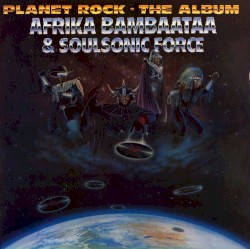
本站收录的歌(1)
- 行星摇滚1982
曲库里的其他专辑(2)
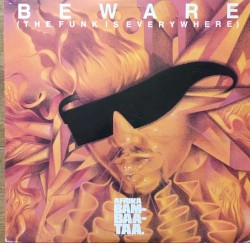
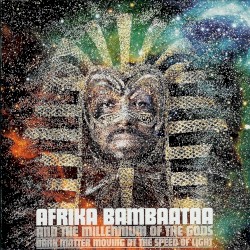
完整作品表见 MusicBrainz。
有关联的艺人
- Soulsonic Force美国 · 嘻哈音乐
成员、所属团体、受到的影响,来自 Wikidata。
风格、年代相近的艺人
- 德瑞医生美国 · 1965– · 匪帮说唱、匪帮放克
- 闪耀大师巴巴多斯 · 1958– · 嘻哈音乐、旧学派嘻哈
- 吐派克·夏库尔美国 · 1971–1996 · 西海岸嘻哈、匪帮说唱
- 雪儿美国 · 1946– · 流行摇滚、浩室音乐
- 肯伊·威斯特美国 · 1977– · 嘻哈音乐、流行音乐
- 布鲁诺·马尔斯美国 · 1985– · 流行音乐、当代节奏布鲁斯
- 史努比狗狗美国 · 1971– · 西海岸嘻哈、匪帮放克
- 艾斯·库伯美国 · 1969– · 西海岸嘻哈、匪帮说唱
- 唐娜·桑默美国 · 1948–2012 · 迪斯科、摇滚乐
- 艾莉娅美国 · 1979–2001 · 流行音乐、摇滚乐
- 麦当娜美国 · 1958– · 流行音乐、舞曲
- 声名狼藉先生美国 · 1972–1997 · 东海岸嘻哈、匪帮说唱