乐单
The Revolution Will Not Be Televised (1971)
介绍
这个词条没有中文维基百科条目,下面是英文维基百科的原文。
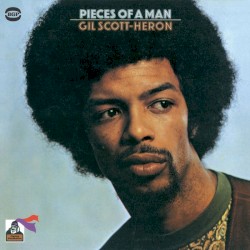
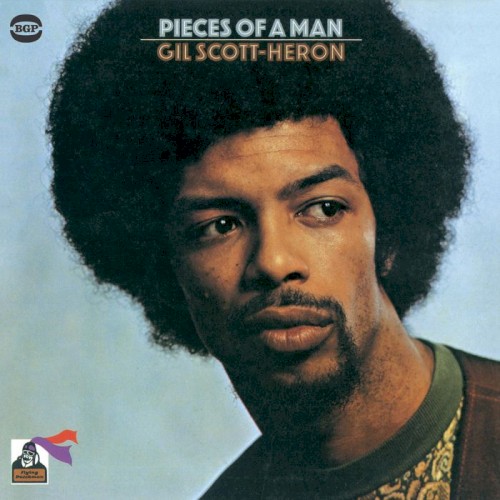
"The Revolution Will Not Be Televised" is a funk and spoken word protest song by American poet and musician Gil Scott-Heron. It was first released as a track on his debut live album Small Talk at 125th and Lenox (1970). In 1971, a version with added jazz-funk instrumentation was included on his debut studio album Pieces of a Man, and released as the B-side of his debut single, opposite "Home Is Where the Hatred Is".
Over a sparse instrumental centered on a funk drum beat, Scott-Heron, a Black man, reads a poem emblematic of the concurrent Black power movement against White supremacy in the United States. Labeling the movement a "revolution", he lists what "the revolution will not" be—mainly, supported by television and other mass media.
The song became Scott-Heron's most popular work, and it is seen by some critics as an early work of hip-hop. It was inducted into the Library of Congress' National Recording Registry in 2005, and has been listed by Rolling Stone as one of the "500 Greatest Songs" and "100 Best Protest Songs" of all time. It popularized its titular phrase, which had been a Black power slogan beforehand; it has been notably quoted by many rappers, including Kendrick Lamar at his Super Bowl halftime performance in 2025.
Background
Gil Scott-Heron spent much of his childhood in Tennessee while Jim Crow laws in the Southern United States enforced racial segregation between Black and White people. He lived there with his grandmother, Lily Scott, who was an activist in the civil rights movement (1954–1968) against racial inequality in the U.S. She gifted him the works of Black writer Langston Hughes, which influenced Scott-Heron's future writing style. In the 1960s, he became one of three Black students to integrate his previously all-White local high school. He then attended Lincoln University near Philadelphia.
In the late 1960s, the civil rights movement, as well as American opposition to U.S. involvement in the Vietnam War, intensified, leading to major protest movements. Scott-Heron organized protests in support of student rights at Lincoln University, including better student health care. Television, a growing and relatively new medium, largely influenced the tense political environment. In 1950, ~6 million TV sets were in U.S. households, and it had increased to ~60 million in 1960. TV news broadcasting became Americans' most viewed news source. Programs which broadcast in-depth coverage of American soldiers' deaths and murders in Vietnam greatly weakened Americans' support for the war. New Histories, published by the University of Sheffield, writes: "Indeed, the accumulated experience of watching the death of another Vietnamese child, jungles burning from chemical weapons, the body bags of American soldiers, stirred an angry, influential counterculture."This counterculture created politically influential protest music; Paste magazine writes that "the civil rights movement both influenced and received reinforcement from" soul and funk music which advocated for racial equality. Such funk artists include Curtis Mayfield, James Brown, and Sly Stone.
Writing
While watching a series of Major League Baseball games between the New York Mets and Philadelphia Phillies from his dorm room TV at university in 1969, Scott-Heron wrote the first lyrics for "The Revolution Will Not Be Televised". Marcus Baram writes for the Library of Congress that, in making the poem, Scott-Heron "highlighted the disconnect between the consumerism celebrated on TV with the protests happening on the streets of America." His lyrics were influenced by the commercials that aired during the Mets–Phillies games, the wordplay in Langston Hughes' prose, and his mother Bobbie Scott-Heron's "acerbic wit".
The song is specifically a response to the spoken word piece "When the Revolution Comes" by The Last Poets (from their 1970 eponymous album), which opens with the line: "When the revolution comes, some of us will probably catch it on TV". Scott-Heron had invited The Last Poets to perform the song at Lincoln University a few months prior to him writing "The Revolution Will Not Be Televised".
Recordings
In 1970, after dropping out of university in his second year, Scott-Heron published a novel, The Vulture. To promote it, he recorded and published Small Talk at 125th and Lenox, a live album of him performing spoken word poetry. He made the recording with Bob Thiele, a music producer who had worked with the era's most influential jazz musicians, such as John Coltrane and Louis Armstrong. The album contains the first released version of "The Revolution Will Not Be Televised".
正文摘自英文维基百科「The Revolution Will Not Be Televised」,按 CC BY-SA 4.0 使用;删去了参考文献、外部链接、表格和图片;篇幅所限只节选了前面一部分,全文见原条目。
资料卡
- 作品性质
- 音乐作品/乐曲
- 表演者
- 吉尔·斯科特-赛壬
- 发行日期
- 1971 年
- 收录于 / 属于
- Pieces of a Man
- 流派
- 抗争歌
- 唱片公司
- Flying Dutchman Records
- 下一部
- The Bottle
资料来自 Wikidata Q1753999(CC0)。
制作名单
- ISRC
- USBB17101029、USRC17101699
制作
- 混音
- Bob Simpson
- 制作人
- Bob Thiele
演奏与演唱
- 指挥
- 强尼·佩特
- 贝斯
- 罗恩·卡特
- 电贝斯
- 罗恩·卡特
- 电钢琴
- Brian Jackson
- 钢琴
- Brian Jackson
- 电吉他
- Burt Jones
- 长笛
- Hubert Laws
- 萨克斯
- Hubert Laws
- 鼓
- 伯纳德·珀迪
- 主唱
- 吉尔·斯科特-赛壬
词曲与编曲
- 作曲
- 吉尔·斯科特-赛壬
- 作词
- 吉尔·斯科特-赛壬
名单来自 MusicBrainz(CC0)这条录音的关系数据,由志愿者录入,不一定齐全。