乐单
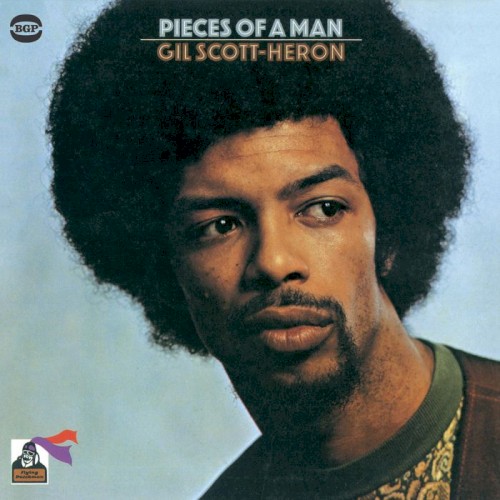
Pieces of a Man (1971)
- 艺人
- 吉尔·斯科特-赛壬
- 发行
- 1971
- 类型
- 专辑
- 唱片公司
- Flying Dutchman Records
- 制作人
- 鲍勃·蒂勒
- 版本
- MusicBrainz 上有 7 个发行版本
曲目
- A1The Revolution Will Not Be Televised3:09
- A2Save the Children4:28
- A3Lady Day and John Coltrane3:37
- A4Home Is Where the Hatred Is3:22
- A5When You Are Who You Are3:23
- A6I Think I’ll Call It Morning3:31
- B1Pieces of a Man4:55
- B2A Sign of the Ages4:03
- B3Or Down You Fall3:14
- B4The Needle’s Eye4:51
- B5The Prisoner9:26
11 首 · 约 48 分钟 · 依据 1971 US 发行的版本,在 MusicBrainz 看这个版本。
介绍
这个词条没有中文维基百科条目,下面是英文维基百科的原文。
Pieces of a Man is the debut solo studio album by the American poet and musician Gil Scott-Heron. It was recorded in April 1971 at RCA Studios in New York City and released later that year by Flying Dutchman Records. The album followed Scott-Heron's debut live album Small Talk at 125th and Lenox (1970); it departed from that album's spoken word performance, instead featuring more conventional popular song structures, with Scott-Heron singing and backed by a full band.
Pieces of a Man marked the first of several collaborations between Scott-Heron and songwriter Brian Jackson, who also played piano on the album. It is one of Scott-Heron's most critically acclaimed albums and one of the Flying Dutchman label's best-selling LPs. Earning modest success after its release, Pieces of a Man has received retrospective praise from critics. Music critics have suggested that Scott-Heron's combination of R&B, soul, jazz-funk, and proto-rap influenced the development of electronic dance music and hip hop. The album was reissued on compact disc by RCA in 1993.
Background and recording
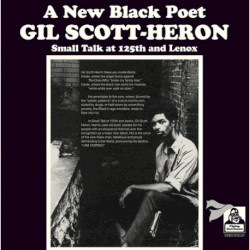
Before pursuing a recording career, Scott-Heron focused on a writing career. He published a volume of poetry and his first novel, The Vulture, in 1970. Subsequently, Scott-Heron was encouraged by jazz producer Bob Thiele to record and released a live album, Small Talk at 125th and Lenox (1970). It was inspired by a volume of poetry of the same name and was well received by music critics.
Pieces of a Man was recorded at RCA Studios in New York City on April 19 and 20 in 1971. The album's first four tracks were written by Scott-Heron, and the last seven tracks were co-written by Scott-Heron and keyboardist Brian Jackson, who backs Scott-Heron with Bernard Purdie & the Playboys. The album was produced by Thiele, who was known for working with jazz artists such as Louis Armstrong and John Coltrane.
Music and lyrics
The album's music is rooted in the blues and jazz influences, which Scott-Heron referred to as "bluesology, the science of how things feel." The album features Gil Scott-Heron exercising his singing abilities in contrast to his previous work with poetry. It also contains more conventional song structures than the loose, spoken-word feel of Small Talk.
On the album's jazz elements, music critic Vince Aletti wrote, "the songs have a loose, unanchored quality that sets them apart from both R&B and rock work. Scott-Heron sings straight-out, with an ache in his voice that conveys pain, bitterness and tenderness with equal grace and, in most cases, subtlety. Frequently the nature of the jazz backing is so free that the vocals take on an independent, almost a cappella feeling which Scott-Heron carries off surprisingly well." Uncut writes that "Heron adopts his trademark jazz-funk sound, underpinned by the great Ron Carter on bass, with Hubert Laws' flute fluttering about like an elusive bird of paradise". Sputnikmusic's Nick Butler notes its latter eight songs as "in line with the soul of the very early '70s - think a Curtis that replaces an orchestra with a chamber band, or a What's Going On that replaces head-in-the-clouds wistfulness with earthy indignation, or a There's A Riot Goin' On without the drugs".
"Lady Day and John Coltrane" was written by Scott-Heron as an homage to influential jazz musicians Billie Holiday and John Coltrane. His lyrics discuss the ability of music to rid people of the personal problems of alienation and existentialism in the modern world. The album features two of Scott-Heron's most well-known songs, "Home Is Where the Hatred Is", which was later a hit for R&B singer Esther Phillips, and "The Revolution Will Not Be Televised", which was originally featured on his debut album Small Talk in spoken word form. "Home Is Where the Hatred Is" is a melodic, somber composition of the narrator's dangerous and hopeless environment, presumably of the ghetto, and how its effects take a toll on him. Scott-Heron's lyrics demonstrate these themes of social disillusionment and hopelessness in the first verse and the chorus.
Unlike other songs on the album, "Save the Children" and "I Think I’ll Call It Morning" are optimistic dedications to joy, happiness, and freedom. The title track, described by journalist and music writer Vince Alleti as the album's best song, is a lyrically cinematic account of a man's breakdown after losing his job as witnessed by his son. Scott-Heron's lyricism on the album has been acclaimed by critics, as the lyrics for "Pieces of a Man" received praise for its empathetic narration. The album's opening track, "The Revolution Will Not Be Televised", is a proto-rap track with lyrics criticizing the United States government, corporations, and mass media; Scott-Heron is backed only by flute, bass guitar, and drums on the track. The song's structure and musical formula would later influence the blueprint of modern hip hop. Because of the song's spoken word style and critical overtones, it has often been referred to as the birth of rap.
正文摘自英文维基百科「Pieces of a Man」,按 CC BY-SA 4.0 使用;删去了参考文献、外部链接、表格和图片;篇幅所限只节选了前面一部分,全文见原条目。
资料卡
- 作品性质
- 音乐专辑
- 表演者
- 吉尔·斯科特-赛壬
- 发行日期
- 1971 年
- 录音地点
- RCA Studios, New York
- 流派
- 灵魂爵士、灵魂乐、放克爵士乐
- 语言
- 英语
- 唱片公司
- Flying Dutchman Records
- 制作人
- 鲍勃·蒂勒
资料来自 Wikidata Q7191416(CC0)。
制作名单
- 厂牌
- Flying Dutchman(目录号 FD-10143)
制作
- 混音
- Bob Simpson
- 制作人
- Bob Thiele
演奏与演唱
- 指挥
- 强尼·佩特
- 贝斯
- 罗恩·卡特
- 电贝斯
- 罗恩·卡特
- 电钢琴
- Brian Jackson
- 钢琴
- Brian Jackson
- 电吉他
- Burt Jones
- 长笛
- Hubert Laws
- 萨克斯
- Hubert Laws
- 鼓
- 伯纳德·珀迪
- 主唱
- 吉尔·斯科特-赛壬
词曲与编曲
- 作曲
- 吉尔·斯科特-赛壬、Brian Jackson(其中 7 首)
- 作词
- 吉尔·斯科特-赛壬(第 A1、A2、A3、A4、B1 首)
名单来自 MusicBrainz(CC0)这一发行版本的关系数据,由志愿者录入,不一定齐全。
更多资料与乐评
在哪听
吉尔·斯科特-赛壬 的其他专辑
艺人页 ›


相似的专辑

同在 1971 年发行