 乐单
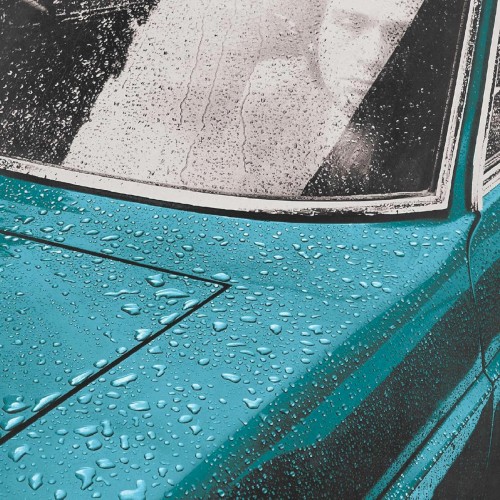
Solsbury Hill (1977)
介绍
这个词条没有中文维基百科条目,下面是英文维基百科的原文。
"Solsbury Hill" is the debut solo single by the English rock musician Peter Gabriel and the first single from his 1977 self-titled album. He wrote the song about a spiritual experience atop Solsbury Hill in Somerset, England, after his departure from the progressive rock band Genesis, of which he had been the lead vocalist since its inception. The single was a Top 20 hit in the UK, peaking at number 13. It reached number 68 on the Billboard Hot 100 chart in 1977.
Gabriel has said of the song's meaning: "It's about being prepared to lose what you have for what you might get ... It's about letting go."
Composition
"Solsbury Hill" is mostly written in 74 time, an unusual time signature that has been described as "giving the song a constant sense of struggle". The meter settles into 44 time only for the last two measures of each chorus. It is performed in the key of B major with a tempo of 102 beats per minute, with Gabriel's vocals ranging from F♯3 to G♯4.
The song originally had seven different sections, but producer Bob Ezrin helped Gabriel pare it down to a shorter length. Gabriel began the song with the main riff on the piano and later developed the rhythmic pattern part on the lower registers of the keyboard. He then worked on some additional chords, including the part that appeared at the end of each chorus. The lyrics were written late in the songwriting process; he had attempted a few different sets of words that he later discarded, including the line "stress, you got me in a mess".
In a 1977 interview with Barbara Charone, Gabriel said that "Solsbury Hill" was almost omitted from the album. Ezrin attributed this to his dislike of the original final line of the chorus, which was "make your life a taxi not a tomb." He said that the song "was not going on the record until we found the proper last line." Several alternative lyrics were attempted, including "does anyone here know Officer Muldoon?"; the two also considered backmasking "fool, you've got the record on backwards." During the final day of mixing, Gabriel changed the line to "grab your things I've come to take you home", which Ezrin accepted. Gabriel ultimately expressed satisfaction with the song, placing particular attention on its time signature: "that 7/4 rhythm works well because it feels like a normal rhythm but isn't quite right...If it's a hit, it'll be interesting to see how people dance to it."
Recording
Recorded at The Soundstage in Toronto, "Solsbury Hill" was the final song recorded for the album. By the time the guitars were recorded, Robert Fripp had returned to London and was unavailable to participate; all of the guitars on the song were played by Steve Hunter. Fripp later wrote that he had "nothing to add to the track after Steve's superb & fitting contribution, although I would love to be on it."
While earlier versions of the song featured more prominent electric guitar, Ezrin instructed Hunter to perform the main riff on an acoustic twelve-string guitar, an instrument "he hadn't played in a long time". However, Hunter stated that he instead borrowed a Martin six-string acoustic guitar. He Travis picked the part with a capo on the guitar's second fret after coordinating with Ezrin and Gabriel on a suitable part to play. Ezrin wanted the acoustic guitar to be triple-tracked, so Hunter overdubbed three takes of the part.
Ezrin removed drummer Allan Schwartzberg's cymbals and placed a shaker in one of his hand and a drum stick in another, which he used to strike a telephone directory. For additional rhythmic textures, Larry Fast designed a drum sound on a synthesiser (which he dubbed the "synthibam"), which was played by percussionist Jimmy Maelen. After the other session musicians departed, Fast overdubbed some additional synthesiser parts. He gravitated toward a sound resembling a French horn, which he deemed to be suitable accompaniment for the acoustic guitars. A four-note riff played by Gabriel on flute and Fast on synthesiser prefaces each line of the lyrics.
Critical reception
NME described "Solsbury Hill" as the "most overtly personal song on the album", adding that "its simple and infectious melody" evinced that Gabriel's departure from Genesis "was like having the proverbial weight lifted from his shoulders." Writing for Melody Maker, Caroline Coon also gave the song a positive review, writing that "its beautifully syncopated rhythm is utterly addictive." She singled out praise for Ezrin's production and the song's "perfectly developed riff." Beat Instrumental labelled "Solsbury Hill" as the best song on the album, along with "Humdrum".
正文摘自英文维基百科「Solsbury Hill (song)」,按 CC BY-SA 4.0 使用;删去了参考文献、外部链接、表格和图片;篇幅所限只节选了前面一部分,全文见原条目。
资料卡
- 作品性质
- 音乐作品/乐曲
- 表演者
- 彼得·盖布瑞尔
- 发行日期
- 1977 年 3 月 21 日
- 收录于 / 属于
- Peter Gabriel、Hit、Peter Gabriel Revisited、Growing Up Live、Growing Up Live、Shaking the Tree: Sixteen Golden Greats、Secret World Live、Secret World Live、Plays Live、New Blood、Live Blood、New Blood: Live In London
- 流派
- 艺术摇滚、交响摇滚、流行音乐
- 语言
- 英语
- 来自
- 英国
- 唱片公司
- 阿特科、Charisma唱片
- 作曲
- 彼得·盖布瑞尔
- 作词
- 彼得·盖布瑞尔
- 制作人
- 鲍伯·艾思林
资料来自 Wikidata Q1808658(CC0)。
制作名单
- 录音室
- 混音:Sound Stage(Toronto);录音:Morgan Studios(Willesden);录音:Olympic Studios(Barnes);录音:Sound Stage(Toronto)
- ISRC
- GBCPB0000003、GBCPB0100039、GBCPB0900635
制作
- 制作人
- Bob Ezrin
- 编程
- Larry Fast
- 录音
- Brian Christian、Jim Frank、Keith Grant、Dave Harris、Robert “Ringo” Hrycyna、Rod O’Brien、Robert Stasiak
演奏与演唱
- 键盘
- Jozef Chirowski、彼得·盖布瑞尔
- 合成器
- Larry Fast
- 吉他
- 罗伯特·弗里普、Steve Hunter
- 古典吉他
- 罗伯特·弗里普
- 电吉他
- 罗伯特·弗里普、Steve Hunter
- 班卓琴
- 罗伯特·弗里普
- 长笛
- 彼得·盖布瑞尔
- 竖笛
- 彼得·盖布瑞尔
- 踏板钢棒吉他
- Steve Hunter
- 原声吉他
- Steve Hunter
- 贝斯
- 东尼·莱文
- 大号
- 东尼·莱文
- 打击乐
- Jimmy Maelen
- bones
- Jimmy Maelen
- 鼓
- Allan Schwartzberg
- 演唱
- 彼得·盖布瑞尔
词曲与编曲
- 作曲
- 彼得·盖布瑞尔
- 作词
- 彼得·盖布瑞尔
名单来自 MusicBrainz(CC0)这条录音的关系数据,由志愿者录入,不一定齐全。
更多资料
在哪听
彼得·盖布瑞尔 的专辑
艺人页 ›
风格、年代相近的歌
- Station to Station大卫·鲍伊 · 1976
- 贵族Lorde · 2013
- MapsYeah yeah yeahs · 2004
- Mr. Brightside杀手乐队 · 2003
- Karma Police电台司令 · 1997
- Summer Babe (Winter Version)镶嵌路面 · 1992
- Where Is My Mind?小妖精乐队 · 1988
- 纠缠三角恋新秩序 · 1986
- Everybody Wants to Rule the World惊惧之泪 · 1985
- Love Will Tear Us Apart欢乐分队 · 1980
- 波希米亚狂想曲皇后乐团 · 1975
- Baba O'Riley谁人 · 1971