 乐单
介绍
这个词条没有中文维基百科条目,下面是英文维基百科的原文。
"Station to Station" is a song by the English musician David Bowie. It was released in January 1976 as the title track and opener of his tenth studio album Station to Station and in edited form as a promotional 7-inch single in France the same month. Co-produced by Bowie and Harry Maslin, it was written and recorded in Los Angeles between September and November 1975. At over 10 minutes in length, it is Bowie's longest studio recording. Opening with a train-like noise, the song's first half is a slow march, while the second, in a different key and tempo than the first, is influenced by progressive rock and disco. It has been characterised as art rock and is influenced by the German electronic bands Kraftwerk and Tangerine Dream.
Lyrically, the song introduces Bowie's sinister persona the Thin White Duke, who became the mouthpiece for Station to Station and often the embodiment of Bowie himself. During the recording, Bowie was heavily dependent on drugs such as cocaine, which is referenced directly throughout. "Station to Station" also makes references to Kabbalah, occultism, gnosticism, paranoia and other fixations that affected Bowie's mind at the time. The opening sound effect is a red herring meant to represent the Stations of the Cross, along with a juncture connecting two different stages of his career; it combined the funk and soul influences of his previous album Young Americans with the experimental sound he would explore on his subsequent Berlin Trilogy.
"Station to Station" has received acclaim from music critics and biographers. Retrospectively, it has been named one of Bowie's greatest songs and, like its parent album, an indicator of where his career was heading at the time. He performed the track throughout the 1976 Isolar Tour in support of Station to Station, often in character as the Thin White Duke, and on various subsequent tours. It was remastered, along with its parent album, as part of the box set Who Can I Be Now? (1974–1976) in 2016.
Composition
"Station to Station" was recorded at Cherokee Studios in Los Angeles between September and November 1975. According to Emily Barker of NME, Bowie "starved his body of all nutrients (besides milk, red peppers, and cocaine)" during the sessions. Bowie later stated that he could not remember recording the album at all: "I have only flashes of making it." Author David Buckley states that Bowie's only memory of the sessions was "standing with [lead guitarist] Earl Slick in the studio and asking him to play a Chuck Berry riff in the same key throughout the opening of 'Station to Station'."
At over 10 minutes in length, "Station to Station" is Bowie's longest studio recording. Structurally, the song builds from a droning, guitar-driven introductory portion that mimics a train building up speed. Following the train noise, the band begins to enter, with percussion and keyboards playing chords in and out of key, after which the groove begins. The opening section consists of a 64 A minor measure, followed by 44 one over F and G, before returning to 64. Author Peter Doggett describes the section as a "slow, hypnotic instrumental march". The march lasts for more than three minutes before Bowie begins his vocals. After several verses, at the five-minute mark, a thud of drums signals a change of tempo and key and the band erupts into what Alan Light of Rolling Stone calls a "celebratory groove", which lasts for the rest of the track. Doggett likens this section to the work of the progressive rock bands Genesis and Jethro Tull. Like the album, the entire song encompasses art rock.
正文摘自英文维基百科「Station to Station (song)」,按 CC BY-SA 4.0 使用;删去了参考文献、外部链接、表格和图片;篇幅所限只节选了前面一部分,全文见原条目。
资料卡
- 作品性质
- 单曲
- 表演者
- 大卫·鲍伊
- 发行日期
- 1976 年 1 月 23 日
- 流派
- 艺术摇滚
- 唱片公司
- RCA唱片
- 作曲
- 大卫·鲍伊
- 作词
- 大卫·鲍伊
- 上一部
- Golden Years
- 下一部
- 电视广告15
资料来自 Wikidata Q6977321(CC0)。
更多资料
在哪听
大卫·鲍伊 的专辑
艺人页 ›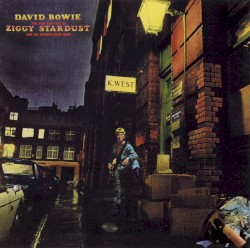
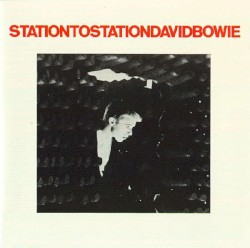

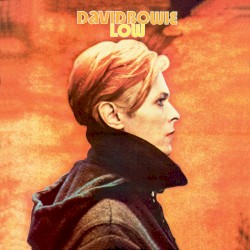
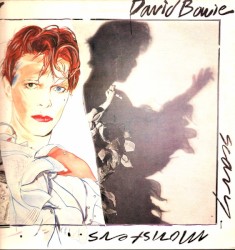
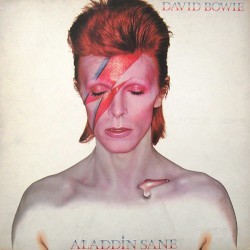
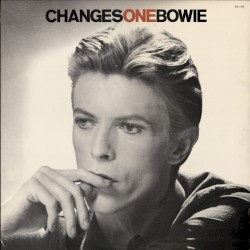

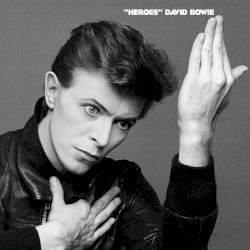
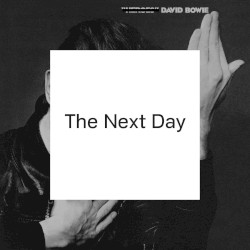

大卫·鲍伊 的其他歌(本站收录)
- 英雄大卫·鲍伊 · 1977
- Life on Mars?大卫·鲍伊 · 1971
- 太空怪谈大卫·鲍伊 · 1969
- Changes大卫·鲍伊 · 1972
- Young Americans大卫·鲍伊 · 1975
风格、年代相近的歌
- Solsbury Hill彼得·盖布瑞尔 · 1977
- Baba O'Riley谁人 · 1971
- MapsYeah yeah yeahs · 2004
- Mr. Brightside杀手乐队 · 2003
- Karma Police电台司令 · 1997
- Summer Babe (Winter Version)镶嵌路面 · 1992
- Where Is My Mind?小妖精乐队 · 1988
- 贵族Lorde · 2013
- 纠缠三角恋新秩序 · 1986
- Everybody Wants to Rule the World惊惧之泪 · 1985
- 我行我素琼·杰特 · 1981
- 今晚又来了菲尔·柯林斯 · 1981