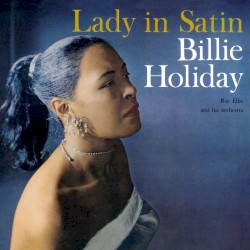
乐单
奇妙的果实 (1939)
- 演唱
- 比莉·荷莉戴、Billie Holiday and her Orchestra
- 发行
- 1939
- 作曲
- Abel Meeropol
- 作词
- Abel Meeropol
介绍
这个词条没有中文维基百科条目,下面是英文维基百科的原文。
"Strange Fruit" is a song written and composed by Abel Meeropol (under his pseudonym Lewis Allan) and recorded by Billie Holiday in 1939. The lyrics were drawn from a poem by Meeropol, published in 1937.
The song protests the lynching of African Americans with lyrics that compare the victims to the fruit of trees. Such lynchings had reached a peak in the Southern United States at the turn of the 20th century, and most victims were African American. The song was described as "a declaration of war" and "the beginning of the civil rights movement" by Atlantic Records co-founder Ahmet Ertegun.
Meeropol set his lyrics to music with his wife Anne Shaffer and the singer Laura Duncan and performed it as a protest song in New York City venues in the late 1930s, including Madison Square Garden. Holiday's version was inducted into the Grammy Hall of Fame in 1978. It was also included in the "Songs of the Century" list of the Recording Industry Association of America and the National Endowment for the Arts. In 2002, "Strange Fruit" was selected for preservation in the National Recording Registry by the Library of Congress as being "culturally, historically or aesthetically significant".
Poem and song
"Strange Fruit" originated as a protest poem against lynchings. In the poem, Abel Meeropol expressed his horror at lynchings of African Americans, inspired by Lawrence Beitler's photograph of the 1930 lynching of Thomas Shipp and Abram Smith in Marion, Indiana.
Meeropol published the poem under the title "Bitter Fruit" in January 1937 in The New York Teacher, a union magazine of the New York teachers union. Though Meeropol had asked others (notably Earl Robinson) to set his poems to music, Meeropol set "Strange Fruit" to music himself. First performed by Meeropol's wife Anne Shaffer and their friends in social contexts, his protest song gained a certain success in and around New York. Meeropol, Shaffer, and the Black vocalist Laura Duncan performed it at Madison Square Garden.
Billie Holiday's performances and recordings
One version of events claims that Barney Josephson, the founder of Café Society in Greenwich Village, New York's first integrated nightclub, heard the song and introduced it to Billie Holiday. Other reports say that Robert Gordon, who was directing Holiday's show at Café Society, heard the song at Madison Square Garden and introduced it to her. Holiday first performed the song at Café Society in 1939. She said that singing it made her fearful of retaliation but, because its imagery reminded her of her father Clarence Halliday, she continued to sing the piece, making it a regular part of her live performances. Because of the power of the song, Josephson drew up some rules: Holiday would close with it; the waiters would stop all service in advance; the room would be in darkness except for a spotlight on Holiday's face; and there would be no encore. During the musical introduction to the song, Holiday stood with her eyes closed, as if she were evoking a prayer.
Holiday approached her recording label, Columbia, about the song, but the company feared reaction by record retailers in the South, as well as negative reaction from affiliates of its co-owned radio network, CBS. When Holiday's producer John Hammond also refused to record it, she turned to her friend Milt Gabler, owner of the Commodore label. Holiday sang "Strange Fruit" for him a cappella, and moved him to tears. Columbia gave Holiday a one-session release from her contract so she could record it; Frankie Newton's eight-piece Café Society Band was used for the session in an arrangement by Newton. Because Gabler worried the song was too short, he asked pianist Sonny White to improvise an introduction. On the recording, Holiday starts singing after 70 seconds. It was recorded on April 20, 1939. Gabler worked out a special arrangement with Vocalion Records to record and distribute the song.
Holiday recorded two major sessions of the song at Commodore, one in 1939 and one in 1944. The song was highly regarded; the 1939 recording eventually sold a million copies, in time becoming the biggest-selling recording of Holiday's career.
In her 1956 autobiography, Lady Sings the Blues, Holiday suggested that she, together with Meeropol, her accompanist Sonny White, and arranger Danny Mendelsohn, set the poem to music. The writers David Margolick and Hilton Als dismissed that claim in their work Strange Fruit: The Biography of a Song, writing that hers was "an account that may set a record for most misinformation per column inch". When challenged, Holiday—whose autobiography had been ghostwritten by William Dufty—claimed, "I ain't never read that book."
Holiday was so well known for her rendition of "Strange Fruit" that "she crafted a relationship to the song that would make them inseparable". Holiday's 1939 version of the song was included in the National Recording Registry on January 27, 2003.
正文摘自英文维基百科「Strange Fruit」,按 CC BY-SA 4.0 使用;删去了参考文献、外部链接、表格和图片;篇幅所限只节选了前面一部分,全文见原条目。
资料卡
- 作品性质
- 音乐作品/乐曲
- 表演者
- Billie Holiday and her Orchestra
- 发行日期
- 1939 年
- 语言
- 英语
- 作曲
- Abel Meeropol
- 作词
- Abel Meeropol
资料来自 Wikidata Q765709(CC0)。