乐单
介绍
这个词条没有中文维基百科条目,下面是英文维基百科的原文。
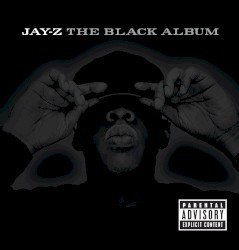
"99 Problems" is the third single released by American rapper Jay-Z from The Black Album. It was released on April 27, 2004. The chorus of "I got 99 problems, but a bitch ain't one" is taken from the Ice-T song "99 Problems", from the album Home Invasion (1993).
In the song, Jay-Z tells a story about dealing with rap critics, racial profiling from a police officer who wants to search his car, and an aggressor. The song reached number 30 on the Billboard Hot 100.
Production
The track was produced by Rick Rubin, his first hip hop production in many years. Rubin provided Jay-Z with a guitar riff and stripped-down beat that were once Rubin's trademarks. In creating the track, Rubin used some classic 1980s sample staples such as "The Big Beat" by Billy Squier, "Long Red" by Mountain, and "Get Me Back On Time" by Wilson Pickett. Featuring the same Billy Squier drum beat sample, Dizzee Rascal released "Fix Up, Look Sharp" in August 2003 prior to The Black Album's release.
Origin of lyrics
The title and hook are derived from Ice-T's song of the same name, from his 1993 album Home Invasion, which featured Brother Marquis of the Miami-based 2 Live Crew. The original song was more profane and describes a wide range of sexual conquests. The hook was coined during a conversation between Ice-T and Brother Marquis. Marquis also used the phrase in the 1996 2 Live Crew song "Table Dance". Ice-T would re-record his version of the song with the Rubin/Jay-Z guitar riff for Body Count's 2014 album Manslaughter in order to "reclaim" the hook from being mis-attributed to Jay-Z. Portions of Ice-T's original lyrics were similarly quoted in a song by fellow rapper Trick Daddy on a track also titled "99 Problems" from his 2001 album Thugs Are Us. Jay-Z begins his third verse directly quoting lines from Bun B's opening verse off the track "Touched" from the UGK album Ridin' Dirty.
Analysis
The second verse, describing Jay-Z's traffic stop, has received much more attention than the rest of the song.
The second verse was based on an actual experience of Jay-Z in the 1990s in New Jersey. He wrote that in 1994, when he was pulled over by police while carrying cocaine in a secret compartment in his sunroof. He refused to let the police search the car and the police called for drug-sniffing dogs. However, the dogs never showed up and the police had to let him go. Moments after he drove away, he saw a police car with the dogs drive by. In a discussion at the Celeste Bartos Forum at the New York Public Library, Jay-Z described the second verse of the song as representing "a contest of wills" between the car's driver who is "all the way in the wrong" for carrying illegal drugs, and a racist police officer who pulls over the driver not for any infraction but for being African American. "Both guys are used to getting their way" and thus reluctant to back down, Jay-Z notes, and the driver "knows a bit about the law because he's used to breaking it" and asserts his legal rights.
In 2011, Southwestern Law School Professor Caleb Mason wrote an article with a line-by-line analysis of the second verse of the song from a legal perspective referencing the Fourth Amendment to the United States Constitution, citing it as a useful tool for teaching law students search and seizure law involving search warrants, Terry stops, racial profiling, the exclusionary rule, and the motor vehicle exception. Mason writes that some of Jay-Z's lyrics are legally accurate and describe prudent behavior (e.g., identifying when police ask for consent to search, specifically asking if one is under arrest, and complying with the police order to stop rather than fleeing which would certainly result in a search of the car and might authorize police to use lethal force to stop a high speed chase). However, Mason also notes the song lyrics are legally incorrect in indicating that a driver can refuse an order to exit the car and that police would need a warrant to search a locked glove compartment or trunk—in fact, police would only need probable cause to search a car. In 2012, Professor Emir Crowne of the University of Windsor Faculty of Law wrote an article concluding that Jay-Z's lyrics may be legally correct under Canadian law.
Jay-Z, in his book Decoded, clarified that the "bitch" in the chorus refers to a different subject in each verse; in the second, it refers to a police dog, but in the third, it refers to a cowardly individual.
Reception
The song garnered widespread acclaim. The song came in at No. 2 on Rolling Stone's top 100 songs of the '00s. On the updated list of the 500 Greatest Songs of All Time, the song was added and came in at No. 172. In 2019, they ranked the song number four on their list of the 50 greatest Jay-Z songs. The song was listed at No. 14 on Pitchfork Media's top 500 songs of the 2000s (decade) and in October 2011, NME placed it at number 24 on its list "150 Best Tracks of the Past 15 Years".
正文摘自英文维基百科「99 Problems」,按 CC BY-SA 4.0 使用;删去了参考文献、外部链接、表格和图片;篇幅所限只节选了前面一部分,全文见原条目。
资料卡
- 作品性质
- 单曲
- 表演者
- 杰斯
- 发行日期
- 2004 年 4 月 27 日
- 流派
- 说唱摇滚
- 来自
- 美国
- 唱片公司
- Roc-A-Fella唱片、Def Jam唱片公司
- 作词
- 杰斯
- 制作人
- 里克·鲁宾
- 上一部
- Dirt off Your Shoulder
- 下一部
- Big Chips
资料来自 Wikidata Q9136676(CC0)。