乐单
曲目
第 1 张 · 12" Vinyl
- A1Silence5:01
- A2Hunter3:59
- A3Nylon Smile3:20
- B1The Rip4:31
- B2Plastic3:31
- B3We Carry On6:28
第 2 张 · 12" Vinyl
- C1Deep Water1:33
- C2Machine Gun4:46
- C3Small6:47
- D1Magic Doors3:32
- D2Threads5:48
11 首 · 约 49 分钟 · 依据 2008-04-08 US 发行的版本,在 MusicBrainz 看这个版本。
介绍
这个词条没有中文维基百科条目,下面是英文维基百科的原文。
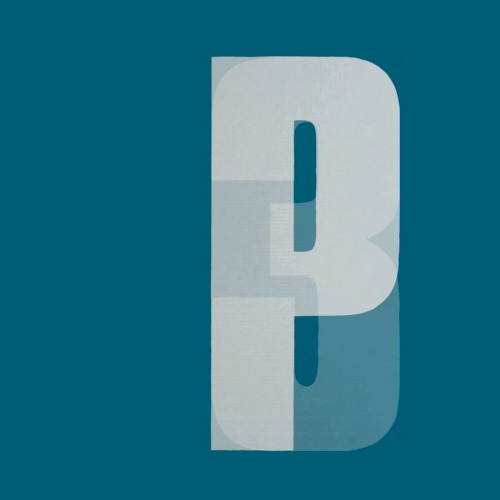
Third is the third studio album by the English band Portishead. It was released on 28 April 2008 in the UK by Island Records and a day later in the US by Mercury Records. Portishead's first studio album in eleven years, Third moved away from their earlier trip hop style, incorporating influences such as krautrock and the film soundtracks of John Carpenter.
After Portishead released their self-titled second album in 1997, the songwriter and drummer, Geoff Barrow, put Portishead on hiatus and moved to Australia. He became uninterested in music, and efforts to develop new songs with the guitarist and keyboardist Adrian Utley failed. They were inspired to create again after producing the Coral, and restarted work with the singer, Beth Gibbons, in Bristol, England.
Third entered the top ten of several national charts and was certified gold in the UK. It was named one of the best albums of 2008 by several publications; in 2013, NME ranked it number 330 in its list of the 500 Greatest Albums of All Time.
Background
In 1998, following three years of tours and a divorce, the drummer and songwriter Geoff Barrow put Portishead on hiatus and went to Australia. He told Drowned in Sound: "I couldn't find anything I liked musically in anybody, in anything." The guitarist and keyboardist Adrian Utley joined him to work on new material, but they were not satisfied with the results.
In 2003, Barrow wrote "Magic Doors", which he described as "an opening ... then we ended up going back and forth, hating everything and then liking everything, and we had to decide whether to carry on." Barrow and Utley produced the Coral's fourth album, The Invisible Invasion (2005), which proved inspiring. Barrow said: "Here's me and Ade, these older dudes, too scared to even play a note because we were scared we'd hate it, and there’s them, just being able to write a soundtrack in an afternoon."
Recording
Portishead produced Third in their Bristol studios. Many of the songs existed for years as sketches, with the members exchanging recordings and adding ideas. By 2006, Portishead had prepared six or seven tracks. Barrow said most of the record was written during a short period of productivity at the end of 2007.
Wanting to move away from their earlier trip hop sound, Portishead avoided using instruments they had used before. Barrow said "the basic thing was to sound like ourselves, not to repeat ourselves". The members experimented with swapping roles; Barrow played bass, and the singer Beth Gibbons played guitar on "Threads". Utley said Portishead were looking for "limited playing", and that technique was no longer important to him after pursuing virtuosity for years.
For the first track, "Silence", Barrow initially sampled a record that had a spoken-word Portuguese introduction. Inspired by a Wiccan theory about the number three, Portishead wrote a "manifesto", had it translated into Portuguese, then recreated the sample with the new words to introduce the album. They did not synchronise the guitar's delay effect with the tempo, creating harsh, asynchronous echoes.
Portishead used analogue synthesisers including a Minimoog, Korg MS-20, ARP 2600, Siel Orchestra and EMS VCS 3, and a clavioline, an electronic keyboard that predates the synthesiser. For "Threads", they used the "evil" detuned sound of the VCS 3 to create a foreboding horn-like sound, inspired by the English progressive rock band Hawkwind. The Siel Orchestra's sequencer was not sophisticated enough to play the arpeggios in "The Rip", so the band recorded the notes individually and edited them into an arpeggio pattern. The track also features a toy acoustic guitar Utley found in a junk shop.
"Deep Water" was inspired by Steve Martin's performance of "Tonight You Belong to Me" in the 1979 film The Jerk. Utley was initially unimpressed with Barrow's concept, and said: "Geoff said he wanted to put these backing vocals on it, and I said I was having nothing to do with it. We didn't argue, I just conceded on that. But now I really quite like it, and the funny thing is Geoff is moving the other way on it."
To create the rhythm on "Machine Gun", Portishead sampled the drum machine in an old electronic organ. The synthesiser outro was inspired by the film soundtracks of John Carpenter. For "Magic Doors", the band added hurdy-gurdy and saxophone played by Will Gregory of Goldfrapp. According to Utley, "We made [Gregory] be a free jazz player that day ... We told him just to go fucking mad, to freak the fuck out. He had to move out of the room, so we couldn't see him, so he'd feel less inhibited."
正文摘自英文维基百科「Third (Portishead album)」,按 CC BY-SA 4.0 使用;删去了参考文献、外部链接、表格和图片;篇幅所限只节选了前面一部分,全文见原条目。
资料卡
- 作品性质
- 音乐专辑
- 表演者
- Portishead
- 发行日期
- 2008 年 4 月 28 日
- 流派
- 实验摇滚、迷幻摇滚
- 语言
- 英语
- 唱片公司
- 小岛唱片、水星唱片
- 制作人
- Portishead
- 上一部
- Roseland NYC Live
资料来自 Wikidata Q571394(CC0)。
制作名单
- 厂牌
- Mercury Records(目录号 B0011141-01 JK02)
制作
- 工程师
- Rik Dowding(其中 10 首)、Stuart Matthews(其中 10 首)、John Pickford(其中 10 首)、Adrian Utley(其中 10 首)
- 混音
- Geoff Barrow(其中 10 首)、Craig Silvey(其中 10 首)
- 制作人
- Portishead(其中 10 首)
演奏与演唱
- 演唱
- Beth Gibbons、David Poore(第 C1 首)、本·索尔兹伯里(第 C1 首)、Team Brick(第 C1 首)
- 大提琴
- Charlotte Nicholls(第 A1、D2 首)
- 萨克斯
- Will Gregory(第 D1、D2 首)
- 念白
- Claudio Campos(第 A1 首)
- 大管
- Wendy Bertram(第 B1 首)
- 单簧管
- Team Brick(第 B2 首)
- 罗兹电钢琴
- John Baggott(第 D1 首)
- 手摇弦琴
- Stu Barker(第 D1 首)
- 鼓
- Clive Deamer(第 D2 首)
- 吉他
- Beth Gibbons(第 D2 首)
词曲与编曲
- 词曲
- Geoff Barrow、Beth Gibbons、Adrian Utley(其中 9 首)、John Baggott(第 D1 首)
名单来自 MusicBrainz(CC0)这一发行版本的关系数据,由志愿者录入,不一定齐全。
更多资料与乐评
在哪听
Portishead 的其他专辑
艺人页 ›
相似的专辑

同在 2008 年发行