乐单
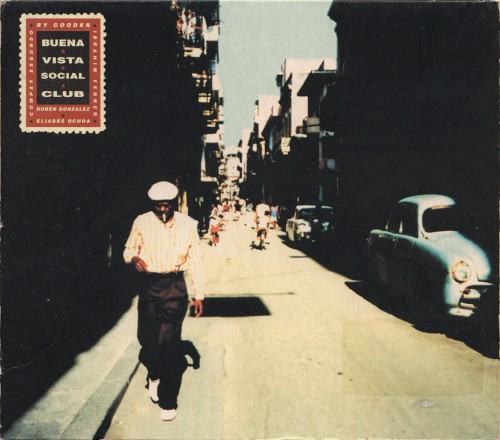
远景俱乐部 (1997)
- 艺人
- 远景俱乐部
- 发行
- 1997-06-23
- 类型
- 专辑
- 唱片公司
- World Circuit
- 制作人
- 雷·库德
- 版本
- MusicBrainz 上有 20 个发行版本
曲目
- 1Chan Chan4:18
- 2De camino a la vereda5:04
- 3El cuarto de Tula7:26
- 4Pueblo Nuevo6:07
- 5Dos gardenias3:04
- 6¿Y tú qué has hecho?3:15
- 7Veinte años3:32
- 8El carretero3:30
- 9Candela5:29
- 10Amor de loca juventud3:23
- 11Orgullecida3:19
- 12Murmullo3:52
- 13Buena Vista Social Club4:53
- 14La Bayamesa2:54
14 首 · 约 60 分钟 · 依据 1997-09-16 US 发行的版本,在 MusicBrainz 看这个版本。
介绍
这个词条没有中文维基百科条目,下面是英文维基百科的原文。
Buena Vista Social Club is the debut and only studio album by Cuban musical esemble Buena Vista Social Club, directed by Juan de Marcos González and American guitarist Ry Cooder. Produced by Cooder, it was recorded at Havana's EGREM studios in March 1996 and released on June 23, 1997, through World Circuit internationally. Release in the United States followed on September 16 by Nonesuch Records. It is the only standard studio album exclusively credited to the Buena Vista Social Club.
Buena Vista Social Club was recorded in parallel with A toda Cuba le gusta by the Afro-Cuban All Stars, a similar project also promoted by World Circuit executive Nick Gold and featuring largely the same lineup. In contrast to A toda Cuba le gusta, which was conceived as a revival of the son conjunto, Buena Vista Social Club was meant to bring back the traditional trova and filin, a mellower take on the Cuban son and bolero, as well as the danzón.
The album was a critical and commercial success and is one of the best-selling Latin albums of all time. Its release was followed by a short concert tour in Amsterdam and New York's Carnegie Hall in 1998. Footage from these dates, as well as from the recording sessions in Havana, was shown in the 1999 documentary Buena Vista Social Club directed by Wim Wenders. In 2022, the album was selected for preservation in the United States National Recording Registry by the Library of Congress as being "culturally historically or aesthetically significant". In the same year it was recognized by the Guinness World Records as the best-selling world music album.
Background
In 1996, American guitarist Ry Cooder was invited to Havana by British world music producer Nick Gold of World Circuit Records to record a session in which two African highlife musicians from Mali were to collaborate with Cuban musicians. When Cooder arrived (via Mexico to avoid the ongoing U.S. trade and travel embargo against Cuba), it was found that the musicians from Africa had not received their visas and were unable to come. Cooder and Gold changed their plans and decided to record an album of Cuban son music with local musicians instead. Cuban musicians already involved in the African collaboration project included bassist Orlando "Cachaito" López, guitarist Eliades Ochoa and musical director Juan de Marcos González, who had himself been organizing a similar project for the Afro-Cuban All Stars. A search for additional musicians led the team to singer Manuel "Puntillita" Licea, pianist Rubén González, trumpeter Manuel "Guajiro" Mirabal and octogenarian singer Compay Segundo, who all agreed to record for the project.
Cooder, Gold and de Marcos organized a large group of performers (twenty are credited) and arranged recording sessions at Havana's EGREM Studios, formerly owned by RCA records, where the equipment and atmosphere had remained unchanged since the 1950s. Communication between the Spanish and English speakers at the studio was conducted via an interpreter, although Cooder reflected that "musicians understand each other through means other than speaking".
Recording
The album contained fourteen tracks and was recorded in six days. It opened with "Chan Chan" written by Compay Segundo, a four-chord son (Dm, F, Gm, A7) that was to become what Cooder described as "the Buena Vista's calling card"; and ending with a rendition of "La bayamesa", a traditional Cuban patriotic song (not to be confused with the Cuban national anthem of the same name). The sessions also produced material for the subsequent release Introducing...Rubén González which showcased the work of the Cuban pianist. Among the songs left off the album were the classic bolero-son "Lágrimas negras", which was deemed too popular for inclusion, and Compay Segundo's "Macusa". Both songs were later released on the compilation Lost and Found.
Songs
The majority of the album comprised standards of the trova and filin repertoire, namely sones, guajiras and boleros typically played by small guitar-led ensembles. A foremost example of the son tradition on the album was "Chan Chan", the group's signature tune and the album opener. Written in the 1980s, it was one of Compay Segundo's most famous songs and one he had recorded several times, most notably with Eliades Ochoa and his Cuarteto Patria. The same formula was followed in this recording, with Ochoa singing lead and Segundo on second voice (as his artist name indicated). The song's lyrics depicted a rural scene with two characters, Juanita and Chan Chan. "Chan Chan" was followed by "De camino a la vereda", another son, written and sung by Ibrahim Ferrer.
正文摘自英文维基百科「Buena Vista Social Club (album)」,按 CC BY-SA 4.0 使用;删去了参考文献、外部链接、表格和图片;篇幅所限只节选了前面一部分,全文见原条目。
资料卡
- 作品性质
- 音乐专辑
- 表演者
- 远景俱乐部
- 发行日期
- 1997 年 9 月 16 日
- 时长
- 1 小时 0 分
- 流派
- 世界音乐
- 语言
- 西班牙语
- 唱片公司
- World Circuit
- 制作人
- 雷·库德
- 下一部
- Buena Vista Social Club at Carnegie Hall
资料来自 Wikidata Q1597639(CC0)。
制作名单
- 厂牌
- Nonesuch(目录号 79478-2)
- 录音室
- 混音:Livingston Studios(Wood Green);混音:The Bakery(Culver City);录音:Estudio EGREM(La Habana);录音:Ocean Way Recording(Hollywood)
制作
- 混音
- Jerry Boys
- 制作人
- 雷·库德
- 录音
- Jerry Boys、Larry Kalman Hirsch
- 母带处理
- Bernie Grundman
- 执行制作人
- Nick Gold
演奏与演唱
- 贝斯
- Orlando “Cachaíto” López(其中 13 首)
- 沙锤
- Alberto "Virgilio" Valdés(其中 11 首)
- 小号
- Manuel "Guajiro" Mirabal(其中 8 首)
- 吉他
- 雷·库德(其中 8 首)、康帕·塞贡多(第 2、6、7、10、11、14 首)、Eliades Ochoa(第 1、3、8、9、11 首)
- 钢琴
- 鲁本·冈萨雷斯(其中 7 首)
- udu
- Joachim Cooder(第 1、4、5、8、12、13 首)
- 演唱
- 伊布拉印·飞列(第 2、5、9、12、14 首)、康帕·塞贡多(第 6、10、11、14 首)、Eliades Ochoa(第 1、9 首)、Omara Portuondo(第 7 首)
- 演奏
- Joachim Cooder(第 7、9、10 首)、Barbarito Torres(第 7、11 首)
- 和声
- 伊布拉印·飞列(第 1、8 首)、Luis Barzaga(第 2、3 首)、Juan de Marcos González(第 2、8 首)、Alberto "Virgilio" Valdés(第 2、3 首)、康帕·塞贡多(第 1 首)、Manuel “Puntillita” Licea(第 2 首)
- 鲁特琴
- Barbarito Torres(第 2、3 首)
- 指挥
- Juan de Marcos González(第 3、9 首)
- 邦戈鼓
- Carlos González(第 3、9 首)
- 牛铃
- Carlos González(第 3、9 首)
- 主唱
- Eliades Ochoa(第 3、8 首)、伊布拉印·飞列(第 3 首)、Manuel “Puntillita” Licea(第 3 首)、康帕·塞贡多(第 7 首)
- 刮瓜
- Lázaro Villa(第 4、13 首)
- 康加鼓
- Lázaro Villa(第 5、12 首)、康帕·塞贡多(第 1 首)、Joachim Cooder(第 3 首)、伊布拉印·飞列(第 4 首)
- 响棒
- 伊布拉印·飞列(第 6、13 首)
- 吉他类
- 雷·库德(第 1 首)
- 达布卡鼓
- Joachim Cooder(第 2 首)
- 姆比拉(拇指琴)
- 雷·库德(第 2 首)
- 天巴鼓
- Julienne Oviedo Sánchez(第 3 首)
- 乌德琴
- 雷·库德(第 8 首)
- 打击乐
- 雷·库德(第 8 首)
词曲与编曲
- 作曲
- Israel “Cachao” López(第 4、13 首)、康帕·塞贡多(第 1 首)、伊布拉印·飞列(第 2 首)、Sergio González Siaba(第 3 首)、Isolina Carrillo(第 5 首)、Eusebio Delfín(第 6 首)、María Teresa Vera(第 7 首)
- 作词
- 康帕·塞贡多(第 1 首)、Sergio González Siaba(第 3 首)、Isolina Carrillo(第 5 首)、Guillermina Aramburu(第 7 首)
包装与设计
- 设计 / 插画
- The Team
- 内页文字
- Nick Gold、Nigel Williamson
- 摄影
- Susan Titelman
名单来自 MusicBrainz(CC0)这一发行版本的关系数据,由志愿者录入,不一定齐全,人数太多只列了前面一部分。
更多资料与乐评
在哪听
远景俱乐部 的其他专辑
艺人页 ›
相似的专辑



同在 1997 年发行