乐单
曲目
- A1Staying Power4:14
- A2Dancer3:48
- A3Back Chat4:35
- A4Body Language4:34
- A5Action This Day3:35
- B1Put Out the Fire3:20
- B2Life Is Real (Song for Lennon)3:33
- B3Calling All Girls3:54
- B4Las palabras de amor (The Words of Love)4:32
- B5Cool Cat3:31
- B6Under Pressure4:06
11 首 · 约 44 分钟 · 依据 1982-05-25 US 发行的版本,在 MusicBrainz 看这个版本。
介绍
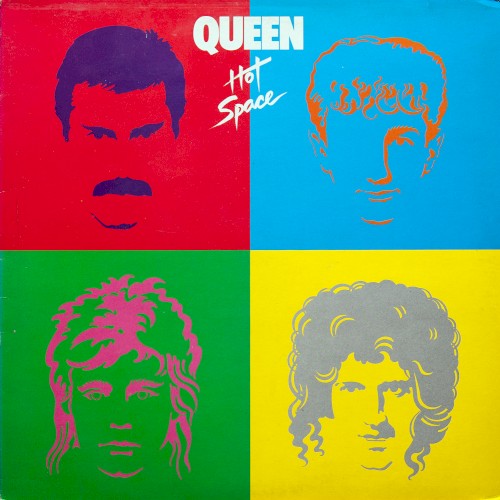
《Hot Space》是英国摇滚乐队皇后合唱团的第十张专辑,由皇后合唱团、阿里夫·马尔丁、莱因霍尔德·麦克以及大卫·鲍伊制作,1982年5月由唱片公司EMI在英国发行,由唱片公司Elektra在美国发行。
正文摘自中文维基百科「Hot Space」,按 CC BY-SA 4.0 使用;已转为简体,删去了参考文献、外部链接、表格和图片。
英文维基百科上的更多内容(英文原文,约 3,287 字符)
Hot Space is the tenth studio album by the British rock band Queen. It was released on 4 May 1982 by EMI Records in the United Kingdom and by Elektra Records in the United States. Marking a notable shift in direction from their earlier work, they employed many elements of disco, funk, R&B, dance, synth-pop and new wave music on the album. Combined with the ongoing backlash against disco music, this made the album less popular with fans who preferred the traditional rock style they had come to associate with the band. Queen's decision to record a dance-oriented album germinated with the massive success of their 1980 hit "Another One Bites the Dust" in the US.
"Under Pressure", Queen's collaboration with David Bowie, was released in 1981 and became the band's second number one hit in the UK. Although included on Hot Space, the song was a separate project and was recorded ahead of the album, before the controversy over Queen's new disco-influenced rock sound. The album's second single, "Body Language", peaked at number 11 on the US charts.
Songs
Overview
Before 1979, Queen had never used synthesisers on their albums. Beginning with The Game, Queen began using Oberheim OB-X synthesisers on their songs, including "Play the Game" and "Save Me". On Hot Space, the band went even further, introducing the drum machine for the first time. A departure from their trademark 1970s sound, most of Hot Space is a mixture of rhythm and blues, funk, dance and disco, while the rock songs continued in a pop rock direction similar to their previous album (an exception is the song "Put Out the Fire").
During an interview in 1984, Roger Taylor affirmed that "it was really John [Deacon]" who turned the band towards a more disco sound. Elaborating, he said: "John's always been R&B orientated, our bass player who wrote 'Another One Bites The Dust', ... which turned out to be the biggest selling record of the year. And I think that was the song that catapulted us into taking that road. I think we went too far and did too much. ... Everybody in the band feels that way now."
Disliking the new sound, Brian May and Taylor were critical of the influence that Paul Prenter, Freddie Mercury's personal manager between 1977 and 1984, had on the singer. Recalling the recording process in 2011, Taylor openly criticized the direction in which Prenter was taking Mercury (and thus the rest of the band), stating that "[Prenter] wanted our music to sound like you'd just walked in a gay club...and I didn't". May also noted that the making of the album in Munich took much longer than usual and that all of the band got into "deep emotional trouble" in the city, blaming a mixture of drink, drugs and partying as the reason for the relatively lengthy recording sessions. According to Reinhold Mack, Queen's producer, Prenter loathed rock music and was in Mercury's ear throughout the Hot Space sessions. Prenter also refused all requests from US radio stations to speak to Mercury. May states, "this guy, in the course of one tour, told every record station to fuck off. But not just "fuck off", but "Freddie says, ‘fuck off’". Queen roadie Peter Hince wrote "None of the band cared for him [Prenter], apart from Freddie", with Hince regarding Mercury's favouring of Prenter as an act of "misguided loyalty".
这部分摘自英文维基百科「Hot Space」,按 CC BY-SA 4.0 使用;删去了参考文献、外部链接、表格和图片;篇幅所限只节选了前面一部分,全文见原条目。
资料卡
- 作品性质
- 音乐专辑
- 表演者
- 皇后乐团
- 发行日期
- 1982 年 5 月 21 日
- 时长
- 43 分 29 秒
- 流派
- 流行摇滚
- 语言
- 英语
- 唱片公司
- EMI、Parlophone
- 制作人
- 皇后乐团
资料来自 Wikidata Q275828(CC0)。
制作名单
- 厂牌
- Elektra(目录号 E1-60128)
- 录音室
- 录音:Mountain Studios(Montreux);录音:Musicland Studios(München)
制作
- 制作人
- 皇后乐团、Mack(其中 10 首)、Arif Mardin(第 A1 首)
- 工程师
- Mack(第 B6 首)、David Richards(第 B6 首)
演奏与演唱
- 和声
- 弗雷迪·默丘里、罗杰·泰勒(第 A2、A5、B1、B4、B6 首)、布赖恩·梅(第 A2、B1、B4 首)
- 主唱
- 弗雷迪·默丘里、罗杰·泰勒(第 A5、B1 首)、布赖恩·梅(第 B1、B4 首)
- 电吉他
- 布赖恩·梅(其中 10 首)、John Deacon(第 A1、A3、B5 首)、罗杰·泰勒(第 A5 首)
- 鼓
- 罗杰·泰勒(其中 7 首)
- 贝斯
- John Deacon(其中 7 首)
- 键盘
- 弗雷迪·默丘里(第 A1、A4、A5、B2、B5、B6 首)、布赖恩·梅(第 B4 首)、John Deacon(第 B6 首)
- 打击乐
- 罗杰·泰勒(第 A2、B1、B3、B4 首)
- 合成器
- 弗雷迪·默丘里(第 A1、A4、B2 首)、John Deacon(第 A3、B5 首)、罗杰·泰勒(第 A5、B5 首)、Mack(第 A5 首)、布赖恩·梅(第 B4 首)、大卫·鲍伊(第 B6 首)
- 电子鼓
- 罗杰·泰勒(第 A1、A3、A4 首)
- 原声吉他
- 布赖恩·梅(第 B2、B3、B4 首)、罗杰·泰勒(第 B3 首)
- 鼓机
- 弗雷迪·默丘里(第 A1、A4 首)、John Deacon(第 A3、B5 首)、布赖恩·梅(第 A2 首)
- 贝斯合成器
- 弗雷迪·默丘里(第 A1、A4 首)、布赖恩·梅(第 A2 首)
- 钢琴
- 弗雷迪·默丘里(第 B2、B6 首)、布赖恩·梅(第 B4 首)
- 铃鼓
- 罗杰·泰勒(第 A2 首)
- 吉他
- 布赖恩·梅(第 A3 首)、罗杰·泰勒(第 B3 首)、John Deacon(第 B6 首)
- 萨克斯
- Dino Solera(第 A5 首)
- 电钢琴
- 罗杰·泰勒(第 B5 首)
- 拍手
- John Deacon(第 B6 首)、布赖恩·梅(第 B6 首)、弗雷迪·默丘里(第 B6 首)
- 打响指
- John Deacon(第 B6 首)、布赖恩·梅(第 B6 首)、弗雷迪·默丘里(第 B6 首)
词曲与编曲
- 作曲
- 弗雷迪·默丘里(第 A1、A4、B2 首)、布赖恩·梅(第 A2、B1、B4 首)、罗杰·泰勒(第 A5、B3 首)、John Deacon(第 A3 首)
- 作词
- 弗雷迪·默丘里(第 A1、A4、B2 首)、布赖恩·梅(第 A2、B1、B4 首)、罗杰·泰勒(第 A5、B3 首)、John Deacon(第 A3 首)
- 词曲
- John Deacon(第 B5、B6 首)、弗雷迪·默丘里(第 B5、B6 首)
- 器乐编曲
- Arif Mardin(第 A1 首)
名单来自 MusicBrainz(CC0)这一发行版本的关系数据,由志愿者录入,不一定齐全,人数太多只列了前面一部分。
更多资料与乐评
在哪听
皇后乐团 的其他专辑
艺人页 ›
相似的专辑

同在 1982 年发行