乐单
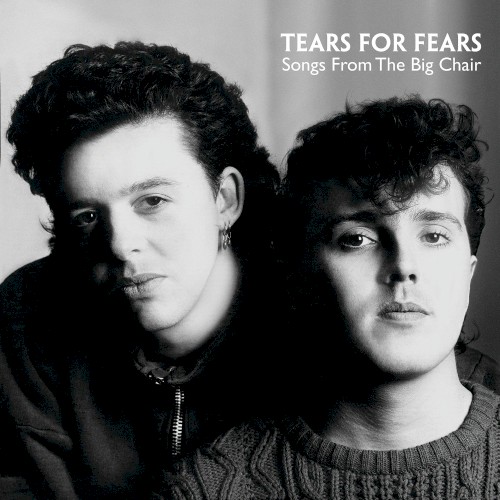
Songs from the Big Chair (1985)
曲目
- 1Shout6:33
- 2The Working Hour6:32
- 3Everybody Wants to Rule the World4:11
- 4Mothers Talk5:10
- 5I Believe4:55
- 6Broken2:39
- 7Head Over Heels / Broken (live)5:02
- 8Listen6:50
8 首 · 约 42 分钟 · 依据 1985-02-25 US 发行的版本,在 MusicBrainz 看这个版本。
介绍
这个词条没有中文维基百科条目,下面是英文维基百科的原文。
Songs from the Big Chair is the second studio album by the English pop rock band Tears for Fears, released on 25 February 1985 by Phonogram Records and Mercury Records. The follow-up to the band's successful debut album, The Hurting (1983), Songs from the Big Chair marked a departure from that album's dark, introspective style, featuring a more mainstream, glossy sound, with sophisticated production values, increased guitar use, and diverse stylistic influences, while Roland Orzabal and Ian Stanley's lyrics reflected socially and politically conscious themes.
The album peaked at number two in the UK and at number one in the US, becoming a multi-platinum seller in several countries and the band's most successful album to date. The singles "Shout" and "Everybody Wants to Rule the World" both topped the US Billboard Hot 100 and reached the top 5 of the UK singles chart, while "Head over Heels", "Mothers Talk", and a re-recorded version of "I Believe" were also successful internationally. Receiving positive critical reviews upon release, Songs from the Big Chair has accrued lasting praise and has been named one of the best albums of the 1980s, and was included in the book 1001 Albums You Must Hear Before You Die (2006).
Background
The album was to be titled The Working Hour, but Roland Orzabal thought to change it to Songs from the Big Chair, a title derived from the 1976 American television film Sybil about a woman with multiple personality disorder who only feels safe when sitting in her analyst's "big chair." The title, according to Curt Smith, reflects both the distinct personalities of each song on the album, and the band's opinion that they were the targets of a hostile British music press at the time.
In an interview for the 2006 deluxe-version booklet, Smith noted: "We were very introverted on The Hurting; it was a very dark album. We found the need to be more outgoing on The Big Chair."
The band started to generate new material for their second album in 1983. The first songs written for the new album were "Mothers Talk", "Head over Heels", and "The Working Hour", which the band played live during their December 1983 tour, as captured on the In My Mind's Eye concert performance video.
Writing and recording
The album was recorded at The Wool Hall (the band's own studio) in 1984. Conceptually and musically, it further developed the band's sound from the previous album The Hurting (1983), expanding the use of guitars in addition to their electronic sound and imparting a wider approach overall. "Mothers Talk", which was released months before the album as a single, was originally recorded in early 1984 with producer Jeremy Green, but was discarded as the record company disliked it, eventually bringing The Hurting co-producer Chris Hughes back into the fold. Hughes helped bring the band out of the “synthesizer rut” they found themselves in to develop a more guitar-oriented sound for the album. Recording officially began in April 1984, with the album taking eight months to complete, including a month of mixing at Union Studios in Munich. Both singles "Mothers Talk" and "Shout" would take the longest to complete, taking up to half the album's production time.
The album utilises many styles and influences, and progressive rock was cited as a primary influence on the album. "I Believe" was influenced by the songwriting of Robert Wyatt, and was originally intended for him to record but the band recorded it themselves. "Broken" is a reworking of the earlier "We Are Broken" and a studio version and a live reprise bookends the song "Head over Heels". The largely instrumental "Listen" has been described as a symphonic piece. Lyrically, the psychological themes on The Hurting were continued and extended to include a variety of themes such as politics, war, money, and love.
Near the end of the completion of the album, Roland Orzabal played two simple chords on his acoustic guitar that formed the foundation of the song "Everybody Wants to Rule the World". Although he was initially not interested in working on it, Orzabal was convinced to write a song based on the two chords and he added the chorus line. The song was completed in about a week and was the last track recorded for the album.
Release
Songs from the Big Chair was released on 25 February 1985 with a black and white photograph of Orzabal and Smith on the record cover. LP copies retained a mixing error in which the left and right stereo channels were swapped; this was corrected for most CD editions. The sole exception was a 1998 reissue by Mobile Fidelity Sound Lab, which retained the LP stereo imaging.
The album reached number two on the UK Albums Chart and spawned several commercially successful singles, including two top 5 hits: "Mothers Talk" (UK No. 14), "Shout" (UK No. 4), "Everybody Wants to Rule the World" (UK No. 2), "Head over Heels" (UK No. 12), and "I Believe" (UK No. 23).
正文摘自英文维基百科「Songs from the Big Chair」,按 CC BY-SA 4.0 使用;删去了参考文献、外部链接、表格和图片;篇幅所限只节选了前面一部分,全文见原条目。
资料卡
- 作品性质
- 音乐专辑
- 表演者
- 惊惧之泪
- 发行日期
- 1985 年 2 月 25 日
- 流派
- 流行摇滚
- 语言
- 英语
- 唱片公司
- 水星唱片
- 制作人
- 克里斯·休斯
资料来自 Wikidata Q549774(CC0)。
制作名单
- 厂牌
- Mercury Records(目录号 422-824 300-1 M-1)、Mercury Records(目录号 824300-1Q)
制作
- 工程师
- David Bascombe
- 混音
- 史蒂芬·威尔森
- 制作人
- Chris Hughes
演奏与演唱
- 鼓
- Manny Elias、Chris Hughes(第 1 首)、Jerry Marotta(第 2 首)
- 贝斯
- Curt Smith
- 键盘
- Ian Stanley
- 主唱
- Roland Orzabal(其中 7 首)、Curt Smith(第 3 首)
- 和声
- Alexander A. McLelland(第 1、7 首)、Roland Orzabal(第 3 首)、Stevie Vann(第 4 首)、Marilyn David(第 7 首)、Annie McCaig(第 7 首)
- 三角钢琴
- Andy Davis(第 2、7 首)、Roland Orzabal(第 5 首)
- 萨克斯
- Will Gregory(第 2、5 首)、Mel Collins(第 2 首)
- 吉他
- Neil Taylor(第 3、6 首)
- 演唱
- Marilyn David(第 8 首)、Roland Orzabal(第 8 首)
词曲与编曲
- 词曲
- Roland Orzabal(第 1、2、4、7、8 首)、Ian Stanley(第 1、2、4、8 首)、Manny Elias(第 2 首)、Curt Smith(第 7 首)
- 作曲
- Roland Orzabal(第 3、5、6、7 首)、Chris Hughes(第 3 首)、Ian Stanley(第 3 首)
- 作词
- Roland Orzabal(第 3、5、6、7 首)、Chris Hughes(第 3 首)、Ian Stanley(第 3 首)
- 器乐编曲
- Manny Elias(第 2 首)、Jerry Marotta(第 2 首)
- 编曲
- Ian Stanley(第 8 首)
名单来自 MusicBrainz(CC0)这一发行版本的关系数据,由志愿者录入,不一定齐全。
更多资料与乐评
在哪听
惊惧之泪 的其他专辑
艺人页 ›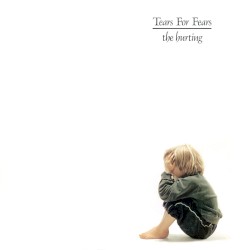
同在 1985 年发行