乐单
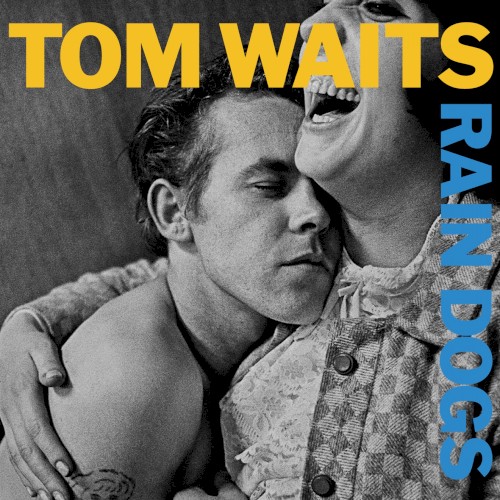
Rain Dogs (1985)
滚石 500(2020) #357滚石 500(2003) #3971001 张专辑
- 艺人
- 汤姆·威茨
- 发行
- 1985
- 类型
- 专辑
- 唱片公司
- 小岛唱片
- 制作人
- 汤姆·威茨
- 版本
- MusicBrainz 上有 21 个发行版本
曲目
- 1Singapore2:45
- 2Clap Hands3:49
- 3Cemetery Polka1:47
- 4Jockey Full of Bourbon2:47
- 5Tango Till They’re Sore2:52
- 6Big Black Mariah2:44
- 7Diamonds & Gold2:33
- 8Hang Down Your Head2:34
- 9Time3:56
- 10Rain Dogs2:57
- 11Midtown (instrumental)1:03
- 129th & Hennepin1:57
- 13Gun Street Girl4:38
- 14Union Square2:25
- 15Blind Love4:20
- 16Walking Spanish3:07
- 17Downtown Train3:53
- 18Bride of Rain Dog (instrumental)1:10
- 19Anywhere I Lay My Head2:48
19 首 · 约 54 分钟 · 依据 1985 US 发行的版本,在 MusicBrainz 看这个版本。
介绍
这个词条没有中文维基百科条目,下面是英文维基百科的原文。
Rain Dogs is the ninth studio album by American singer-songwriter Tom Waits, released in September 1985 on Island Records. A loose concept album about "the urban dispossessed" of New York City, Rain Dogs is generally considered the middle album of a trilogy that includes Swordfishtrombones and Franks Wild Years.
The album, which features guitarists Keith Richards and Marc Ribot, is noted for its broad spectrum of musical styles and genres, described by Arion Berger as merging "outsider influences – socialist decadence by way of Kurt Weill, pre-rock integrity from old dirty blues, the elegiac melancholy of New Orleans funeral brass – into a singularly idiosyncratic American style."
The album peaked at number 29 on the UK charts and number 188 on the US Billboard Top 200. Rod Stewart had success with his cover of "Downtown Train", later included on some editions of his 1991 album Vagabond Heart. In 1989, it was ranked number 21 on the Rolling Stone list of the "100 greatest albums of the 1980s." In 2012, the album was ranked number 399 on the magazine's list of "The 500 Greatest Albums of All Time", and at number 357 in 2020.
Composition and recording
Waits wrote the majority of the album in a two-month stint in the fall of 1984 in a basement room at the corner of Washington and Horatio Streets in Manhattan. According to Waits, it was, "kind of a rough area, Lower Manhattan between Canal and 14th Street, just about a block from the river ... It was a good place for me to work. Very quiet, except for the water coming through the pipes every now and then. Sort of like being in a vault."
In preparation for the album, Waits recorded street sounds and other ambient noises on a cassette recorder to get the sound of the city that would be the album's subject matter.
A wide range of instruments was employed to achieve the album's sound, including marimba, accordion, double bass, trombone, and banjo. The album is notable for its organic sound, and the natural means by which it was achieved. Waits, discussing his mistrust of then fashionable studio techniques, said, "If I want a sound, I usually feel better if I've chased it and killed it, skinned it and cooked it. Most things you can get with a button nowadays. So if I was trying for a certain drum sound, my engineer would say, 'Oh, for Christ's sake, why are we wasting our time? Let's just hit this little cup with a stick here, sample something (take a drum sound from another record) and make it bigger in the mix, don't worry about it.' I'd say, 'No, I would rather go in the bathroom and hit the door with a piece of two-by-four very hard.'"
Waits also stated that "if we couldn't get the right sound out of the drum set we'd get a chest of drawers in the bathroom and bang it real hard with a two-by-four," such that "the sounds become your own."
Rain Dogs was the first time that Waits worked with guitarist Marc Ribot, who was impressed by Waits' unusual studio presence. Ribot said, "Rain Dogs was my first major label type recording, and I thought everybody made records the way Tom makes records. ... I've learned since that it's a very original and individual way of producing. As producer apart from himself as writer and singer and guitar player he brings in his ideas, but he's very open to sounds that suddenly and accidentally occur in the studio. I remember one verbal instruction being, 'Play it like a midget's bar mitzvah.'" Ribot also recalls how the band would not rehearse the songs before going to record; rather, Waits would play them the songs on an acoustic guitar in the studio. "He had this ratty old hollow body, and he would spell out the grooves. It wasn't a mechanical kind of recording at all. He has a very individual guitar style he sort of slaps the strings with his thumb ... He let me do what I heard, there was a lot of freedom. If it wasn't going in a direction he liked, he'd make suggestions. But there's damn few ideas I've had which haven't happened on the first or second take."
It also marks Waits' first recording with the Rolling Stones's Keith Richards, who played on "Big Black Mariah", "Union Square" and "Blind Love". Waits later contributed vocals and piano to the Rolling Stones album Dirty Work. Richards cowrote "That Feel" on Waits' Bone Machine (1992) and played on several tracks on Bad as Me (2011). Waits said, "There was something in there that I thought he would understand. I picked out a couple of songs that I thought he would understand and he did. He's got a great voice and he's just a great spirit in the studio. He's very spontaneous, he moves like some kind of animal. I was trying to explain 'Big Black Mariah' and finally I started to move in a certain way and he said, 'Oh, why didn't you do that to begin with? Now I know what you're talking about.' It's like animal instinct."
According to Barney Hoskyns, the album's general theme of "the urban dispossessed" was inspired in part by Martin Bell's 1984 documentary Streetwise, to which Waits had contributed music.
正文摘自英文维基百科「Rain Dogs」,按 CC BY-SA 4.0 使用;删去了参考文献、外部链接、表格和图片;篇幅所限只节选了前面一部分,全文见原条目。
资料卡
- 作品性质
- 音乐专辑
- 表演者
- 汤姆·威茨
- 发行日期
- 1985 年 9 月 30 日
- 时长
- 53 分 46 秒
- 流派
- 摇滚乐
- 语言
- 英语
- 唱片公司
- 小岛唱片
- 制作人
- 汤姆·威茨
资料来自 Wikidata Q259443(CC0)。
制作名单
- 厂牌
- Island(目录号 422-826 382-2)
- 录音室
- 混音:Quadrafonic Sound Studio(Nashville);混音:RPM Studios(New York);录音:RCA Studios(New York)
制作
- 助理混音
- Tony Gonzales、Jeff Lippay
- 制作人
- 汤姆·威茨
- 助理录音
- Dennis Ferrante
- 工程师
- Robert Musso(其中 18 首)
- 混音
- Robert Musso(其中 18 首)、Jeff Lippay(第 17 首)
- 录音
- Jeff Lippay(第 17 首)
演奏与演唱
- 主唱
- 汤姆·威茨(其中 17 首)
- 鼓
- Stephen Taylor Arvizu Hodges(其中 9 首)、Michael Blair(第 14、18、19 首)、Mickey Curry(第 17 首)
- 低音提琴
- Larry Taylor(其中 8 首)、Greg Cohen(第 5、12、13 首)、Tony Garnier(第 2 首)
- 吉他
- 汤姆·威茨(其中 8 首)、Marc Ribot(其中 7 首)、基思·理查兹(第 6、14、15 首)、Robert Quine(第 15、17 首)、克里斯·史佩丁(第 1 首)、G.E. Smith(第 17 首)
- 打击乐
- Michael Blair(第 1、3、13、17 首)、Bobby Previte(第 2 首)
- 长号
- Bob Funk(第 3、5、10、19 首)
- 萨克斯
- Ralph Carney(第 4、11、14、18 首)、Crispin Cioe(第 11 首)
- 贝斯
- Larry Taylor(第 7、11、14、16 首)、东尼·莱文(第 17 首)
- 马林巴
- Michael Blair(第 2、7、12 首)、Bobby Previte(第 2 首)
- 手风琴
- William Shimmel(第 3、9、10 首)
- 风琴
- 汤姆·威茨(第 3、19 首)、Robbie Kilgore(第 17 首)
- 钢琴
- 汤姆·威茨(第 5、12 首)
- tenor horn / alto horn
- Arno Hecht(第 11、19 首)
- 小号
- Hollywood Paul Litteral(第 11、19 首)
- 铜管
- Uptown Horns(第 11、19 首)
- 康加鼓
- Michael Blair(第 4 首)
- 班卓琴
- Robert Musso(第 7 首)、汤姆·威茨(第 13 首)
- 单簧管
- Ralph Carney(第 12 首)
- 提琴类
- Ross Levinson(第 15 首)
- 和声
- 基思·理查兹(第 15 首)
- 中音萨克斯
- John Lurie(第 16 首)
- 上低音萨克斯
- Crispin Cioe(第 19 首)
词曲与编曲
- 作曲
- 汤姆·威茨(其中 18 首)
- 编曲
- 汤姆·威茨(其中 17 首)、Uptown Horns(第 6、8、10、11 首)
- 作词
- 汤姆·威茨(其中 16 首)
- 词曲
- Kathleen Brennan(第 8 首)、汤姆·威茨(第 8 首)
名单来自 MusicBrainz(CC0)这一发行版本的关系数据,由志愿者录入,不一定齐全。
更多资料与乐评
在哪听
汤姆·威茨 的其他专辑
艺人页 ›
相似的专辑
同在 1985 年发行