乐单
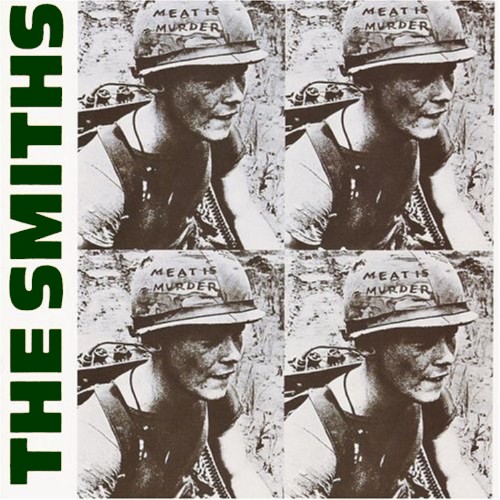
肉食即谋杀 (1985)
- 艺人
- 史密斯
- 发行
- 1985-02-11
- 类型
- 专辑
- 唱片公司
- 男同唱片、Sire Records
- 制作人
- 史密斯
- 版本
- MusicBrainz 上有 23 个发行版本
曲目
- 1The Headmaster Ritual4:52
- 2Rusholme Ruffians4:20
- 3I Want the One I Can’t Have3:14
- 4What She Said2:42
- 5That Joke Isn’t Funny Anymore4:59
- 6How Soon Is Now?6:46
- 7Nowhere Fast2:37
- 8Well I Wonder4:00
- 9Barbarism Begins at Home6:58
- 10Meat Is Murder6:06
10 首 · 约 47 分钟 · 依据 1985 US 发行的版本,在 MusicBrainz 看这个版本。
介绍
《肉食即谋杀》是英国摇滚乐队史密斯乐队的第二张录音室专辑,于1985年2月11日发行。它是乐队唯一一张登上英国专辑排行榜榜首的录音室专辑,并在榜单上停留了13周。这张专辑在国际上取得了成功,在欧洲百大专辑榜上停留了11周, 最高排名第29位。 在美国,这张专辑在Billboard 200排行榜上也达到了第110名。
创作
继史密斯乐队的首张录音室专辑《史密斯》(1984)后,主唱莫里西和吉他手约翰尼·马尔又亲自制作了这张专辑。专辑制作过程中,乐队仅接受了音频工程师斯蒂芬·斯特里特(Stephen Street)的协助。他们在《Heaven Knows I'm Miserable Now》的录音工作中第一次见到斯蒂芬·斯特里特,并要了他的联系电话。 不过,这张专辑的制作人一栏最终只写了“史密斯乐队”。
莫里西向马尔和斯特里特提供了他自己的BBC音效记录副本,作为专辑采样的来源。 莫里西在乐队未来的创作中延续了这种做法。
《肉食即谋杀》比前作更具激进性和政治色彩,包括了主张素食主义的同名主打歌(莫里西禁止乐队成员被拍到在吃肉), 以及反对体罚的歌曲《The Headmaster Ritual》。在音乐上,乐队展现了更多的冒险精神,马尔和乐队贝斯手安迪·鲁尔克在《Rusholme Ruffians》和《Barbarism Begins at Home》中分别融入了乡村摇滚乐和放克。值得注意的是,《Rusholme Ruffians》借鉴了维多利亚·伍德歌曲《Fourteen Again》的元素。作家约翰·金认为,这张专辑的同名主打歌可能受到了无政府朋克乐队冲突1983年的歌曲《Meat Means Murder》的启发,后者也探讨了相同的主题,并以慢节奏开场。
莫里西在关于该专辑的许多采访中表达了自己强烈的政治立场。他的攻击目标包括撒切尔政府、英国君主制以及同时代的音乐人。当被问及当时在英国媒体上大力宣传的慈善活动Band Aid时,他讽刺道:“一个人可以非常关心埃塞俄比亚的人民,却每天对英国人民施加折磨。” 他也开始在演出和采访中宣传素食主义,甚至说服一家苏格兰电视台在晚餐时间播放屠宰场的画面。
专辑的封面使用了一张美国海军陆战队上士迈克尔·韦恩(Michael Wynn)1967年在越南拍摄的照片,并将他头盔上的“Make War Not Love”字样改为了“Meat Is Murder”。韦恩在2019年表示,他从未授权过乐队使用这张照片作为封面,并且对头盔上的字样被改动“并不是很高兴”。
评价
2003年,《肉食即谋杀》在滚石杂志五百大专辑中排名第295位, 在2012年修订后的榜单中排名第296位。 专辑亦被收录在2005年出版的《生前必听的1001张专辑》中。
正文摘自中文维基百科「肉食即谋杀」,按 CC BY-SA 4.0 使用;已转为简体,删去了参考文献、外部链接、表格和图片。
英文维基百科上的更多内容(英文原文,约 3,163 字符)
Meat Is Murder is the second studio album by the English rock band the Smiths, released on 11 February 1985 by Rough Trade Records. Following the release of their self-titled debut album in early 1984, the Smiths maintained a prolific output with non-album singles and the compilation Hatful of Hollow, while also drawing media attention for their outspoken political views and provocative lyrics. The band began working with engineer Stephen Street during this period, a collaboration that continued into Meat Is Murder.
Recording for the album took place between mid-1984 and December of that year, with sessions held in London at the Fallout Shelter and Jam Studios, and in Surrey at Ridge Farm Studio. Guitarist Johnny Marr developed many of the demos in his Earl's Court flat, often incorporating BBC sound effects records provided by Morrissey, a technique that became a recurring part of their creative process.
Musically, the album expanded the band's sound, incorporating elements of indie rock and post-punk. It marked a shift toward more overtly political themes, with songs addressing vegetarianism, corporal punishment, and social alienation. It became the band's only studio album to reach number one on the UK Albums Chart, and stayed on the chart for 13 weeks. The album was an international success, spending eleven weeks on the European Top 100 Albums chart and peaking at number 29. In the United States, it reached number 110 on the Billboard 200.
Background
Following the release of their self-titled debut studio album The Smiths, the band continued to generate both critical attention and controversy; the song "Suffer Little Children" addressed the Moors murders and drew backlash from the press and some members of the public. The Sun claimed the track was insensitive to the victims' families, alleging it contained offensive lyrical content. Morrissey expressed distress at these allegations and the lack of opportunity to publicly clarify his intentions. In response, the band issued a press statement affirming that the song did not condone child abuse and had been written with serious intent. In the aftermath, a positive outcome emerged when Morrissey was contacted by Ann West, the mother of Lesley Ann Downey, a ten-year-old girl who had been killed in the Moors murders, who came to believe that the song was written with sincere and respectful intentions.
In May and September 1984, they released the non-album singles "Heaven Knows I'm Miserable Now" and "William, It Was Really Nothing", respectively. The former became their first top ten hit in the United Kingdom, and both songs were later included on the compilation Hatful of Hollow, released in November 1984. "Heaven Knows I'm Miserable Now" marked the beginning of the band's collaboration with then-engineer Stephen Street, who would become a key figure in their subsequent recordings. They had first met Street on the session for the song and requested his contact number. The Hatful of Hollow compilation brought together BBC Radio session tracks, B-sides, and alternative versions of previously released songs, further consolidating the band's early fanbase and public presence.
这部分摘自英文维基百科「Meat Is Murder」,按 CC BY-SA 4.0 使用;删去了参考文献、外部链接、表格和图片;篇幅所限只节选了前面一部分,全文见原条目。
资料卡
- 作品性质
- 音乐专辑
- 表演者
- 史密斯
- 发行日期
- 1985 年 2 月 11 日
- 时长
- 39 分 46 秒
- 流派
- 另类摇滚
- 语言
- 英语
- 唱片公司
- 男同唱片、Sire Records
- 制作人
- 史密斯
资料来自 Wikidata Q1065599(CC0)。
制作名单
- 厂牌
- Sire Records(目录号 9 25269-2)
- 录音室
- 混音:Basing Street Studios(Notting Hill);录音:Amazon Studios(Simonswood);录音:Ridge Farm Studios(Dorking)
制作
- 工程师
- Stephen Street
- 制作人
- 史密斯(其中 9 首)、John Porter(第 6 首)
演奏与演唱
- 鼓
- Mike Joyce(其中 8 首)
- 钢琴
- 强尼·马尔(其中 8 首)
- 吉他
- 强尼·马尔(其中 8 首)
- 贝斯
- Andy Rourke(其中 8 首)
- 演唱
- 莫里西(其中 8 首)
词曲与编曲
- 作曲
- 强尼·马尔
- 作词
- 莫里西
- 词曲
- 强尼·马尔(第 6 首)、莫里西(第 6 首)
名单来自 MusicBrainz(CC0)这一发行版本的关系数据,由志愿者录入,不一定齐全。
更多资料与乐评
在哪听
史密斯 的其他专辑
艺人页 ›
相似的专辑
同在 1985 年发行